True Crime Chronicles: New forensic techniques and good police work solved 5o-year-old Delaware County mystery


For five decades, the tragic death of Georgie Cannaday lay shrouded in the stifling silence of a cold case.
In June 1973, the reclusive 48-year-old was found deceased in her Delaware County farmhouse, her body wrapped in a braided rug, a loyal poodle still at her side.
Thanks to dedicated cold case investigators and a startling deathbed confession, the truth behind Georgie's final moments emerged in 2023, offering a measure of closure to her family and highlighting the enduring pursuit of justice in Oklahoma.

The discovery of Georgie's body on June 28, 1973, by Delaware County Undersheriff Bill Loux, painted a perplexing picture. There were no signs of forced entry or robbery, her purse untouched. The only disarray was her rumpled bed.
For years, the case remained open but inactive, a file gathering dust amidst fading memories and lost evidence.
Born prematurely in 1925, Georgie was described by relatives as "child-like" and kind, living a quiet life tending to animals and gardens on her father's farm. Despite minor intellectual challenges noted in her autopsy, she was fiercely independent, harboring a premonition of danger just weeks before her death, fearing her home might be burned down.
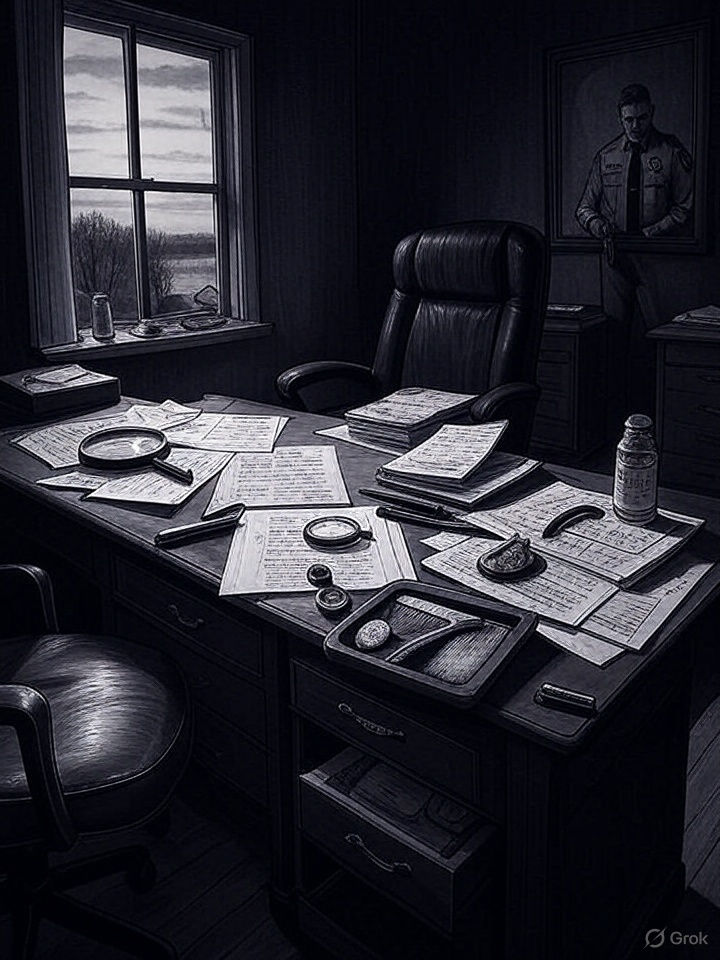
The pivotal breakthrough in Georgie's case came in 2023 with the rediscovery of her original autopsy report. This crucial document, which had been overlooked for years, definitively confirmed what investigators had long suspected: Georgie Cannaday died by strangulation, evidenced by fractured larynx and hyoid bones.
While the extent of decomposition prevented a determination of sexual assault, the cause of death was now undeniably clear.
Crucially, the work of forensic pathologists like Dr. Angela Bird, who leads Oklahoma Pathology, plays an indispensable role in such cases.

While Dr. Bird's tenure post-dates Georgie's initial autopsy, the very existence of such detailed reports, preserved and accessible, underscores the critical long-term impact of thorough pathological examination.
Her ongoing efforts to advance forensic science in Oklahoma mean that future investigations will benefit from increasingly sophisticated techniques, potentially preventing decades-long mysteries like Georgie's from lingering in the shadows. The meticulous work of pathologists, then and now, provides the foundational scientific evidence upon which justice can ultimately be built.

The renewed focus on Georgie's case began in 2021 when Sheriff James Beck established a Cold Case Unit. Georgie's great-niece, Christina Asp, fueled by family stories and a promise to seek justice, reignited interest. Investigators meticulously combed through archives, interviews, and newspaper clippings. An online story about the case sparked new leads, and then, a critical call arrived.
A woman revealed her father's long-held secret: a dying neighbor had confessed to overhearing a man admit to killing Georgie, with two accomplices. One suspect, a paranoid recluse who had reported a suspicious truck near Georgie's home the night before her death, passed away in 1994.
The second suspect was a 16-year-old boy with a disturbing history of violence towards women, including previous assaults. He died in 2020.

August 7, 2023, investigators met with the District Attorney. The case was declared solved but unprosecutable. With both primary suspects deceased, and one having been a juvenile at the time of the crime, legal restrictions prevent the public release of their names or any charges being filed.
Though the legal system did not bring the perpetrators to formal justice, Georgie's family has found a profound sense of closure. The silent justice of discovery has lifted a five-decade-long burden.
A grave in Zena Cemetery in Jay, Delaware County stands as a tribute to Georgie Cannaday's life and the long, winding journey to uncover the truth.
Her story serves as a testament to the tireless dedication of those who refuse to let the past remain buried, ensuring that even after half a century, the pursuit of answers for victims like Georgie never truly ends.


