True Crime Chronicles: The kidnapping, robbery, and murder of Dan Short and echoes of money laundering in 1989
- Dennis McCaslin

- May 13
- 4 min read


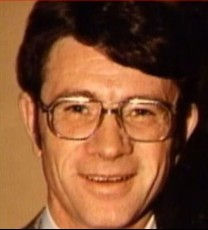
In the quiet Ozarks town of Noel, Missouri--self-proclaimed “Missouri’s Christmas City” with a population around 1,200 in 1989--Dan Short stood as a pillar of the community. At 51, the president of the State Bank of Noel since 1983 had relocated there in 1986, known for calling high school football games on local radio, writing a weekly sports column, and emceeing the town’s Christmas parade.
He lived alone in a rural home in Benton County, Arkansas, roughly eight miles from Noel in the tight-knit tri-state region near the Missouri, Arkansas, and Oklahoma borders. Yet beneath the surface of this small-town banker’s life lay tensions: the bank faced repeated audits and whispers of money-laundering ties, and in the weeks before his death, Short confided to family that he felt uneasy about the bank’s affairs, feared for his job after a board member pressured him into an “immoral act,” and even reported feeling stalked following a break-in at his home.

Sometime after 11 p.m. on October 5, 1989, after a guest had left his isolated Benton County residence, Dan Short was abducted at gunpoint. A neighbor later recalled seeing him forced into a two-tone brown van. The kidnappers drove him to the State Bank of Noel, arriving around 2 a.m.
They damaged the security cameras--one shot with a .45-caliber pistol, the lens spray-painted--leaving two .45 shell casings on the floor. Short was forced to disarm the alarm, unlock the doors, and open the vault. The thieves took roughly $70,000 to $71,000 in cash and heavy sacks of coins—--over 300 pounds of quarters, dimes, and nickels--but left behind at least another $100,000 in an unlocked drawer, suggesting they were outsiders unfamiliar with the full layout.

They abandoned Short’s red pickup truck, still scattered with coins, and fled in the van.
By 8 a.m., bank employees discovered the open vault and their boss missing. With Short unaccounted for and the money gone, initial suspicion fell on him as a possible inside-job perpetrator who had fled. The FBI and agencies from three states launched a cross-border investigation.

That theory shattered five days later on October 11, when a couple fishing near Cowskin Bridge on Grand Lake in Ottawa County, Oklahoma--about 20 miles west--spotted a gruesome sight: Short’s body floating in the water, still bound with gray duct tape to an antique chair weighted by a concrete block and heavy chain hoist.
He had been thrown off the bridge while alive and drowned; he was not gagged, and evidence suggested he may have been unconscious when dumped. A separate piece of matching duct tape recovered from the lake bank bore a nearly perfect fingerprint.

Witnesses reported a dark van speeding from the bridge around 6 a.m. without plates, and others described two men tossing something heavy.
In the somber weeks that followed, Noel’s holiday season felt forever altered as yellow ribbons appeared on doors along Main Street. The FBI had few solid leads by mid-December 1989, and local speculation filled the void. Some pointed to disgruntled customers angered by repossessions or loan denials amid the bank’s economic struggles.

In the somber weeks that followed, Noel’s holiday season felt forever altered as yellow ribbons appeared on doors along Main Street. The FBI had few solid leads by mid-December 1989, and local speculation filled the void. Some pointed to disgruntled customers angered by repossessions or loan denials amid the bank’s economic struggles.
Others whispered of an inside job linked to the audits and possible money laundering.
Community rumors in Benton County -- including around nearby Siloam Springs--turned toward at least one local individual early on amid the county-wide ripple effects, though those leads were pursued and ultimately cleared as evidence mounted elsewhere.
Prosecutors countered that this was a distraction from the clear greed-driven crime by two local opportunists whose family settlement money from their father’s 1980 plane crash had run dry.

Joseph “Joe” Agofsky, 23, and his brother Shannon Agofsky, 18--both Noel natives--emerged as prime suspects after an anonymous tip and reports of them bragging about sudden wealth, with Shannon calling himself “the richest teenager in the county.”
They had been seen on a lavish spending spree. Their alibis, initially supported by
their mother Sheila, crumbled under phone records and other evidence. Physical links proved damning: the chain hoist matched one stolen earlier from a property tied to the family; the duct-tape fingerprint belonged to Shannon; they owned .45-caliber guns consistent with the casings; a brown van like theirs was spotted at both the abduction and dump sites; and inmates later testified the brothers had discussed abducting a banker and seeking blueprints.

Arrested in March 1992, the brothers were convicted in federal court of conspiracy, aggravated bank robbery, and firearm use, each receiving life plus five years.
In the 1997 Oklahoma murder trial, Shannon was convicted and sentenced to life, while Joe’s jury hung and he was not retried. Joe died in federal prison in 2013 at age 46. Shannon, already serving life for Short’s murder, later killed a fellow inmate in a Texas prison in 2001--beaten, kicked, and stomped--earning a federal death sentence that was eventually commuted, though he remained imprisoned for life.
Though whispers of organized crime--perhaps tied to emerging methamphetamine networks in the rural Ozarks or broader laundering operations-- lingered in local lore and Unsolved Mysteries-style theories, no evidence ever connected the Agofskys or the crime to a formal syndicate like the Dixie Mafia or any cartel.

The brothers were local boys turned calculated killers who exploited a vulnerable small-town bank for quick cash. Dan Short, remembered as a “genuine nice guy” who boosted his community, left behind a town forever scarred by that brutal October night when a respected banker was kidnapped from his Arkansas home, forced to rob his own Missouri vault, and drowned alive in Oklahoma’s Grand Lake.
The yellow ribbons eventually came down, but the tri-state horror and its lingering questions about what really stirred inside that bank before the abduction remain etched in Ozarks memory.