Our Arklahoma Heritage: Rev. James Dyer of Eagletown imparted the Word to natives and settlers alike for six decades
- Dennis McCaslin

- May 13
- 2 min read


Rev. James Dyer was born on October 3, 1837, near Eagletown in what was then the Choctaw Nation, Indian Territory. He died on August 7, 1921, a few miles from his birthplace in McCurtain County.
A full-blood Choctaw, he served his people as a council representative, Washington delegate, carpenter, farmer, and Presbyterian minister through the final decades of tribal government and into Oklahoma statehood.
His father, Moses Dyer, had come to the Choctaw Nation on the Trail of Tears from Mississippi in 1832. James received his early education when Presbyterian minister Rev. Cyrus Kingsberry took him to Nashville, Tennessee, at age 18. After four years of schooling, he returned home trained as a carpenter.
Dyer was elected to the Choctaw Council from Eagle County and represented his district in sessions at Naniwaya near Tuskahoma. He also served as a delegate to Washington and as a member of the Choctaw Commission that worked with the Dawes Commission to prepare for the end of tribal land ownership and Oklahoma statehood in 1907.

He joined the Presbyterian Church and was licensed to preach in September 1875 and ordained in April 1879. He served congregations on the Mt. Fork and Big Lick circuits near Smithville and Eagletown, preaching in both Choctaw and English. His congregations were made up mostly of Choctaw families with a few white settlers.
Ministerial pay was low, so Dyer supported his family by farming and doing carpentry work.
He built homes and churches in the area, including the 1884 Chief Gardner Mansion near old Eagletown.
He traveled the rough roads by horse or buggy, carrying his water and lunch, and kept his appointments faithfully. His home was known for its hospitality; the household usually had seven members, but relatives and friends were often at the table.
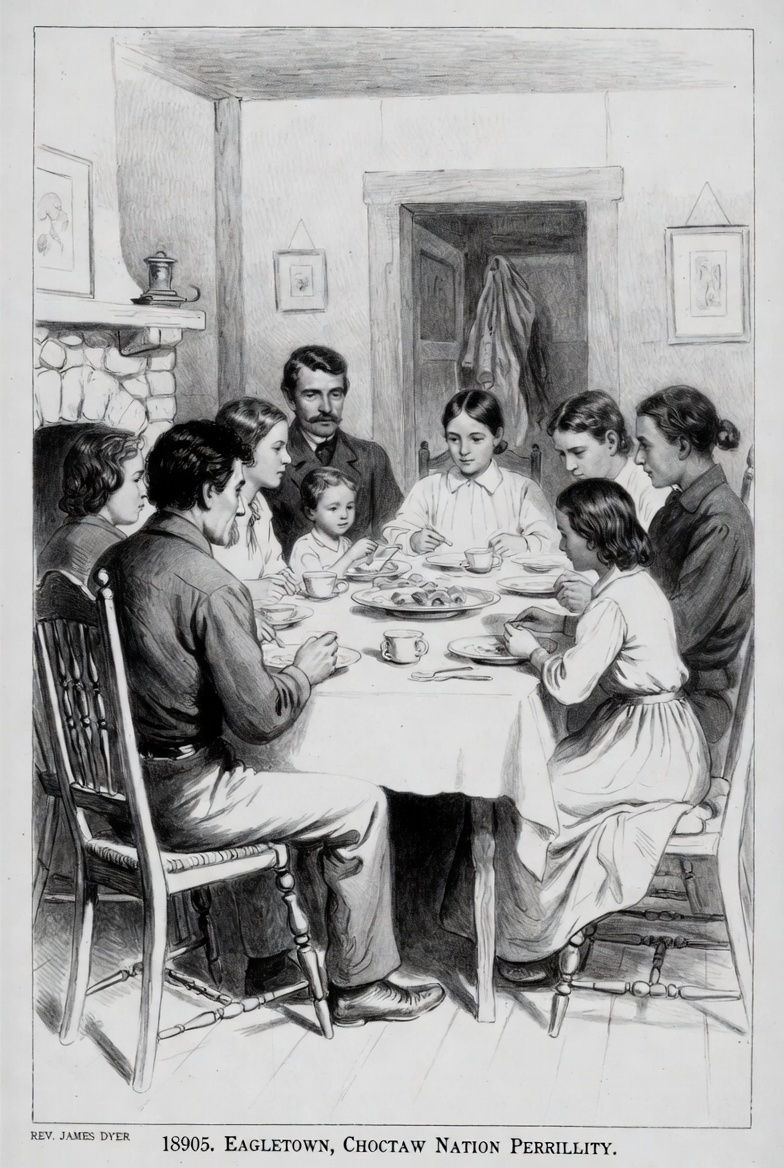
He married Malinda (Lucy Malindie) Precy Labor on December 22, 1874, at Big Lick Presbyterian Church. Records show he had several wives over his lifetime and a large family that included sons Elliston Edwin (E.E.) Dyer and others.
E.E. later operated a store and mill in Eagletown that drew customers from across the Arkansas line.
As Dyer aged and could no longer preach or work, the Presbytery discussed aid for him. Fellow minister Silas Bacon offered his own salary, saying he was young and could support himself while Dyer needed the help.
Dyer died at home in Eagletown at age 83. He is buried in Eagletown Cemetery beside family members.


