True Crime Chronicles: "I'll rob an old man of $900 or kill somebody" - Roswell Westbrook -Red Oak, Oklahoma- 1916
- Dennis McCaslin

- Jun 29
- 4 min read


Calvin H. Tomlinson was born on June 5, 1894, and died on February 7, 1916, at the age of just 21. He was buried in Cedars Cemetery, Red Oak, Latimer County. His short life ended violently in one of the more infamous early Oklahoma murder cases in the Arklahoma region.
In the fading light of a cold February evening in 1916, the Tomlinson family settled into their modest single-room home on a rented farm in the northeastern corner of Latimer County, about fourteen miles southwest of the small community of Sutter (sometimes called Calhoun) in neighboring Le Flore County.
W.S. Tomlinson (Wiley Scott Tomlinson, 1854–1936) and his wife Mary Elizabeth “Lizbeth” Wehunt Tomlinson (1846–1920), then aged sixty-nine, occupied one bed near the fireplace while their twenty-one-year-old son Calvin took the other. A pine knot burned brightly in the hearth, casting long shadows across the humble space.

Shortly after seven o’clock, the quiet night shattered as two masked men forced open the front door. Gunshots rang out. Calvin rose up in bed and was struck twice. Mary later testified that one intruder wore a scarf around his face and the other a cape. She lit a lamp and struck one of the robbers with her son’s shoe, knocking his mask away before he pistol-whipped her to the floor.
As chaos erupted, Calvin urged his mother to flee with him to the smokehouse. There, in his final moments of clarity, he gasped that one of the attackers was Jack McKennon, whom he had seen in Sutter at Christmas. The second robber held a pistol to the elderly W.S. Tomlinson’s face and demanded money.
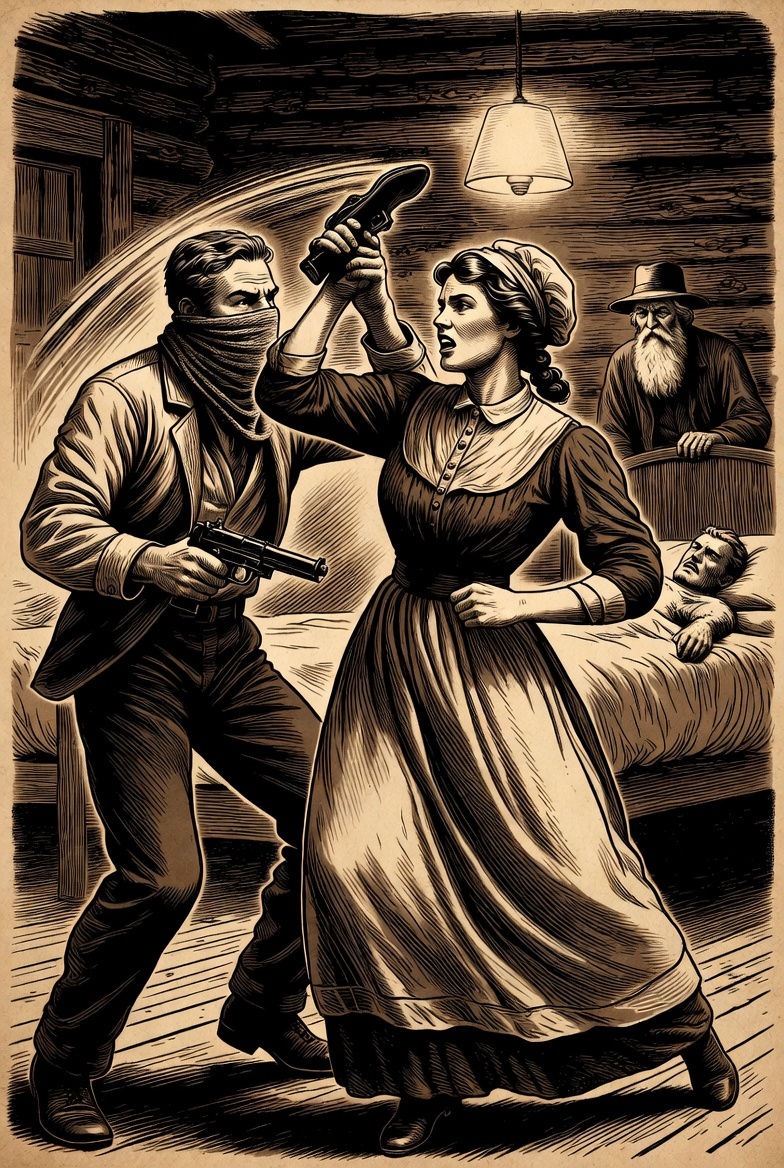
The couple surrendered about sixty dollars. The intruders fled into the darkness. Mary signaled for help by hammering on a plow, and neighbors soon arrived. Calvin lingered through the night and died the following evening.
Multiple witnesses, including G.B. Kimbrough who lived nearby, heard the dying young man name Jack McKennon as one of the shooters.
The investigation quickly focused on Roswell Westbrook and Jack McKennon, both associated with the Sutter area. Undisputed facts placed Westbrook borrowing a large dark brown horse from Finis “Skin” Herron and a saddle from W.J. Sterling on the day of the crime. He was seen carrying a large pistol.
Around the same time, McKennon hired a distinctive sorrel blaze-face pony from a local livery stable. Witnesses observed the pair meeting in Sutter and riding westward together in the direction of the Tomlinson farm.

Farmer Frank Harris saw two men on matching horses passing near his place around three o’clock that afternoon. The next day, neighbors tracked distinctive horse prints -- a large horse and the pony with its crooked ankles and deeper outside tracks -- from the road through brush near the crime scene and back toward Sutter.
When the same animals were later brought to the trail, the tracks matched perfectly.

Additional testimony proved damning. Charity Covey and her mother, Mrs. Bertha Priest, reported that Westbrook had spoken openly the day before and on the day of the robbery about plans to rob an old man, boasting they would get nine hundred dollars or three hundred “or kill somebody.”
Ben Priest noted Westbrook carrying a pistol in his waistband. Frank Taylor, who boarded with Westbrook, testified that the defendant did not occupy his bed the night of February seventh. In a recorded conversation captured by a dictaphone while the two suspects shared a jail cell shortly after their arrests, Westbrook reportedly discussed details of the shooting, hitting the old lady, and the lack of money in the house.

Westbrook and McKennon were jointly charged with murder. McKennon later pleaded guilty and received a life sentence. Westbrook went to trial separately in Latimer County District Court before Judge W.H. Brown. The jury returned a verdict of guilty and fixed his punishment at death.
On appeal to the Oklahoma Court of Criminal Appeals in the case of Westbrook v. State (decided April 30, 1918), defense counsel argued that the trial court had erred in denying an application for a commission to take depositions of nonresident witnesses and in overruling a motion for continuance due to absent witnesses.
The appellate court agreed these rulings constituted error but found the evidence of guilt so overwhelming that reversal was not required. In the furtherance of justice, and noting that McKennon had received life imprisonment as the apparent leader, the court modified Westbrook’s sentence from death to life imprisonment at hard labor in the state penitentiary. The judgment was affirmed as modified.
Calvin Tomlinson, cut down in the prime of his youth, was laid to rest in a quiet family plot in Cedars Cemetery, joining other Tomlinson kin in the soil of the River Valley he had called home. His parents survived the terrifying ordeal and lived out their remaining years in the same hardscrabble region.
The case stands as a stark reminder of the violence that sometimes visited isolated farmsteads in early Oklahoma, where horse tracks, deathbed identifications, and neighborly vigilance could bring swift, if imperfect, justice to the Arklahoma hills.


