True Case Chronicles: Fort Smith murder in 1980 led to execution sixteen years later of man who maintained innocence
- Dennis McCaslin

- Apr 21, 2025
- 4 min read


On a summer evening in 1998, Wilburn Henderson, a 56-year-old career criminal, was executed by lethal injection at the Cummins Unit in Arkansas. His final words to the warden were resolute: “I am an innocent man. God forgive you for what you do.”
Henderson’s execution closed a contentious chapter in Arkansas’ history of capital punishment, marked by significant doubts about his guilt and questions about the justice system’s handling of his case.
Nearly three decades later, we revisit the life, crimes, and lingering controversies surrounding Wilburn Henderson’s conviction and execution.
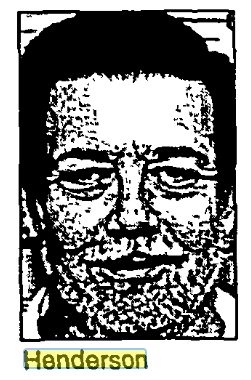
Wilburn Henderson’s life was shaped by hardship and a long history of criminal activity. Born in 1942, little is publicly documented about his early years, but court records describe him as a career criminal with a history of mental illness.
By 1980, Henderson had already accumulated a rap sheet that painted him as a habitual offender. His struggles with mental health were noted in legal proceedings, though they did not play a significant role in his defense during his trials.
Henderson’s background as a drifter with a propensity for petty crimes made him an easy target for law enforcement suspicion when a brutal murder rocked Fort Smith, Arkansas.
On November 26, 1980, Willa Dean O’Neal, a 62-year-old co-owner of a used furniture store in Fort Smith, was found dead in her shop. She had been shot with a .22-caliber pistol during what police described as a robbery that netted a mere $41.
The brutality of the crime--O’Neal was killed in broad daylight in her place of business--shocked the community t a time when murder was a rarity in the Sebastian County seat.

The prosecution’s case against Henderson hinged on circumstantial evidence. A key piece was a yellow piece of paper found on the floor of the store, bearing two phone numbers given to Henderson by a real estate agent
. This, prosecutors argued, placed him at the scene. However, no fingerprints, murder weapon, or eyewitnesses directly linked Henderson to the crime. The lack of physical evidence would later become a focal point of appeals and debates over his guilt.
Willa Dean O’Neal was a respected figure in Fort Smith, known for running the used furniture store alongside her husband, Bob O’Neal. Described as kind and hardworking, she was a mother and stepmother to children from previous marriages.
Her death left her family and community reeling, particularly as suspicions swirled about her husband’s possible involvement. O’Neal’s daughter and stepdaughter told police they believed Bob O’Neal, who had a history of violence and mental instability, might have been responsible.

They alleged he had abused Willa Dean and that she had considered divorcing him before her death. These claims, however, were not thoroughly pursued during Henderson’s initial trial.
Henderson was arrested shortly after the murder and convicted in 1981. The prosecution portrayed him as a desperate criminal who killed O’Neal in a botched robbery. However, the case was far from airtight.
In 1991, the 8th Circuit U.S. Court of Appeals in St. Louis overturned Henderson’s conviction, citing “significant doubt” about his guilt. The court pointed to five other possible suspects, with Bob O’Neal as the primary alternative.
Court records revealed that Bob O’Neal owned a .22-caliber pistol--the same type used in the murder--and claimed it was stolen after the crime, preventing ballistic testing. O’Neal’s history of paranoid delusions, for which he was committed to the Arkansas State Hospital in 1985, further fueled suspicions.

The appeals court criticized Henderson’s defense attorney for failing to investigate these alternative suspects, granting Henderson a new trial. Yet, in 1993, a second jury convicted him again, relying heavily on the same circumstantial evidence. Despite the appellate court’s earlier ruling, the prosecution maintained that Henderson was the sole perpetrator, and the case proceeded toward execution.
Prior to his second trial, Henderson was offered several plea deals that would have spared his life, including one that would have allowed him to apply immediately for parole. But Henderson turned them down. According to his lawyer, he never wavered on maintaining his innocence.

On July 8, 1998, Wilburn Henderson was put to death, becoming one of 31 people executed in Arkansas since the reinstatement of the death penalty in 1976. His execution drew little media attention at the time, overshadowed by other high-profile cases.
However, a 2000 investigation by the Chicago Tribune highlighted Henderson’s case as emblematic of flaws in the capital punishment system, noting the “powerful evidence” implicating Bob O’Neal and the lack of direct evidence against Henderson.
Bob O’Neal, who died of a heart attack in 1992, was never formally charged or tried in connection with his wife’s murder. The absence of DNA evidence--unavailable at the time of the crime--left critical questions unanswered. Unlike modern cases where DNA testing has exonerated wrongfully convicted individuals, no such evidence was preserved to conclusively determine Henderson’s guilt or innocence.

Looking back, the execution of Wilburn Henderson raises uncomfortable questions about the reliability of Arkansas’ death penalty process in the 1980s and 1990s. The case exemplifies issues that have long plagued capital punishment: inadequate legal representation, reliance on circumstantial evidence, and the failure to thoroughly investigate alternative suspects.
Henderson’s claims of innocence, echoed by the federal appeals court’s concerns, resonate with stories of other death row inmates later exonerated, such as Rickey Dale Newman, freed in 2017 after nearly 16 years in Arkansas’ prison system.

For the family of Willa Dean O’Neal, the execution may have brought closure, but the doubts surrounding the case linger. Her daughter and stepdaughter’s suspicions about Bob O’Neal, coupled with his documented instability, suggest the possibility that justice was not fully served.
For Henderson, a man with a troubled past and no voice left to plead his case, his execution remains a stark reminder of the irreversible consequences of a flawed system.


