Stone Gardens: Baseball journey took "Jelly" from Russellville all the way to centerfield for the Chicago American Giants,
- Dennis McCaslin

- Apr 12
- 3 min read


Floyd Gardner spent his first fourteen years on Orange Street in Russellville. The road later became South Jonesboro Avenue .
His parents, Alec Floyd Gardner and Josie Smith Gardner, raised him and his younger sister Annie in a segregated town of fewer than four thousand residents. His father labored on farms along the Arkansas River Valley. The family home stood in a neighborhood where open lots doubled as ball fields for Black children and adults.
Gardner attended the Russellville Public School through eighth grade. In 1910 his family sent him to Arkansas Baptist College in Little Rock. The institution served as both A boarding high school and college for African American students. He finished high school and continued for two years of college courses.
On the campus baseball field he joined the team as an infielder. A coach spotted his cross-handed batting grip and corrected it, giving him the foundation for a professional stroke.
Dy 1913, Gardner played for the Hot Springs Giants, one of the strongest semi professional teams in the region. Summer breaks carried him to Texas, where he joined the Longview Giants in 1916 and the Texas All Stars in 1917. The All Stars barnstormed against top Black clubs.
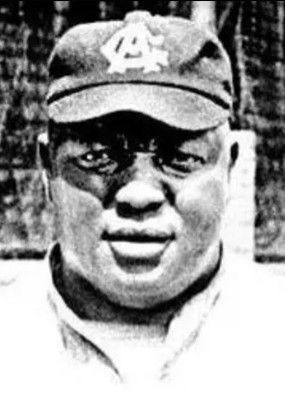
In one game against Rube Foster's Chicago American Giants, Gardner recorded three hits and scored a run in a narrow defeat. That showeng planted his name in Foster's mind.
The United States entered World War I. Gardner registered for the draft in June 1917 and listed his occupation as ballplayer. He enlisted in the Army and served as a private in Company F of the 365th Infantry Regiment, 92nd Division. The unit shipped to France and fought in the Meuse Argonne Offensive during the closing months of the war.
A December 1918 notice in an Arkansas newspaper listed him as missing in action. He returned safely aboard a troop ship in February 1919 and received discharge the next month.

Gardner moved to Chicago after the war. He worked restaurant and hotel jobs while resuming baseball. In 1919 he signed with the Detroit Stars. The following season he joined the Chicago American Giants in August and locked down the right field spot as their leadoff hitter.
The team won the inaugural Negro National League pennant. Gardner remained with the American Giants for most of the 1920s and helped secure additional pennants in 1921 and 1922. He also played for the New York Lincoln Giants, spent time with the Homestead Grays, and returned to Detroit in 1931.

Standing five feet seven inches and weighing 160 pounds, Gardner built his reputation on speed and craft. He batted left-handed and threw right-handed. His approach featured sharp line drives, drag bunts, hit-and-run execution, and relentless base running.
He worked counts for walks and turned singles into extra bases. In the outfield, he covered ground with range and delivered a strong, accurate arm.
Contemporary accounts placed his career batting average near .281 with a .376 on base percentage across more than seven hundred documented games. He led the league in stolen bases one season and ranked near the top in others.
He also spent winters in the Cuban League.His Arkansas roots never faded from the narrative. Arkansas Baptist College had shaped his early discipline. The Hot Springs Giants had tested him on home soil. Local followers in Pope County tracked his progress through sparse newspaper mentions.
The same river valley that produced him watched as he competed at the highest level available to Black players of the era. Rube Foster, the founder of the Negro National League, mentored him personally and emphasized the mental side of small ball that matched Gardner's instincts.
After his playing career wound down around 1931, Gardner stayed in Chicago. He found steady work with the railroad and lived without fanfare. In 2006 he appeared among ninety-four nominees in a special Baseball Hall of Fame review of Negro Leagues candidates.
He did not receive election. Teammates and opponents, including longtime American Giants manager Dave Malarcher, described him as one of the finest leadoff men of his generation. The absence of his name from the Hall of Game underscores how many talents from that segregated era still wait for full recognition.
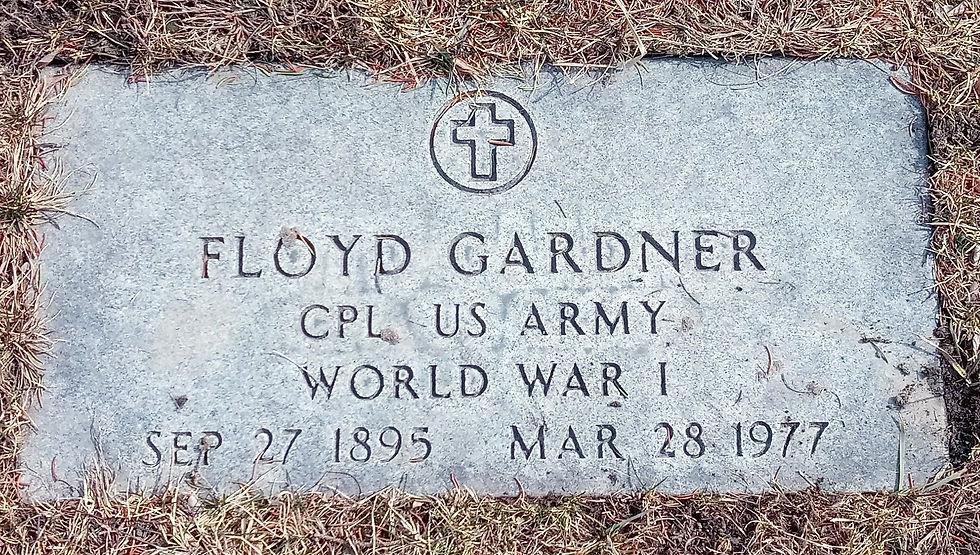
Gardner died in Chicago on March 28, 1977, at age eighty one. He rests at Saint Mary Catholic Cemetery and Mausoleum in Evergreen Park, Illinois. A military headstone in Section SP, Block 4, Lot 5, Grave 1 identifies him as a corporal in the United States Army from World War I.
The marker stands far from the Arkansas River Valley fields where his journey started.


