Stone Gardens: A western Arkansas WWII Hero lies in a cemetery at a crossroads in rural Sebastian County
- Dennis McCaslin

- 54 minutes ago
- 3 min read


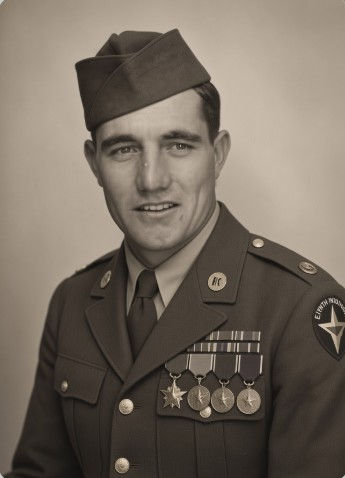
One of the most decorated World War II veterans who survived some of the most horrific days in the war to end all wars returned home to the red clay dirt and ancestral roots of the Natural State, where he remained until the end.
Paul James Childress was born on October 20, 1922, in Jenny Lind, one of many a small coal mining communities that shaped much of western Arkansas life in the early twentieth century.
Census indexes from the area point to James Delbert Childress and Lillie Bell Hawthorne Childress as his speculative parents. A 1940 household in Marion Township, Sebastian County, lists J. D. Childress born about 1891, Lellie Childress born about 1896, Paul Childress born about 1923, and Deloris Childress born about 1932, ages and names that align with Paul and his known sister.

Supporting records identify this couple as the parents of other local Childress children of matching generation, making them the strongest available match though confirmation would require the original schedules.
He grew up amid the hard work of mining families and rural routines during the interwar years. He later married Verla Jean Childress, who was born in 1929 and died in 1988. They raised a daughter, Paula Murphy of Dayton, and two sons, Bart of Downey, California, and Jim of Blythe, California.
He was also survived by a sister, Deloris Starkey, and a brother, Art Childress of Fort Smith, Arkansas, along with grandchildren and great-grandchildren.
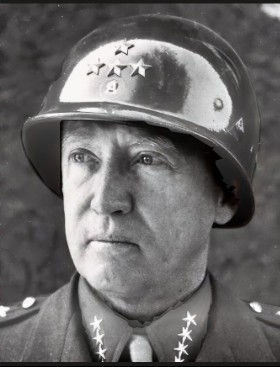
As a young man from this corner of Arkansas, Childress entered the United States Army and served in World War II with the Fifth Infantry Division, known as the Red Diamond or Red Devils, under General George S. Patton’s Third Army.
His unit was Company G. The division had trained extensively before crossing the Atlantic, including service in Iceland and further preparation in England and Northern Ireland. It landed on Utah Beach in Normandy on July 9, 1944, more than a month after the initial invasion, and soon took up defensive positions near Caumont.

From there, the Red Diamond launched its first major attack at Vidouville on July 26 and pushed southeast of Saint-Lo. The division then raced across northern France, capturing Angers in early August, Chartres with armored support, crossing the Seine at Montereau, the Marne, and seizing Reims and positions east of Verdun in a matter of weeks.
Supply shortages briefly halted the advance before the costly fight for Metz began in September. Attempts to cross the Moselle met fierce resistance, with an early effort near Dornot repulsed and a successful bridgehead later secured near Arnaville at high cost.

The division battered the fortified city and its surrounding forts through the fall, finally reducing Metz in late November after weeks of grinding combat. It crossed into Germany in early December, reached the Saar, and was then rushed north to help contain the southern flank of the German Ardennes offensive in Luxembourg during the Battle of the Bulge.
In early 1945 the division forced crossings of the Sauer, cracked the Siegfried Line, advanced to the Rhine, and crossed that river near Oppenheim on the night of March 22 with little initial opposition. It cleared Frankfurt, helped reduce the Ruhr Pocket, and drove eastward into Czechoslovakia by the time hostilities ended in May.

Across roughly 270 days of combat, the division advanced more than two- thousand miles through five major campaigns. Such continuous frontline infantry service in the face of determined German defenses, counterattacks, fortified positions, winter weather, and river crossings produced the conditions under which a soldier could accumulate multiple decorations.
Childress received the Silver Star for gallantry and intrepidity in action against the enemy, as recorded in Headquarters Fifth Infantry Division General Orders Number 39 of 1945, along with four Bronze Stars for valor or meritorious achievement in combat and two Purple Hearts for wounds sustained under fire.

These awards mark him as one of the more highly decorated soldiers from western Arkansas in the European theater, reflecting both specific acts of courage under fire and the sustained hazards of months spent in the line with a hard-fighting division of Patton’s army.
After the war, he returned to the same land he had helped protect. He worked for Latchford Glass and lived out his later years in Dayto.
Paul James Childress died at home on March 2, 2011, at the age of eighty-eight. Funeral services were held in Greenwood, and he was laid to rest at Union Ridge Cemetery in Crossroads, Sebastian County, beside his wife.


