Our Arklahoma Heroes: A Missouri native who won the Medal of Honor chose to be buried in rural Benton County


Marcus Waldo Hatler was born on January 6, 1894, in Bolivar, Polk County, Missouri, the elder of two sons of Troy Cornelius Hatler and Rosamund B. Wilcox Hatler, called Rose. His father was a banker and a dealer in real estate, and the household had the steadiness that came with that work in a county-seat town still tied to farms, mills, and the slow business of southwest Missouri.
A younger brother, Waldo Harold Hatler, grew up beside him. In time the family moved to Neosho, in Newton County, and Waldo took his place in the world his father had built, behind a counter and among ledgers rather than in a courtroom.
He had the schooling for the law. In 1914 he finished at the University of Michigan Law School, yet he never hung out a shingle. He went back to the bank and the real estate trade in Neosho, the work he already knew. When the United States entered the World War he tried for a commission in the Navy and was turned down for medical reasons.
He could have kept the exemption that his situation allowed. He waived it. He was inducted from Neosho, sent into the Army, and assigned to Company B, 356th Infantry, 89th Division. By the last autumn of the war he was a sergeant, Army serial number 2199881.

On November 8, 1918, near the French village of Pouilly, the regiment was stopped at the Meuse. The advance toward Germany had run into the river, swollen by autumn rain, with German positions on the far bank held in force and poorly known.
Commanders needed the strength and the layout of those lines before men were committed to a crossing. Volunteers were called for. Hatler was the first to offer himself.
He and another soldier went into the water. Midstream the other man was seized with cramps and drowned. Hatler went on alone. He reached the German side, moved through the ground opposite his own company, and reconnoitered positions that were occupied in strength. He noted what he had been sent to learn, then turned back into the same current and swam it again. He brought the report to his own bank.

The War Department citation, published in General Orders No. 74 in 1919, recorded the act in the language of the award: he was the first to offer his services for the dangerous mission, he reached the German lines after the soldier who started with him drowned in midstream, and alone he carefully and courageously reconnoitered the enemy's positions, which were held in force, and again successfully swam the river, bringing back information of great value.
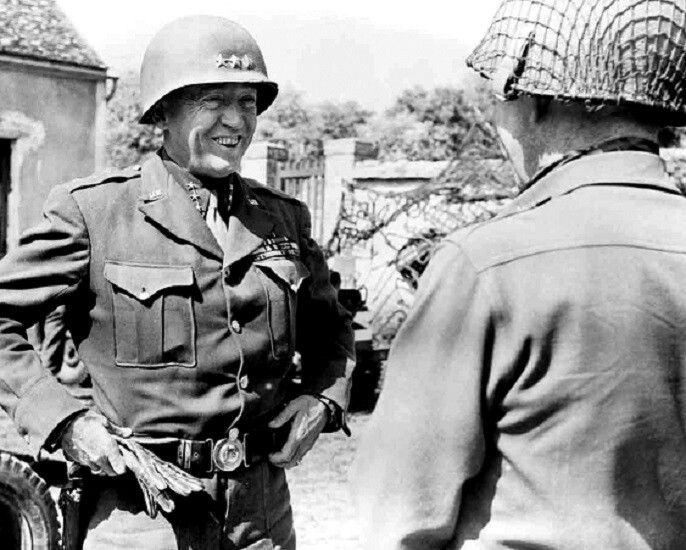
The Medal of Honor was presented in 1919 at a park in Kansas City, Kansas, by officers from Fort Leavenworth. He also received the Italian Croce di Guerra. Years later the reconnaissance was counted among the war stories General George S. Patton ranked with his hundred best.
The armistice came three days after the swim. Hatler went home to Neosho and took up banking and real estate again. On October 29, 1921, in Springfield, Missouri, he married Mary Ruth Miller. Later records place him for a time in Enid, Oklahoma, but Neosho remained the town of his life.

On April 11, 1951, in Benton County, Arkansas, he married Margaret Yates, who would outlive him and, in 1968, bring out The M. Waldo Hatler Story through the Ozarkana Book Press of Neosho, drawing on his own account of the years
. Public notices of other marriages are less firmly fixed, and a daughter is sometimes mentioned and never confirmed.
His parents died in Missouri, his father in 1932 and his mother in 1955. His brother died in 1944. Hatler himself lived on in Neosho, the last surviving Missourian of the World War who held the Medal of Honor, and he stood once as an honorary pallbearer for the unknown soldiers of the Second World War and the Korean War.

Several years before his death he crossed into Arkansas and chose his ground.
The place was the Grand Army of the Republic Cemetery at Sulphur Springs, in Benton County, on the hill above town near what is now about 6000 Skyline Drive, County Road 446, some forty miles from Neosho.
He had a large stone set there while he was still living. He said he preferred that quiet mountaintop to a military cemetery. The marker was cut to read Congressional Medal of Honor, Company B, 356th Infantry, 89th Division, and beneath it the line, A - Salute to Thee My Lord and Master.

He died on August 31, 1967, at the age of seventy-three, in Neosho. On Sunday, September 3, 1967, full military rites were held at the cemetery he had already claimed. The Veterans of Foreign Wars post from Neosho conducted the service.
The Sulphur Springs Legion post was represented by Jim Lynn and Jesse Dills. He was buried on the hill he had picked, under the stone he had ordered, a Missourian at rest on an Arkansas ridge rather than in the ordered rows of a national cemetery.