Our Arklahoma Heritage: A town in McCurtain County had to move three miles west to make way for Broken Bow Lake



The cabins start a few miles before the water. On U.S. 259 north of Broken Bow, the second Hochatown is a strip of rental lodges, saloons, gift shops, and a distillery built for people who came to see Broken Bow Lake.
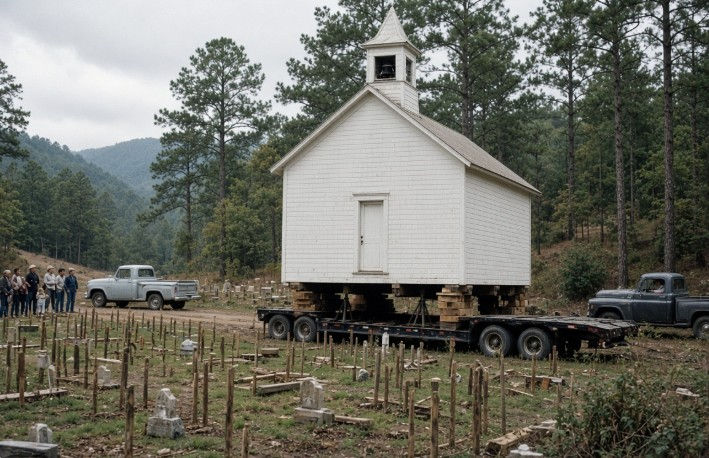
The town that first carried the name is not on that highway. It sits under the lake, on the old bank of the Mountain Fork, and the church and cemetery that were saved were moved about three miles west to higher ground beside the same road.
The name is older than the timber town. A historical marker at the relocated Hochatown Union Church and Cemetery says the place was named for a Choctaw man, Hocha, who arrived on the Trail of Tears in 1833. The town’s own account puts Choctaw families on the Mountain Fork in the 1830s, after removal from Mississippi.
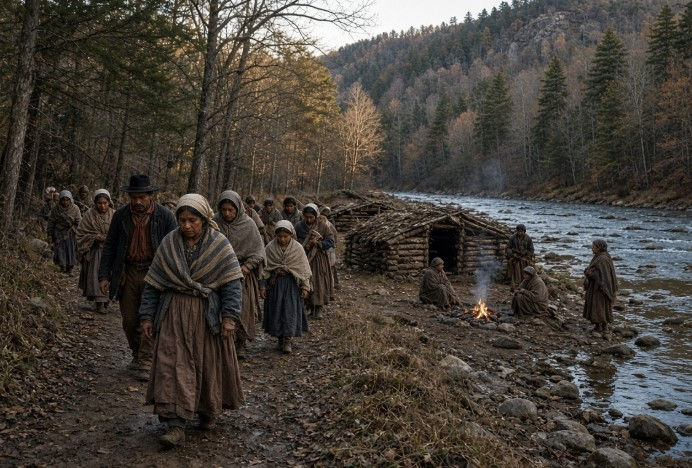
This was Choctaw Nation land, in Bok Tuklo County of the Apukshunnubbee District. A local marker also notes older use of the river: spear points from prehistoric hunters, and a Caddo presence long before the Choctaw settlement. Mayor Dian Jordan has said records show some form of postal service in the area as far back as March 1832. The post office that people remember came later.
Twelve Choctaw families were in the valley by the 1880s. Growth followed the timber. Like Broken Bow, Hochatown rose with the Choctaw Lumber and Coal Company, later Dierks Forests. The company ran a railroad spur from Hochatown to Eagletown so logs could get out of the mountains.

A post office opened in 1894. By 1900 the place was busy enough to be called a town, with a church, a school, and a store that served farms along the river. White settlers were moving in around the turn of the century.
At statehood in 1907 it was a social center for families in the hills, but it never incorporated. At its peak the post office served about 175 families, mostly farmers, ranchers, and timber workers on the Mountain Fork and in the nearby Ouachitas.
Arnold C. Kincaid was the last postmaster. His great-nephew, the Oklahoma historian Bob Burke, says Kincaid held the job for more than 35 years. The Forest Heritage Center, which keeps the donated post office collection through the Burke family and Lois Kincaid-Burke, puts the stretch at more than 41 years. When ZIP codes arrived in 1962, old Hochatown was given 74742.
The timber did not last. In the 1920s and 1930s the best pine was cut and the lumber company shifted to other tracts. What remained was a reputation. Clean water, corn, and distance from Muskogee made the valley a whiskey district. A federal agent is said to have called Hochatown the moonshine capital of Oklahoma, and a 1930s Daily Oklahoman piece used the same phrase. Some later visitors heard “hooch” in the name. The older record points to Hocha.
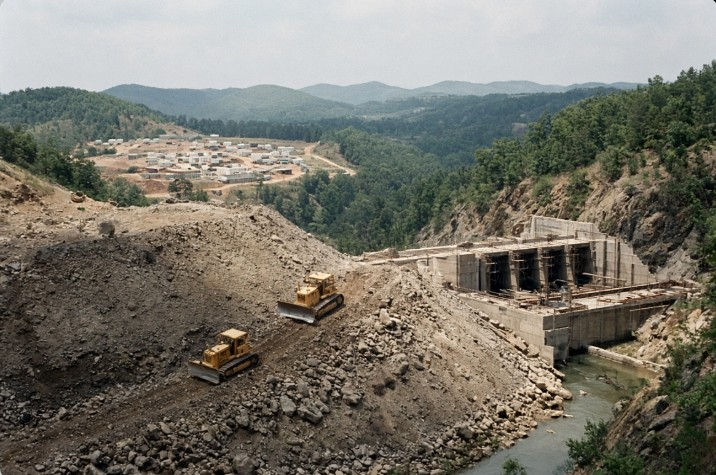
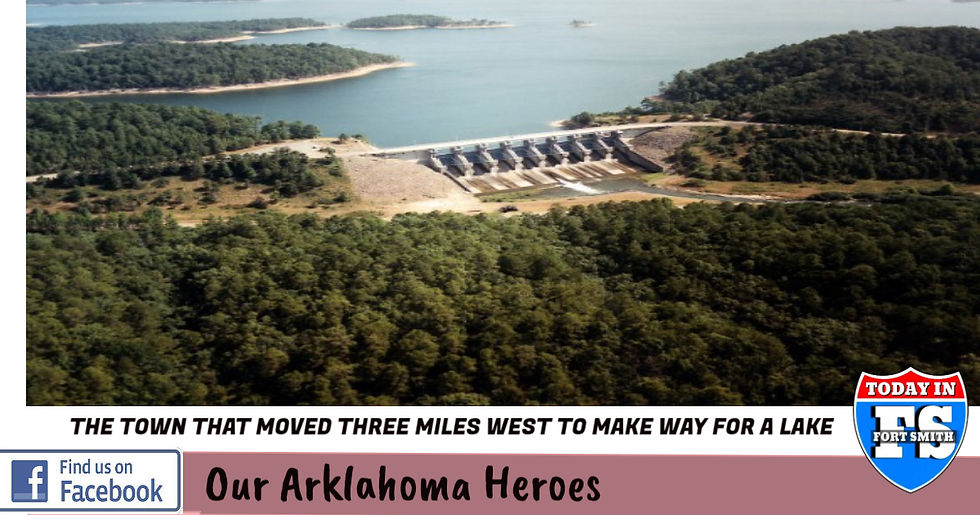
The end was a dam, not a market. Congress authorized Broken Bow Dam for flood control, water supply, and power. The Corps of Engineers broke ground in 1961 on an earth and rockfill structure 2,820 feet long and 225 feet above the streambed. Residents were moved in the early 1960s
. The post office closed in 1963, or by early 1964. The last family left the old site in 1966. The church and the cemetery were taken to the highway. Houses and the store were not. The pool began filling in 1968. The first full pool came in 1970, the same year the two hydropower units came online and Beavers Bend State Park was expanded. Divers still say pieces of the old town are visible on the bottom. Published accounts disagree on the depth over the site. They do not disagree that the original streets are gone.
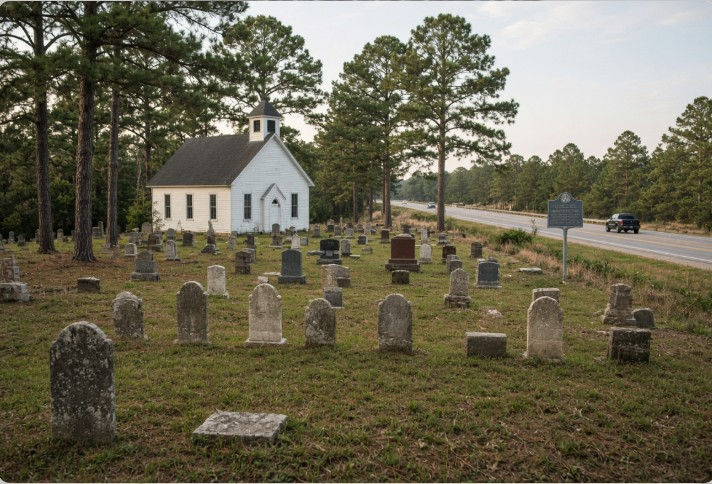
The name moved with the church. A second Hochatown grew about a mile west of the lake, at the entrance people actually use, and it stayed a Broken Bow address. The lost ZIP code, 74742, became 74728. For decades the cabin trade boomed without a town government. Beavers Bend draws more than a million visitors a year. In November 2022 residents voted 129 to 18 to incorporate.
In 2025 Senator James Lankford filed a bill to make the Postal Service give the name its own ZIP code again. Burke’s line on that fight is that the government retired his great-uncle when it closed the old office, and the town on the highway is still trying to get the address back.
What a visitor sees is the second town: the bourbon shop, the cabin rows, the trout water below the dam. The first Hochatown is a few miles east of that strip, under Broken Bow Lake, with its postmaster’s name on a donated collection and its dead on the hill beside U.S. 259.