Our Arklahoma Heritage:The death of a five-year-old daughter in 1945 sent a Stamps Quartet singer down a different path


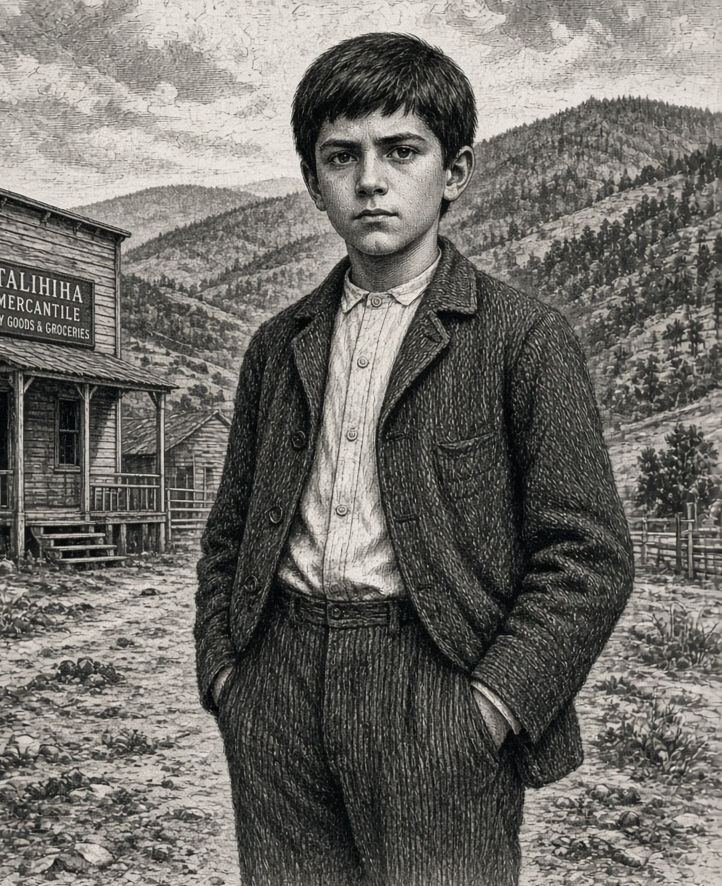
Wilkin Beard Bacon was born on April 27, 1908, in Talihina,the son of Colton and Josephine Bacon of Choctaw heritage. His life spanned the rise of professional southern gospel quartets on radio, the writing of enduring hymns, decades of preaching and song leading in Churches of Christ, and a return to the small town where he began.
His mother died before he turned twelve, and his father later remarried. He grew up with an older brother named Richard, a younger brother named Thomas, and a half-sister, Luvina. From an early age he wanted nothing more than to learn how to sing. He sought out every singing school he could reach and took every chance to raise his voice in public.

On May 23, 1931, at the age of twenty-three, he married Mary Sue Painter, a schoolteacher from the nearby town of Albion. Their marriage would last fifty years. In 1937, while living in Sherman, Texas, he was baptized into Christ by Burton Coffman. The faith that took root that day shaped everything that followed.
By the late 1930s and early 1940s, his powerful voice had carried him into the professional gospel-quartet world. He sang baritone with the Lone Star Quartet, a Stamps-Baxter group heard over radio station KWFT in Wichita Falls, Texas, and later over the powerful WPTF in Raleigh, North Carolina. He also performed with the Frank Stamps Quartet and other Stamps-affiliated groups.
Because of his Choctaw heritage, he acquired the nickname “Big Chief,” and the name stuck for the rest of his life. Hundreds of thousands of listeners across the South and beyond came to know the sound of that booming voice on the airwaves.

The traveling life of a professional quartet singer began to pull against other loyalties. In 1943, while wrestling with the tension between the road and regular attendance at worship, he wrote both the words and the music of the hymn that would become his best-known work, “Can He Depend on You?”
Copyrighted that year by Stamps-Baxter and first published in the book Heaven’s Lamp, the song asked a searching question: after all that Christ had done, could the Lord count on the singer’s faithfulness?
In January 1945, the decision became final. While the family was living in Dallas, their five-year-old daughter Barbara died.

Bacon left the Stamps organization and the professional quartet circuit. He told others that heaven seemed sweeter now that Barbara was there, and that he wanted the Lord to be able to depend on him to do His will on earth.
He turned his full energy to preaching the gospel and leading the singing in Churches of Christ.
His first full-time work was with the Sunset Church of Christ in Dallas. Over the next decades he served congregations in Hampton Place and Oak Cliff in Dallas, Fifth Avenue in Corsicana, Abraham Street and Park Row in Arlington, Northside in Duncan, Oklahoma, College Terrace in Fort Smith, Arkansas, and others.

In Fort Smith he labored with the College Terrace Church of Christ, a congregation that had been formed in 1958 when growth at the Midland Boulevard church led the elders to build a second meeting place. That building stood at the corner of Grand Avenue and Waldron Road.
Roughly half the Midland Boulevard members chose the new location, and the two churches worked side by side for years. Decades later, in 1981, College Terrace merged with the group that had continued from Midland Boulevard (by then meeting on Windsor Drive) to form the West-Ark Church of Christ.
The original College Terrace building was eventually torn down, and a larger facility rose on the same Waldron Road site, where West-Ark continues today.

Wherever Bacon went he taught singing schools, conducted training series in the rudiments of music, directed choruses, and led the singing for hundreds of gospel meetings. In 1946 he formed the Bacon Male Quartet with Paul Epps, Tex Stevens, and Ray Wood; they sang for the Lord and recorded many of their songs. He also sang at times with Lloyd O. Sanderson and his son Leon, and later with the Gospel Hour Quartet associated with V. E. Howard’s International Gospel Hour.
In the final active decade of his ministry he returned to the little church in his hometown of Talihina. There his voice, remembered by those who sat under it as able to fill the small building, continued to lead the singing.

In later years he sang with a local quartet that included Dr. and Mrs. Robert Hampton and Mrs. Mary Hand. He and Mary celebrated their fiftieth wedding anniversary on May 23, 1981.
A few months later, after an extended illness, he died at home on October 9, 1981, peacefully in his sleep at the age of seventy-three. He was survived by Mary, by their daughter Linda Campbell, and by a grandson, Jeff.

The funeral was held three days later in the auditorium of the Talihina church he had served. He was buried in the Old Talihina Cemetery beside the place where he had been born.
Mary lived until 2011, reaching the age of 103, and rests beside him under the shared inscription that records their long marriage.
Those who knew him remembered not only the stage name and the radio voice but the teacher who loved to show ordinary people how to open their mouths in praise, the preacher who stayed close to the gospel, and the man whose own question still echoes in the hymnbooks of the Churches of Christ: Can He depend on you?


