Our Arklahoma Heritage: “Greater love has no one than this: to lay down one’s life for one’s friends.”— John 15:13
- Dennis McCaslin

- 1 hour ago
- 4 min read


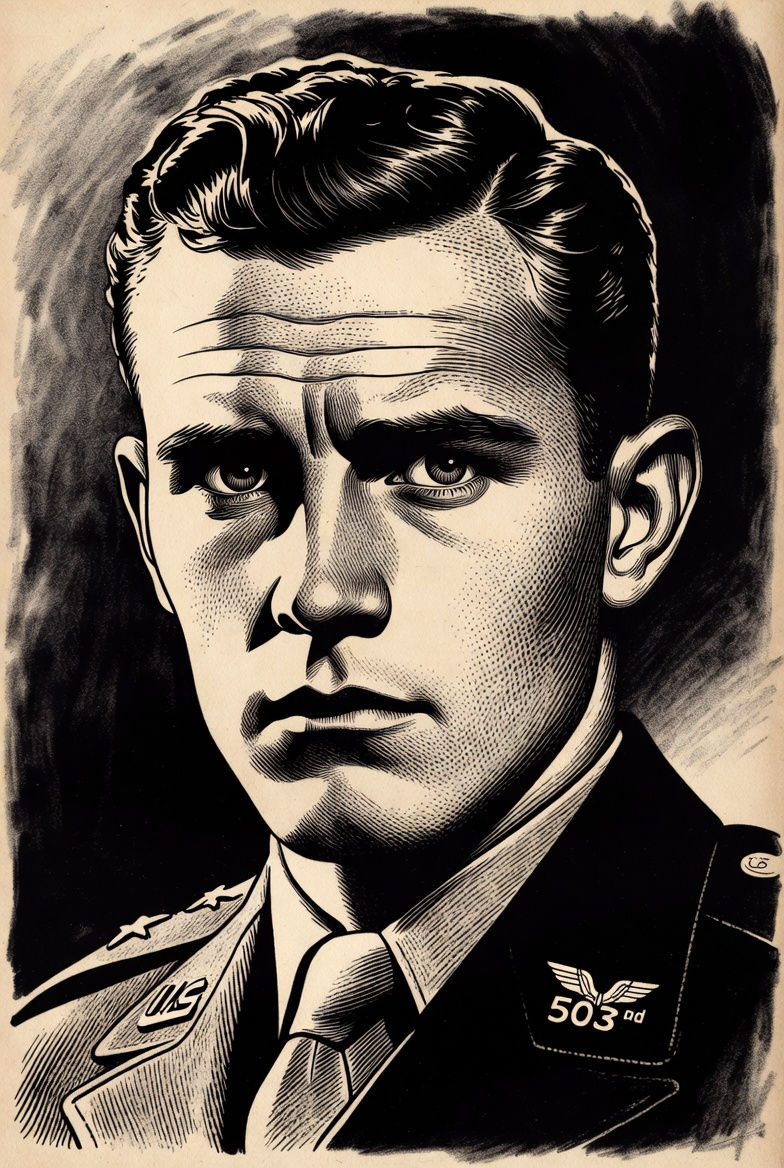
In the dense, rain-soaked foothills of Negros Island in the central Philippines, on May 22, 1945, a young Staff Sergeant from rural Arkansas made a split-second decision that saved the lives of his comrades.
John Marlow Guthrie, a 27-year-old paratrooper with the elite 503rd Parachute Infantry Regiment, threw himself onto a live grenade detonated by friendly fire. The blast ended his life but spared those around him.
His selfless act went unheralded by medals--his commander reportedly did not believe in them--but it earned eternal gratitude from the men he protected, including fellow trooper Chet Nycum, who later recalled, “There’s no doubt in my mind that S/Sgt. John M. Guthrie… saved my life, and the lives of others.”
Guthrie’s story is one of quiet courage rooted in the red-dirt hills of Scott County. Born on July 14, 1917, in the tiny community of Lewis (near Abbott), he was the eldest son of Wilbert Lero Guthrie (1890–1950) and Della Lorene Hood Guthrie (1895–1982), who married on July 1, 1916.

The Guthries were a typical Scott County farming family—hardworking, close-knit, and deeply tied to the land in one of Arkansas’s most rural and rugged counties. By the 1930 U.S. Census, the family was living in Lewis Township, where Wilbert supported the household through farming and local labor.
John grew up alongside siblings including Wilbert Lee (1921–1986), Albert Elton (1919–1983), and Bernard Milton Sr. (1923–1975), learning the values of self-reliance, family loyalty, and community that would later define his final act.
Education in early 20th-century Scott County was modest but formative. John attended the small two-room schools serving Lewis and Abbott before possibly continuing at the consolidated schools in Waldron or nearby. Like many boys in the Ozarks during the Great Depression, he balanced schooling with farm chores--tending crops, livestock, and the family’s modest holdings.

By the time he registered for the draft in 1940 (listed as a resident of Abbott), he was a young man of the land, shaped by the same resilient spirit that had sustained Scott County families through generations of pioneering hardship.
When war came, Guthrie answered the call. He enlisted in the U.S. Army (service number 37100662) and was selected for the demanding airborne program. He joined Company G of the 503rd Parachute Infantry Regiment, part of the 503rd Regimental Combat Team—one of the first and most storied airborne units in the Pacific Theater.
The 503rd earned its reputation through grueling campaigns: fierce fighting in New Guinea in 1943, followed by the legendary combat jump onto the fortified island of Corregidor (“The Rock”) in February 1945, where they helped recapture the iconic fortress from Japanese forces in one of the war’s most audacious airborne operations.
By spring 1945, the regiment had moved to Negros Island as part of the broader liberation of the Philippines. The paratroopers operated in rugged, mountainous terrain--rain forests, steep ridges, and dense jungle--supporting ground forces of the 40th Infantry Division against dug-in Japanese positions. They relied on small arms and close-quarters fighting, often patrolling in small squads through unforgiving country.

On that fateful May day, Guthrie’s patrol was moving through the foothills when tragedy struck from an unexpected quarter. An American unit (believed to be from the 40th Division) opened fire in a case of mistaken identity.
A bullet struck a grenade on Guthrie’s webbing, dislodging the pin. As the explosive fell, he did not hesitate. He dove onto the grenade, absorbing the full force of the blast to shield his squad.
His sacrifice was instantaneous—and, according to unit accounts, went unrecognized with any formal decoration due to command policy. Yet his comrades never forgot. The 503rd’s own records and veteran recollections preserve his heroism as a defining moment of the Negros campaign.

Guthrie was laid to rest at the Manila American Cemetery and Memorial in the Philippines—Plot G, Row 1, Grave 36—alongside thousands of other fallen Americans.
Back home in Scott County, his family joined the ranks of Gold Star households. His parents, siblings, and the tight-knit communities of Lewis, Abbott, and Waldron mourned a son, brother, and neighbor who embodied the county’s quiet valor.
John Marlow Guthrie never sought glory. He was a farmer’s son, a paratrooper, and ultimately a protector. In an era when Scott County sent dozens of its young men to war--with names like his appearing on local honor rolls and in county histories--his story stands out for its profound selflessness.
Staff Sergeant John Marlow Guthrie qualifies as a Gold Star veteran. The Gold Star designation--and its accompanying flag or banner--is awarded to the next of kin of U.S. military members who die in the line of duty during wartime. Guthrie’s family received this honor.

He was also eligible for the Purple Heart, the standard award for those killed or wounded by enemy action. No higher individual valor medals (such as the Silver Star) were awarded, consistent with accounts that his commander did not routinely recommend such commendations.
Today, as Scott County and the nation remember its World War II heroes, Guthrie’s legacy endures not in bronze or headlines, but in the lives he saved and the example he set for future generations of Arkansans: that true courage often whispers from the hills, unnoticed until the moment it matters most.