Cole Case Files: Myth or Mystery - Is there a cache of gold hidden on a rural mountaintop in Madison County?
- Dennis McCaslin

- Jul 4
- 4 min read


In the rugged Ozark hills of Madison Count where the White River carves through limestone bluffs and dense hardwood forests, legends of lost gold have lingered for generations. One of the most intimate and poignant tales centers on a modest cabin near the mouth of Baldwin Creek, where an unnamed elderly man supposedly concealed a fortune in gold coins during the chaos of the Civil War.
This is not a grand conquistador hoard or outlaw cache but a deeply personal story of fear, secrecy, and a widow’s desperate search--elements that make it a classic unsolved Ozark mystery.
Madison County was no stranger to violence during the Civil War. Remote and sparsely settled, the area saw guerrilla warfare, bushwhackers, and roaming bands that preyed on civilians. The distant crack of gunfire often echoed through the hollows, striking terror into families clinging to their homesteads along the White River and its tributaries like Baldwin Creek.
In this environment, an old man living near the mouth of Baldwin Creek--his cabin close to where the creek joins the White River--amassed or held a “wealth of gold,” according to local lore. Details about his identity, exact age, or how he acquired the gold remain sketchy. He may have been a farmer, merchant, or someone who benefited from pre-war trade or hidden savings.
What matters is his fear: with lawless raiders active, he hid his treasure not in a dramatic cave or buried chest, but right under his mattress in the bedroom—a practical, last-resort spot for a man of limited mobility.
As the war dragged on and threats intensified, the old man grew increasingly paranoid. He reportedly moved the purse of valuable gold pieces, likely coins including gold eagles or other specie common in the era, from its hiding place under the mattress and carried it up the nearby mountain.
The terrain is steep and rocky, with bluffs and hollows typical of the Ozarks, but accounts emphasize he couldn’t have climbed very high up the mountain or hidden the gold a great distance from his cabin. This suggests the cache is relatively close—perhaps within a short, arduous hike from the White River confluence. He died sometime after the war without revealing the new location to his wife. She was left in poverty and searched frantically for the gold that could have secured her future.
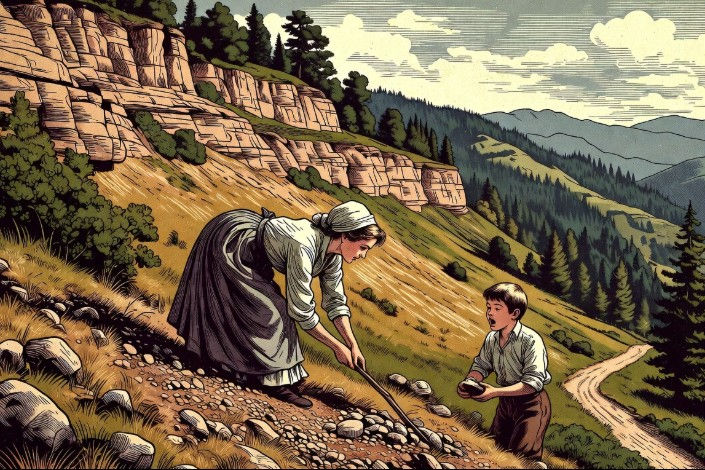
According to the story, she enlisted help from neighbors, including a young George Brashears, who was just a boy during the Civil War era. Brashears later recounted turning over almost every rock on the mountain in the search, but they found nothing. The widow’s need was real and pressing; the failure left a lasting mark on local memory.

The most detailed retelling comes from Walter Stansell, a resident of St. Paul in or near Madison County, who shared it in oral history circles. Stansell heard it directly from the late George Brashears, who had firsthand involvement as a boy helping the widow. This chain of transmission gives the story a stronger local pedigree than many vague Ozark treasure yarns.
It appeared in online forums like Treasurenet, preserving it for modern treasure enthusiasts. No contemporary documents, newspapers, or official records appear to corroborate specific names or exact dates, which is typical for such folk tales passed down in the hills. They thrive i
n the gaps of written history, fueled by the region’s isolation and oral culture.
This tale fits a broader pattern of Civil War-era lost treasures in Arkansas and the Ozarks, where guerrilla activity prompted many to bury valuables. Similar stories involve Jesse James caches, Confederate payrolls, or personal hoards hidden from raiders. Nearby or related legends include the Lost Gold of Keel Mountain, also tied to Madison County-area guerrilla activity, and various White River or Lee’s Creek Spanish or pioneer treasures.
The Baldwin Creek story stands out for its human scale: not millions in Confederate gold, but a personal fortune that could transform a widow’s life, lost to the mountains. The limited search radius keeps hope alive for detectorists and hikers.

Modern unsolved mysteries in Madison County amplify the allure, with clusters of cold cases and disappearances adding to the sense that the hills still hold secrets. The same remote terrain that hid gold in the 1860s complicates searches today. Location clues point to the mouth of Baldwin Creek where it meets the White River. Focus on historic cabin sites, steep mountainsides, rocky outcrops, or bluff areas not too far upslope.
No verified recoveries are documented. The gold may still be on that mountain somewhere, as Stansell put it.
Imagine a misty dawn along the White River: the old man, purse clutched tightly, laboring up the slope as distant gunfire cracks. He tucks it away, returns home, and carries the secret to his grave. His widow, scanning the same rocks decades later with young Brashears, finds only silence.
In Madison County, such stories blend fact, memory, and longing. Whether the purse was rediscovered quietly, washed away, or still waits beneath leaf litter and stone, it embodies the Ozarks’ enduring mystique--wealth hidden in plain sight, just out of reach. For treasure hunters and historians alike, it’s a call to the hills: the past is never fully buried.


