Our Arklahoma Heritage: John Patrick McNaughton was a founding contributor to early Ottawa County mining interests
- Dennis McCaslin

- 2 days ago
- 3 min read


John Patrick McNaughton’s life reads like an epic of the American frontier.
Born on June 13, 1853, in Winchester, Franklin County, Tennessee, he grew up amid the shadows of the Civil War. His father, Thomas McNaughton, was wounded in several battles, including Shiloh, and an older brother died as a Confederate captain.
These hard times forged in young J.P. a self-reliant spirit that would carry him across the expanding West.

By age 13, McNaughton was already working as a laborer in Fort Smith, helping build the first brick structure on Garrison Avenue. He later became a teamster hauling cotton to Springfield, Missouri, and eventually a freighter (“bullwhacker” and “mule skinner”) on routes that took him through Texas, Utah, Arizona, and even Mexico.
These journeys gave him practical knowledge of geology, minerals, and Indian languages—skills that proved essential in his later career.
A pivotal turning point came in September 1877. While heading toward the Black Hills, McNaughton encountered a penniless Shawnee Indian and helped him return to Indian Territory. In gratitude, the Shawnee told him about the “old Spanish mines” on Peoria lands in the northeastern corner of the territory. Intrigued, McNaughton detoured to investigate.

He found ancient shafts and tunnels--some hundreds of feet deep--suggesting major past operations. Convinced of untapped potential, he secured a special permit from the Department of the Interior and later leases directly from the Peoria tribe (some of the earliest in the territory).
In 1881, McNaughton married Clara Ellen Peery, granddaughter of a Peoria chief and daughter of a Kansas stockman. The marriage brought him 200 acres through land allotments and deep ties to the local Native community. He is credited with receiving what was likely the first deed issued in what became Ottawa County.
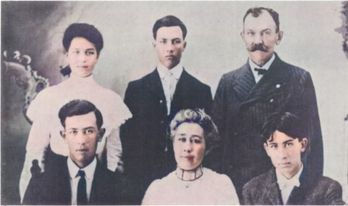
The couple established the Max Mirage View Farm, which eventually grew to hundreds of acres of crops, pasture, and livestock.
McNaughton organized the Peoria Mining Company and opened the first lead and zinc mine in Indian Territory. Though early efforts faced legal challenges, low ore prices, and technical difficulties (including underground water), his work helped spark the region’s mining boom and the growth of Peoria.
He also contributed to community infrastructure. securing post offices at Miami and Max, aiding churches and schools, representing Indians in Washington, and participating in early Oklahoma governance efforts.

On his land, McNaughton built a massive multi-purpose barn in 1893 that served ranching, mining support, stagecoach travelers, and even as a local post office. The structure stood for decades as a symbol of his ambition.
After more than a century of use and Oklahoma weather, it was listed on the National Register of Historic Places in 1991. The Ankenman Ranch restored it between 2001 and 2002, and it remains part of a working cattle operation today--an enduring landmark tied to his legacy.
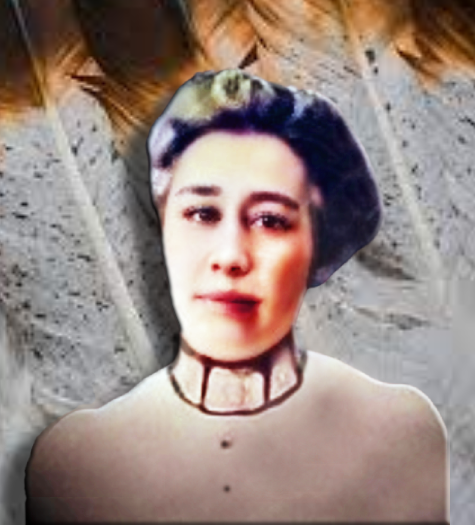
J.P. McNaughton died on November 13, 1932, at age 79, after a paralytic stroke at his son Willis’s farm northeast of Miami. He was survived by his wife, Clara and three prominent sons: attorney Ray McNaughton, physician Dr. Guy Peery McNaughton, and farmer Willis McNaughton.
Hundreds attended his funeral, with burial in the historic Peery Cemetery on the old family homestead, marked by a 30-acre grove of trees he had planted decades earlier.
From Tennessee schoolboy to frontier freighter, miner, rancher, and community builder, John Patrick McNaughton helped transform Indian Territory into modern Oklahoma.
His adventurous, resilient spirit lives on in the mines he pioneered, the land he developed, the family he raised, and the historic barn that still stands on the hill he once claimed.


