True Crime Confessions: Abused wife finally pulled the trigger on a bad relationship on Christmas Eve 1881
- Dennis McCaslin

- Dec 4, 2025
- 3 min read


In the dim hours just after midnight on December 24, 1881, a single gunshot shattered the quiet of a modest home on First Street in Rogers,
The shot, fired in a bedroom between Elm and Poplar Streets, ended the life of carpenter Esow Bolin and set off a chain of events that exposed the harsh realities of domestic strife in a burgeoning railroad town. What followed was a swift confession, an inquest, and a jailhouse suicide, closing the case without a trial.
Rogers in the early 1880s was a frontier outpost transformed by the arrival of the railroad. Founded just a few years earlier, the town in Benton County drew immigrants seeking opportunity amid the post-Civil War reconstruction.

Among them was Esow Bolin, a man in his 40s or 50s who had recently moved from Stone County, Missouri. By trade a carpenter, Bolin brought with him a wife, Mary, roughly a decade his junior, and their 12-year-old daughter, also named Mary. The family settled into a simple residence, but beneath the surface simmered years of conflict
.On the evening of December 23, tensions boiled over. According to inquest testimonies Esow and Mary argued, with him threatening her life using a knife, a pattern corroborated by neighbors who described him as quarrelsome and violent.
Esow had a troubled past: Mary later stated he had killed at least two men in prior incidents, possibly back in Missouri, and engaged in horse theft. As the night wore on, Esow retired to bed. Around 12:11 a.m., while he slept, Mary retrieved a pistol and shot him once in the back of the head.

The bullet fractured his skull, causing instantaneous death .The report of the gun awoke the household, including young Mary Jr., who testified she had been awake but did not directly witness the shooting. She confirmed hearing her father's threats earlier that evening. Mary Bolin made no attempt to flee or conceal her actions.
Instead, she confessed immediately to authorities summoned to the scene, framing the act as self-defense after enduring prolonged abuse.By daylight on Christmas Eve, an inquest convened under Coroner J.W. Butler. Witnesses included the Bolins' daughter, who reiterated the threats she overheard, and neighbors who attested to Esow's volatile nature.
Mary herself provided a detailed account, emphasizing the years of violence and her fear for her life. The coroner's jury ruled the death a homicide by pistol shot, inflicted by his wife. No evidence suggested outside involvement; it was a domestic matter through and through.
Mary was arrested and transferred to the county jail in Bentonville, the seat of Benton County, to await trial. But justice would not proceed to court. On December 26 or 27—accounts vary slightly—she requested a knife from the jailer, claiming she needed it to mend her dress.
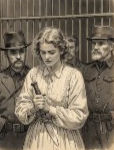
Once alone, she used it to cut her throat, succumbing to blood loss soon after. A second inquest confirmed the act as suicide, with no suspicion of foul play.The case concluded as a murder-suicide, aligned with the era's frontier norms where formal trials were sometimes bypassed by swift resolutions. No further legal actions ensued. As for burials, records remain scant.
Esow, a recent arrival with few ties, likely lies in an unmarked grave in Rogers Cemetery or a similar pauper's site, common for non-prominent figures in rural 19th-century Arkansas.
Mary's resting place is equally undocumented, possibly affected by the stigma attached to suicides at the time. Their daughter, Mary Jr., survived but vanishes from historical records after 1881.
This incident, reported in outlets like the New York Times and Cincinnati Commercial on December 31, 1881, says a lot about domestic relationships in post-Civil War Arkansas.
Domestic violence cases often escalated without legal protections for women, leading to desperate acts and self-inflicted ends. In a rough boomtown like Rogers, such tragedies underscored the fragility of family life on the American frontier.
Today, the story survives in archives and local histories, a somber reminder of unchecked personal conflicts in an unforgiving time.


