True Crime Chronicles: "Texas" Jack Reed went from robbing banks to saving souls in Tulsa after parole from prison


In the moonlit shadows of Blackstone Switch, Oklahoma, on a crisp November night in 1894, Nathaniel "Texas Jack" Reed crouched by the railroad tracks, his heart pounding like a runaway locomotive.
The Katy No. 2 train thundered toward him, laden with whispers of gold bullion. With a flick of the switch, Reed aimed to derail not just the train, but his fate. What followed was a hail of bullets, a botched heist, and the end of an era for one of the Wild West's most elusive outlaws.
But for Reed, it was only the beginning of an extraordinary second act—one that traded six-shooters for sermons and turned a bandit into a beacon of redemption.
Born on March 23, 1862, in the rugged hills of Madison County, Arkansas, near the tiny town of St. Paul, Nathaniel Reed's early life was forged in hardship. Orphaned at just a toddler when his father, Mason Henry Reed, fell in the Union ranks during the Civil War—likely at the Battle of Campbell's Station in Tennessee—young Nate was raised by relatives in the Ozark backwoods.

The post-war South was a land of opportunity and desperation, and by age 21, Reed struck out west, drifting through Idaho, Wyoming, Colorado, and Texas as a cowboy and laborer. It was in Indian Territory (modern-day Oklahoma) where he found work on a ranch near Muskogee, but the siren call of easy money soon pulled him into the shadows.
Reed's descent into outlawry began innocuously in the summer of 1885, when his ranch foreman lured him into a daring train robbery in La Junta, Colorado. Tasked with storming the passenger car, pistol blazing to cow the terrified travelers, Reed walked away with $6,000—enough to ignite a nine-year spree of holdups that spanned the Southwest
.
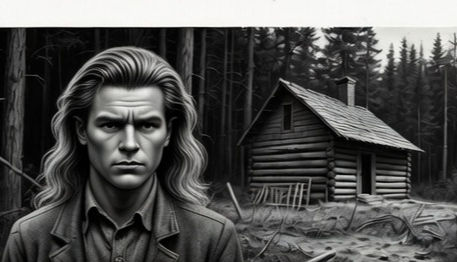
By his own tally, he pulled off four train robberies, seven bank jobs, and three stagecoach heists. In Riverside, Texas, in 1888, he cleaned out a bank vault; in Arizona, he ambushed a locomotive; and in California, he intercepted a gold shipment that legends say glittered like fool's gold under the desert sun.He earned his moniker "Texas Jack" after a 1891 Brownsville bank raid that sent Texas Rangers on a fruitless chase, though ironically, Reed spent little time in the state that named him.
His gang was a loose-knit crew of opportunists—men like Buz Luckey, William "Will" Smith, and the hulking Cherokee, Tom Root. Reed later boasted ties to notorious figures: the Dalton Gang's doomed Coffeyville raid in 1892, Bill Doolin's wild bunch, even aiding Cherokee Bill's escape from Fort Smith. Historians debate these claims as tall tales, embellishments from a man who knew how to spin a yarn.

But one thing is certain: Reed operated in the lawless twilight of the frontier, where U.S. Marshals like Bud Ledbetter patrolled with badges and bullets.The Blackstone Switch fiasco marked the pinnacle of Reed's criminal career. Tipped off about a gold-laden train from Dallas, he assembled his gang for what should have been a straightforward ambush.
But the switch flipped too soon, alerting the engineer. Unbeknownst to Reed, the gold had been rerouted, and the express car brimmed with armed deputies: Ledbetter, Paden Tolbert, Sid Johnson, and Frank Jones. Gunfire erupted in a chaotic symphony that lasted nearly an hour
. One outlaw fell dead; Reed, wounded in the leg (or side, depending on the telling), fled into the night, hiding under a rock ledge with pilfered loot as his pillow. Nursed by a sympathetic local Indian woman, he evaded a massive manhunt that scorched canebrakes and threatened farmers' fields. His accomplices weren't so lucky—Luckey and Root were gunned down in Broken Arrow, while Smith vanished into obscurity.

Hobbled and hunted, Reed sought refuge back in Arkansas with his brother. In a bold gambit, he contacted the infamous "Hanging Judge" Isaac C. Parker at Fort Smith, offering testimony against a supposed mastermind in exchange for mercy. Despite promises of leniency, Reed was convicted and sentenced to five years. He served less than one, paroled in November 1896—perhaps Parker's last act before his death.
Clutching his parole papers and a note from Ledbetter confirming the shootout, Reed emerged from prison a changed man.What followed was a redemption arc straight out of a dime novel. Reed reinvented himself as an itinerant evangelist, pounding the streets of Tulsa with fiery sermons against the sins that once defined him. "I was a bandit for eight years," he'd proclaim, "but I've trusted in God for 41."
Like reformed outlaws Cole Younger and Frank James, he toured carnivals and Wild West shows, billing himself as "Texas Jack, the famous bandit and train robber," and claiming to be the sole survivor of Indian Territory's 47 most notorious desperados. His 1936 memoir, The Life of Texas Jack: Eight Years a Criminal—41 Years
Trusting in God, sold thousands of copies, blending fact with frontier flair. He even pitched his story to Hollywood, though the silver screen never came calling.In his twilight years, Reed lived quietly in Tulsa, far from the dusty trails and crackling gunfire of his youth.

He passed away on January 7, 1950, at 87, and was laid to rest in Brashears Cemetery back in Saint Paul, Arkansas—a full-circle return to the Ozarks that birthed him. Obituaries in papers like The New York Times hailed him as a relic of the Old West, a man who outlived his peers by quitting while ahead.
Today, Reed's tale endures in folk ballads, historical tomes like Glenn Shirley's Great Train Robberies of the Old West, and the collective memory of a vanishing frontier.
He wasn't as mythic as Billy the Kid or Jesse James, but in an age of outlaws who died young and violently, Texas Jack Reed stands as a testament to second chances. His life reminds us that even in the wildest West, redemption can ride in on the next train.


