True Crime Chronicles: Murderer of rural Miller County convenience store clerk closes in on thirty years on Death Row
- Dennis McCaslin

- Jul 7, 2025
- 3 min read


On a humid July night in 1993, in the small Miller County town of Garland City a senseless, brutal crime would reverberate through the state’s legal system for decades was committed by a known criminal and repeat offender.
.At the center of it was Andrew Sasser, a man whose troubled past and violent tendencies culminated in the murder of Jo Ann Kennedy, a convenience store clerk working the late shift alone.
What followed was a capital trial, a death sentence, and a legal saga that would test the boundaries of justice, mental health law, and the death penalty.
Despite extensive legal documentation, little is publicly known about Andrew Sasser’s early life, education, or upbringing.
Court records and appeals focus almost exclusively on his criminal behavior and legal proceedings, offering no insight into his childhood, family dynamics, or formative years.
This absence of background became a point of contention in later appeals, where his defense argued that mitigating evidence—such as possible intellectual disability and a history of trauma—was never adequately explored during his trial.

Jo Ann Kennedy, a 38-year-old clerk at the E-Z Mart in Garland City, was nearing the end of her shift when she was attacked. The store was empty, and the security measures minimal.
Sasser entered the store, and what followed was a violent assault that left Kennedy dead from multiple stab wounds and blunt-force trauma to the head.
Her body was found nude from the waist down, with her clothing discovered in the men’s restroom. Although no physical evidence of sexual assault was found, the prosecution argued that the crime was committed during an attempted rape or kidnapping, which elevated the charge to capital felony murder.
The prosecution introduced evidence from a 1988 incident in which Sasser had attacked another E-Z Mart clerk in Lewisville. In that case, he was convicted of second-degree battery, kidnapping, and rape.
The similarities between the two crimes--both involving isolated female clerks at rural convenience stores--were used to establish a pattern of predatory behavior.
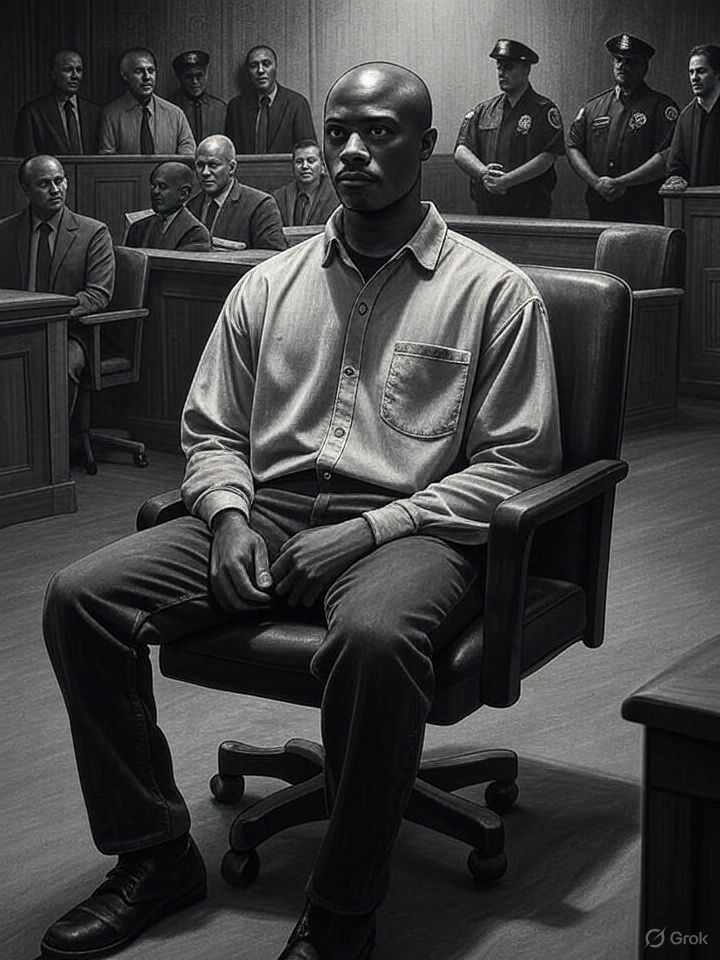
Sasser’s trial began in early 1994. He stipulated that he caused Kennedy’s death but did not plead guilty, as the state refused to waive the death penalty. The jury found him guilty of capital felony murder and sentenced him to death by lethal injection.

The aggravating factor was his prior violent felony; mitigating factors included his willingness to stipulate guilt and testimony that he could be a productive inmate.
Sasser’s legal journey did not end with his conviction. Over the next three decades, he filed numerous appeals in state and federal courts:
1995–1999: The Arkansas Supreme Court upheld his conviction and denied postconviction relief, rejecting claims of ineffective counsel and evidentiary errors.
2000s–2010s: Sasser filed federal habeas corpus petitions, arguing that his trial counsel failed to investigate and present mitigating evidence, including potential intellectual disability.
2013–2021: The Eighth Circuit Court of Appeals remanded parts of his case for reconsideration. A district court briefly vacated his death sentence based on ineffective assistance of counsel, but that decision was reversed on appeal.
Atkins Claim: Sasser argued he was intellectually disabled and thus ineligible for execution under Atkins v. Virginia (2002). Courts ultimately rejected this claim, citing insufficient evidence under the legal standard.

One of the most contentious aspects of Sasser’s appeals was the claim that he suffered from intellectual disability. His defense argued that trial counsel failed to present psychological evaluations and school records that could have supported this claim.
However, courts found that the evidence did not meet the threshold required to exempt him from execution.
As of 2025, Andrew Sasser remains on death row in the Arkansas Department of Corrections, more than 30 years after his conviction. He is housed at the Varner Supermax Unit in Lincoln County, where inmates are confined to their cells for up to 23 hours a day under maximum security conditions.
Despite the passage of time, no execution date has been scheduled. Arkansas has not carried out an execution since 2017, when it executed four inmates in rapid succession due to the expiration of its lethal injection drugs. Since then, legal challenges, drug procurement issues, and shifting political will have stalled further executions.
Jo Ann Kennedy’s family has long sought closure, while Sasser’s legal team continues to argue that his life story--largely untold--deserved deeper consideration before the ultimate punishment was imposed.
Sasser’s case, like many others, exists in a kind of legal purgatory--his sentence intact, but the path to resolution uncertain.


