True Crime Chronicles: Murder of former Boston Store seamstress in Muskogee resulted in the death penalty
- Dennis McCaslin
- 1 minute ago
- 4 min read



On the evening of December 27, 1932, Mary Ellen Wolfenberger closed her dressmaking shop in Muskogee and began the walk toward her home. A middle-aged woman of about 45 or 50 who weighed roughly 175 pounds, she had spent 25 years as a seamstress in the city and was widely known for her charity work.
She often sewed layettes and clothing for the needy and for the previous eight years had taught a free sewing class at the Young Women’s Christian Association. She was also active in church work and the American Legion auxiliary.
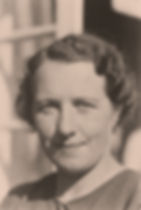
That night she telephoned her 80-year-old mother to say she planned to stay overnight with someone, though the partially deaf mother did not catch the name.
Sometime after dark she was attacked near the West High School on West Broadway.
Authorities later determined she had apparently been taken from a motor car and dragged about 75 yards across the school grounds. Her body was found early the next morning, around 7 o’clock on December 28, by school janitor J. W. Booth as he walked toward the administration building to start a fire.
It lay concealed behind a wing of the high school building. She had been clubbed brutally with a hammer, the top of her head beaten in. Her shoes were scattered on the grounds. Her clothing was disarranged. Blood marked the sidewalk near the gymnasium entrance, and her purse and one glove were recovered nearby.

Bits of flesh found under her fingernails indicated the attacker was African American.
The purse itself had been brought to the police station the previous evening around 6:30 by a man named Square Smith, who said he found it near the school. Inside were business papers, a life insurance policy in her name, and a single penny. Investigators initially believed robbery was the motive.
On the night of the murder, another woman, Mrs. C. E. Reams, had her purse snatched. Police theorized a purse snatcher might have been responsible for the fatal beating.

Mary Wolfenberger was the daughter of the late Judge W. S. Wolfenberger. She was born in Gate City, Virginia. The family moved to Greenville, Texas, in 1880 and four years later settled in Fort Smith, where they lived until 1903 before relocating to Muskogee.
In Fort Smith, she attended public schools, lived in the 100 block of South Twelfth Street, and worked for a number of years in the dressmaking department of the Boston Store.
Rudolph Ney, the store’s president, later recalled her employment there from the time he first arrived in the city. Her father practiced law in both state and federal courts in Fort Smith and was prominent in federal court circles in the early days, though he was not a federal judge.

He died in 1923. One of her brothers had been killed in action during World War I. Two sisters, Hazel and Beulah, worked in county offices in Muskogee.
Fort Smith residents who had known the family remembered her as active in church and business circles. News of her murder shocked many of the older residents of Fort Smith, where she had once lived and operated a dressmaking establishment.
Early in the investigation, several men were arrested as suspects and held in Muskogee, including Jesse Young of Fort Smith, Hafford Young of Frederick, and Will Davis of Okmulgee. A fourth man, Harrison Woodson, was briefly held but released after Mrs. Reams failed to identify him.
Jesse Young was well known to Fort Smith officers as the son of James Young of 416 Belle Avenue. He had previously served a term in the penitentiary, and in the year before the killing he had been arrested three times on prowling charges and once fined for drunkenness and carrying a pistol.

Two Fort Smith men were among those questioned and later released. William Johnson was not among the early suspects.
Months later, on April 17, 1933, County Attorney Phil Oldham announced that Bill Johnson, a 30-year-old man, had confessed to the hammer murder. Johnson had been arrested that afternoon in connection with a recent burglary. While being questioned about the killing, officers found a letter written by him in the pocket of a coat that was allegedly stolen.
The letter read in part: “A woman was killed here. It’s getting hot for me. I’ve got to get out of town.”

Johnson told officers he killed the woman with a hammer when she resisted robbery. He said he carried the hammer to knock locks off automobile tires. He was immediately taken to the state prison at McAlester for safekeeping. Murder charges were to be filed the following day.
A search of the house where Johnson stayed at 208 Kinsley Street turned up stolen property hidden under a stairway. He later gave a more detailed confession in which he stated he had met the victim near the gymnasium, struck her on the head with a hammer, dragged her behind the building, and assaulted her. Authorities described the confession as voluntary.
He was tried for murder in Muskogee County District Court before Judge E. A. Summers. The jury found him guilty and fixed the punishment at death. On September 8, 1933, the Oklahoma Court of Criminal Appeals affirmed the death sentence.

The court found the evidence sufficient and the confession properly admitted. Execution was set for November 10, 1933, at the Oklahoma State Penitentiary in McAlester.
On that Friday morning William Johnson was electrocuted in the presence of 13 witnesses inside the death cage. More than a hundred other persons, including three African American observers, watched from the outer chamber. Before the current was applied Johnson declared he was dying “for something I never done.”
He was pronounced dead at 12:10 a.m. He was one of a dozen men put to death in Oklahoma that year for capital crimes.
