True Crime Chronicles: He killed his girlfriend and her child and he'll never see the outside of a prison for the rest of his life

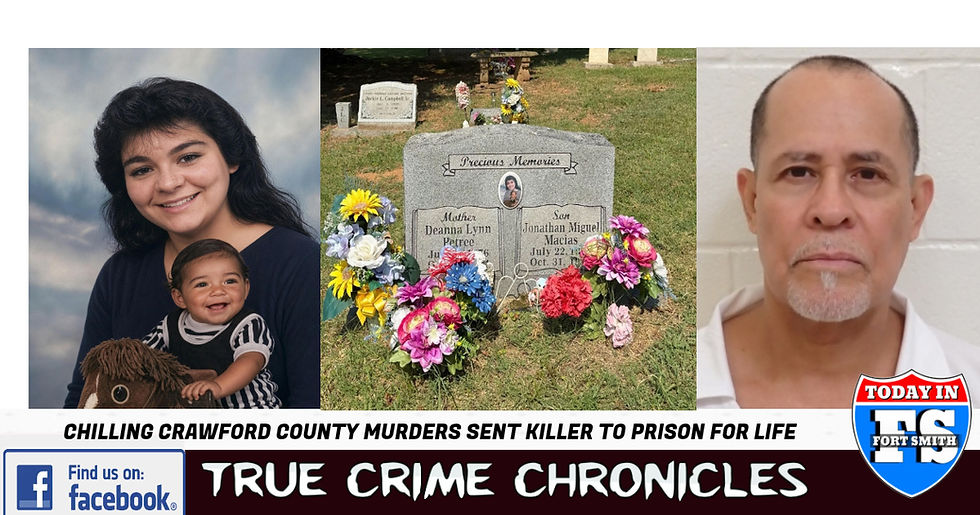

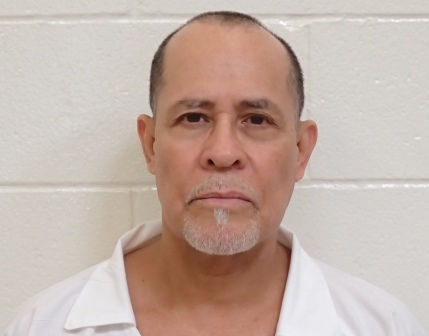
On the last afternoon of October 1994, in a house in Crawford County, Deanna Lynn Petree was at home with her mother, her three brothers, and her son. She was eighteen. Jonathan Miguel Macias was fifteen months old, born the summer before. The man who came through that house with a shotgun was Rafael Camargo, her former boyfriend.
What happened next was not reconstructed from rumor. Deanna’s mother and two of her brothers later testified that they watched Camargo shoot her. Robert, the oldest brother, said Camargo then turned the shotgun on him and pulled the trigger. The gun did not fire. The family got outside. From the yard they heard more shots.
They saw Camargo leave the house before officers arrived. When police went in, Deanna and Jonathan were dead.
The scene and the autopsies fixed the manner of the killings more tightly than the flight did. Shotgun shells lay where the bodies were found. Photographs and the medical examiner’s testimony described close-range wounds. Jurors were allowed to see that evidence because the range and the number of shots went to intent.
Under Arkansas law, premeditation can be inferred from the weapon, the way it is used, and the nature and location of the wounds. Camargo did not challenge the sufficiency of the proof on appeal. The Arkansas Supreme Court reviewed the record anyway and found substantial evidence of capital murder on both counts.

Deanna had been living in that house with her mother and brothers, not alone with the man who killed her. The people who could identify him were not strangers pulled in from the street. They were the relatives who had been in the room, who had run outside, and who had watched him go. One of them had already been in the sights of the same gun.
At sentencing, the jury found two aggravating circumstances: that Camargo had a prior felony involving violence, and that in the course of the murders he knowingly created a great risk of death to someone other than the victim.
Camargo was examined at the state hospital on his own motion. Doctors found him competent to stand trial and sane at the time of the killings. They also found limited intellectual capacity. His language was Spanish, and he had little ability to speak or understand English.

Those findings became the center of the penalty fight, not of the question of who fired the shots. In Crawford County Circuit Court, before Judge Floyd G. Rogers, a jury convicted him of two counts of capital murder and sentenced him to death.
The convictions stood. In March 1997, the Arkansas Supreme Court affirmed the guilt verdicts and reversed the death sentences because the jury had not returned the written findings the statute requires before death can be imposed. The case went back for a new sentencing. A second jury again chose death.
In 1999 the Supreme Court affirmed that sentence. A later petition claiming ineffective counsel, including a claim that lawyers had not fully developed mitigation, was denied in 2001.
The sentence on the books changed in the summer of 2004, in federal court in Fort Smith. Camargo’s lawyers argued that he was intellectually disabled, citing an IQ they put at 55, and that the United States Supreme Court’s decision in Atkins barred his execution.
On August 12, 2004, the state agreed not to carry out the death sentence. In exchange, Camargo accepted life without parole and dropped his remaining appeals. The agreement was presented to U.S. District Judge Robert Dawson. A separate claim about consular notice for a Mexican national was part of the wider background and was not the issue decided that day.
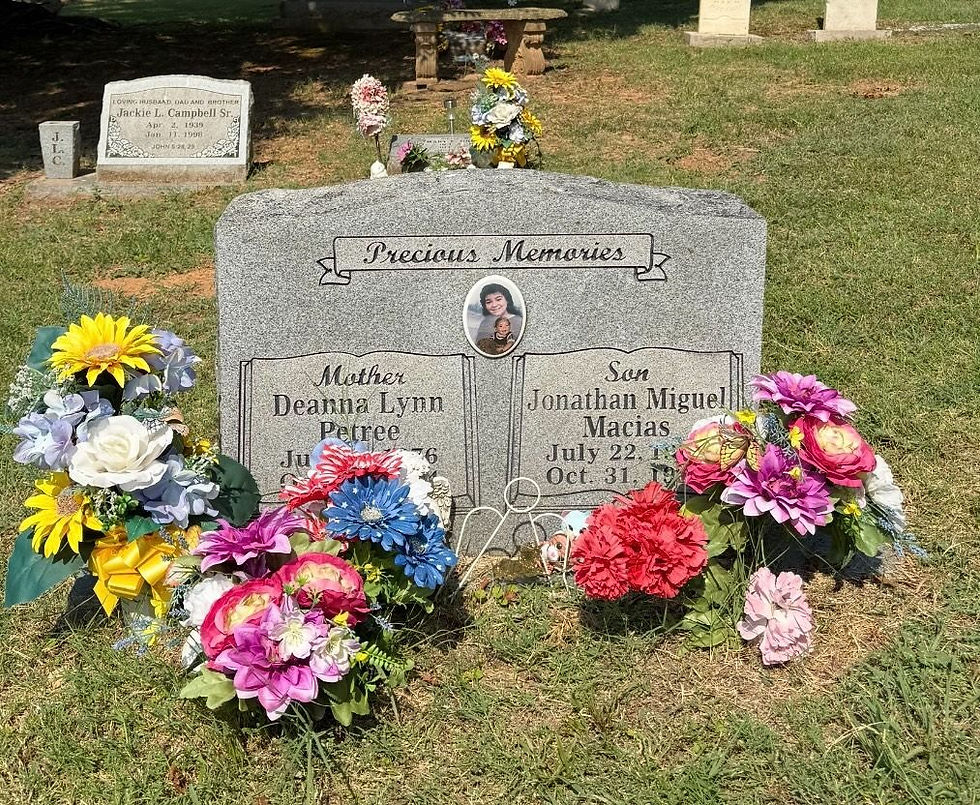
Deanna and Jonathan were buried together at Fairview Cemetery in Crawford County. Her dates on the stone are June 8, 1976, to October 31, 1994. His are July 22, 1993, to the same day. The note left with the record is plain. They were murdered by her former boyfriend, who received life in prison.
That is still the sentence. As of October 2026, Arkansas correctional records list Camargo as serving life without parole for the Crawford County capital murder. The Halloween killings were over in minutes.
The case ran from a family living room to two death verdicts, two appeals, a federal bargain, and a term that does not end.