True Crime Chronicles: Four decades before Jesus overlooked the town, Eureka Springs had a "history"
- Dennis McCaslin
- 2 hours ago
- 3 min read


While the giant statue of Christ of the Ozarks now watches over the limestone bluffs and winding streets of Eureka Springs, the town’s history remains a layered story of healing waters, open vice, crusading temperance, Prohibition-era shadows, and a later underworld that thrived in hotels, underground passages, and discreet arrangements.
Nestled in the Ozark Mountains, Eureka Springs first rose to fame in the late nineteenth century as a medical and spiritual oasis. Crowds arrived seeking the mineral springs believed to cure nearly every affliction. Hotels and boarding houses multiplied quickly.
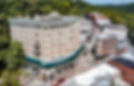
With the throngs of health-seekers came a flourishing underworld of saloons, gambling halls, and more than twenty brothels that operated with the quiet cooperation of local authorities. Open prostitution was part of the town’s early commercial life; “hostesses” and working women were a visible, if unofficial, feature of the resort economy.

Carrie Nation, the hatchet-wielding (and faced) temperance crusader, arrived near the end of that open era. In 1909 she purchased a house on Steel Street and named it Hatchet Hall. There she sheltered women fleeing the violence of drink, ran a temperance and Bible school, and continued her war against liquor.
In January 1911 she delivered her final public address in Eureka Springs, collapsing during the speech. She died months later. Her campaign was one of the last forceful public challenges to the vices that would soon be driven deeper underground.
National Prohibition (1920–1933) forced much of the trade into concealment, yet the Ozarks proved adaptable. Eureka Springs possessed a ready-made infrastructure for secrecy.

When streets were raised against flooding, original storefronts and sidewalks became subterranean passageways beneath the new street level.
These underground corridors--lit by grates and glass blocks above--linked basements, old roads, and hidden spaces. Local lore holds that the tunnels facilitated the movement of bootleg liquor, discreet visits to brothels, and the quiet comings and goings of those who preferred not to be seen on the surface.
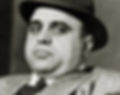
Stories persist that Al Capone himself used the passages when he visited, moving freely through a town said to have given him the run of the place.
The Basin Park Hotel, completed in 1905 against the mountainside, became a focal point of this hidden economy. It's unusual design--every floor opening onto a ground-level exit--offered rapid escape routes from any room. Beneath and around the hotel, spaces once used for storage reportedly held bootleg whiskey.

Hotel history claims that Al Capone’s sister, Mafalda Capone Mariote (the only sister who survived into adulthood), spent an entire month there enjoying the Prohibition-era high life the mountain town still offered. The hotel is also said to have maintained its own live-in “hostess,” whose business was well known yet largely ignored by authorities.
After repeal, local restrictions and lingering dry attitudes still made open liquor-by-the-drink and gambling precarious. Into this environment stepped Joe Parkhill. Born in Eureka Springs in 1911 and partly raised in Chicago, he returned with connections and ambition.
In 1944 his uncle, Tulsa oilman Roy Parkhill, acquired the Basin Park Hotel for him. Parkhill set out to turn the landmark into an entertainment playground for wealthy visitors--especially Chicago figures seeking gambling, drink, and privacy beyond easy reach of ordinary law enforcement.

Local businessman and later Arkansas Congressman Claude Fuller also once had a financial interest in the hotel, and local lore says his influence helped convince certainlaw enforcement officials to "look the other way".
Slot machines operated in the sixth-floor Roof Garden and billiards room; a long bar served liquor that could be concealed behind “storage” doors at the first hint of a raid. Certain guests were registered at no charge.
The arrangement, local accounts suggest, suited everyone involved.
One of Parkhill’s lasting creations was the Barefoot Ball, first staged in 1948 after a radio-show stunt and continued for decades as a rooftop celebration. The same festive atmosphere kept the illicit side of the business lively.
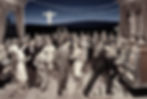
In 1955 a new sheriff determined to clean up the town raided the Barefoot Ball after the liquor and gaming devices had been brought out. Joe Parkhill, a “John Doe,” and Jack Rabbit (also rendered Jack Rabbett) were arrested. The slot machines were smashed. Without the draw of free-flowing drink and gambling, the Chicago clientele faded. Parkhill soon sold the hotel.

Today the giant statue of Jesus still watches over the hills. The mineral springs still flow. Hatchet Hall remains a reminder of Carrie Nation’s final crusade. The raised streets still hide the old storefronts and passageways once used for bootleg runs and discreet visits.
And the Basin Park Hotel, restored as a historic landmark, carries the quieter echoes of Joe Parkhill’s experiment, the reported month-long stay of Capone’s sister, the hotel’s live-in hostess, Jack Rabbit’s arrest, and the long tradition of a mountain town that repeatedly reinvented itself while never entirely forgetting how to look the other way.
