True Crime Chronicles: Dispute over pastureland in McCurtain County in 1934 led to double murder
- Dennis McCaslin

- Apr 27
- 4 min read


In the rural farmland south of Idabel, Oklahoma, in McCurtain County, the winter of 1934 was marked by the lingering hardships of the Great Depression. Tenant farming and sharecropping defined life for many families—white and Black—scraping by on land owned by others. On the morning of February 13, 1934, a seemingly ordinary day in the fields turned deadly when a dispute over rented land erupted into a double murder. T
he victims were Dan Stiles and his wife Anna Stiles, a white farm couple. The perpetrator was Frank Clark, a Black tenant farmer and laborer, approximately 55–60 years old. What followed was a swift manhunt across state lines, a rapid guilty plea, and an execution that underscored the era’s harsh justice system in Oklahoma.

Dan and Anna Stiles lived and worked a modest farm about 12 miles south of Idabel. Contemporary accounts describe them as a typical rural Oklahoma couple trying to make ends meet during tough economic times. On the morning of the killings, their sons were plowing in a field that had recently become a point of contention. The land belonged to George Dean, who had previously allowed Frank Clark to cultivate it.
For the 1934 season, however, Dean had rented the same plot to Dan Stiles. Clark, displaced by this decision, harbored deep resentment over the loss of his livelihood. Neither Dan nor Anna Stiles had any prior personal trouble with Clark. The conflict was purely economic--a classic tenant-farmer grievance amplified by the scarcity of the Depression era.

The sequence of events unfolded quickly and violently in the open field where the Stiles sons were working. Clark approached the couple as they observed their sons plowing. He fired the first shot, striking Dan Stiles, who immediately fell. Clark then turned his weapon on Anna Stiles and shot her twice. One bullet struck her in the chest.
The sons heard the shots and looked up to see their father collapse. As one son ran toward his parents--getting within about 100 yards--Clark fired at him as well before fleeing toward the Stiles family home. Anna Stiles survived for roughly two hours after the shooting. In that time, she was able to speak and explicitly told investigators that the shooting stemmed from an argument over the rented land. Her dying statement became key evidence.
Clark fled immediately after the shootings. By noon, he had crossed the Red River into Texas aboard a fisherman’s boat. Word spread rapidly in Idabel. A massive posse—reportedly 300 men, including nearly every able-bodied man from the area—formed and pursued him across the state line. Bloodhounds were rushed from Texarkana to Red River County, Texas, to track Clark through the dense bottoms north of Clarksville.

Newspapers across the country carried dramatic accounts of the manhunt, painting it as a high-stakes pursuit through rural river country.
Clark was captured within days. He was returned to Oklahoma, where he faced immediate charges. On February 28, 1934—just two weeks after the murders—Clark was charged by information in McCurtain County District Court with the murder of Anna Stiles. He entered a guilty plea that same day. The court heard testimony to establish the facts and circumstances of the crime.
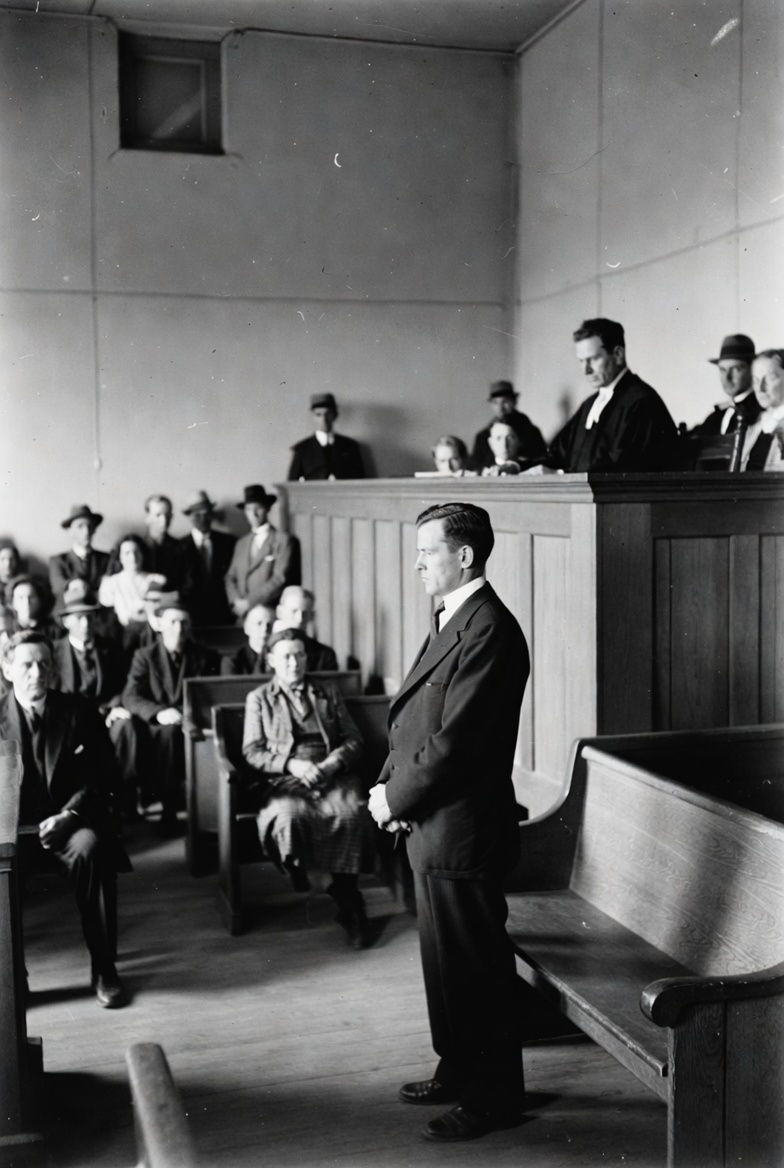
Counsel was appointed to represent him. On March 5, 1934, he was sentenced to death by electrocution, originally set for May 18, 1934. No appeal was filed. Under Oklahoma law at the time, the Criminal Court of Appeals reviewed the case at the Governor’s request to ensure procedural fairness. The judges examined the record and unanimously confirmed that the information properly charged murder,
Clark had counsel, and all legal formalities had been observed. In their advisory opinion, they described the killings as “a brutal and deliberate murder, well meriting the extreme penalty assessed by the court.”
Frank Clark was electrocuted at the Oklahoma State Penitentiary in McAlester early on the morning of October 19, 1934. He reportedly told authorities before his death that he killed the Stiles couple because they had rented “his” land to another tenant. Contemporary wire-service reports noted the execution matter-of-factly, reflecting the routine nature of capital punishment in that era. Clark was one of dozens executed by electrocution in Oklahoma during the 1930s.
The Stiles murders occurred amid the Jim Crow South’s racial tensions and economic desperation. McCurtain County, part of former Choctaw Nation lands, had a history of racial violence, including documented lynchings in earlier decades.

While the case resulted in formal legal proceedings rather than mob justice, the speed of the arrest, plea, sentencing, and execution (less than nine months from crime to death) was typical for the time, especially when the victim and perpetrator crossed racial lines.
The case received regional and national attention primarily through wire services, but it did not become a cause célèbre like some contemporaneous cases. No significant appeals, clemency campaigns, or later exoneration efforts are recorded. It stands as a stark example of how land disputes among tenant farmers could turn lethal in the Dust Bowl-era Oklahoma countryside and how swiftly the state’s justice system responded in capital cases involving white victims.
The Stiles family’s tragedy faded into local history, preserved mainly in court records, newspaper clippings, and genealogical archives. Frank Clark’s name appears on lists of pre-1972 Oklahoma executions, a grim ledger of the state’s use of the electric chair.


