True Crime Chronicle: Depression-Era gangsters Oklahoma chapter endures in public memory of state residents
- Dennis McCaslin

- Mar 3, 2025
- 4 min read
Updated: Mar 4, 2025


Among America’s Depression-era outlaws, few names evoke the blend of cunning and menace as Alvin "Creepy" Karpis. His role in the "Gangster Era" is deeply defined by incidents that happened in the state of Oklahoma from 1932 to 1933.
Born Albin Francis Karpavičius on August 10, 1907, to Lithuanian immigrants in Montreal, Canada, Karpis rose from petty thief to the last "Public Enemy Number One" captured alive by the FBI.
Known for his sinister smile and sharp intellect, he led the notorious Barker-Karpis Gang through a spree of bank robberies, kidnappings, and murders that terrorized the Midwest in the 1930s.
Oklahoma played a pivotal role in his story--a crucible where alliances were forged, crimes were planned, and his path to infamy took shape. Even today, as of March 3, 2025, Oklahoma’s historical ties to Karpis resonate, with recent local efforts to revisit this era through museum exhibits in Tulsa spotlighting the gang’s origins.
Karpis’s early life offered little hint of the mayhem to come. Raised in Topeka, Kansas, he turned to crime as a boy, running with gamblers and bootleggers by age 10.

His first major brush with the law came in 1926, when he was sentenced to 10 years at the Kansas State Industrial Reformatory for attempted burglary. He escaped in 1930 with fellow inmate Lawrence DeVol, embarking on a year-long crime spree that ended when he was recaptured after living briefly with his parents in Kansas City.
But it was in 1931, after his release from the Kansas State Penitentiary in Lansing, that Karpis’s trajectory shifted decisively--toward Oklahoma and the Barker family.
In Tulsa, Oklahoma, Karpis met Fred Barker, a hardened criminal he’d befriended in prison. Fred, one of four sons of Kate "Ma" Barker, had just been released from Kansas after serving time for burglary.

Their reunion in Tulsa marked the genesis of the Barker-Karpis Gang, a ruthless outfit that would rival the likes of John Dillinger and Bonnie and Clyde. Oklahoma, with its mix of rural hideouts and corrupt officials, provided fertile ground for their schemes.
On June 10, 1931, Tulsa police arrested Karpis (under the alias George Heller) and Fred for suspected burglary, but Karpis received a four-year suspended sentence after making restitution, while Fred avoided jail entirely.
This leniency--possibly aided by local corruption--allowed them to regroup and escalate their ambitions.

In 2024, Tulsa historians uncovered new archival records suggesting that payoffs to local law enforcement may have been more extensive than previously thought, further cementing Oklahoma’s permissive role in the gang’s early survival.
Oklahoma’s influence on Karpis deepened through the Barker family’s ties to the state.

Fred’s brother, Arthur "Doc" Barker, had been serving a life sentence at the Oklahoma State Penitentiary in McAlester for the 1920 murder of a night watchman. In 1932, Governor William "Alfalfa Bill" Murray pardoned Doc, a decision some historians attribute to bribery, possibly involving a state senator.
Doc’s release reunited him with Fred and Karpis, strengthening the gang’s core. Another brother, Herman Barker, had been loosely tied to Tulsa’s Central Park Gang in the 1910s before his 1927 suicide in Kansas, though he never joined the later gang.
Meanwhile, Lloyd Barker, the least criminal of the siblings, was arrested for vagrancy in Tulsa in 1921, underscoring the family’s recurring presence in the state. As of 2025, Oklahoma’s penitentiary archives have digitized records of Doc’s incarceration, offering fresh insights into his time there and the political machinations behind his pardon.
With Oklahoma as a staging ground, the Barker-Karpis Gang launched a wave of violence.
On November 8, 1931, Fred killed Pocahontas, Arkansas, police chief Manley Jackson during a botched robbery, an act Karpis later detailed in his 1971 memoir. The gang fled to Missouri, but Oklahoma remained a touchstone. In 1932, they returned briefly to Tulsa, leveraging its underworld connections before moving north.
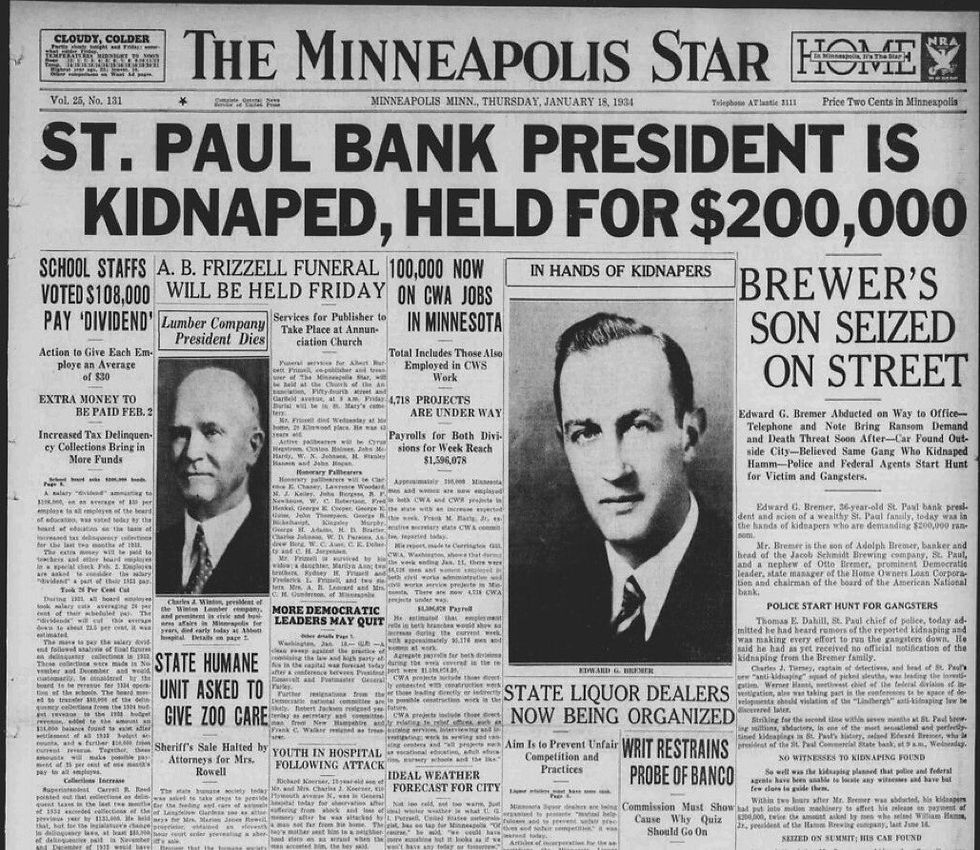
Their most audacious crimes soon followed: the 1933 kidnapping of Minnesota brewer William Hamm Jr. for $100,000 and the 1934 abduction of banker Edward Bremer Jr. for $200,000.
These high-profile heists, planned with Karpis’s photographic memory, cemented their notoriety, though none occurred in Oklahoma itself.
The gang’s Oklahoma ties also shaped its downfall. After the Bremer kidnapping, the FBI intensified its pursuit, killing Fred and Ma Barker in a 1935 Florida shootout.
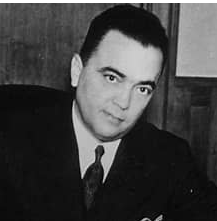
Karpis, now the last major figure standing, evaded capture until May 1, 1936, when J. Edgar Hoover personally oversaw his arrest in New Orleans.
The operation was a publicity coup for Hoover, who claimed to have grabbed Karpis himself--though Karpis insisted in his memoir that Hoover only appeared after agents had subdued him, tying his hands with a necktie when handcuffs were forgotten.
Sentenced to life for the Hamm kidnapping, Karpis spent 26 years at Alcatraz, the longest tenure of any inmate there.
Paroled in 1969 and deported to Canada, Karpis later moved to Torremolinos on the Costa del Sol in Spain. where he died on August 26, 1979, of natural causes--initially mistaken for suicide due to sleeping pills found nearby.
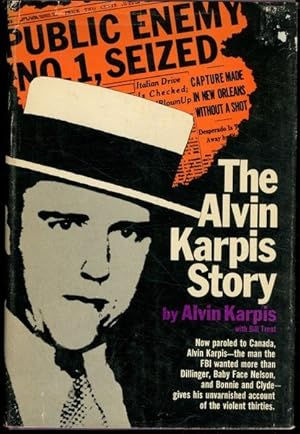
His two memoirs, The Alvin Karpis Story (1971) and On the Rock (1980), reflect on his life with a dry wit, recalling a moment during a Canadian book tour when he quipped to a companion at a bank, "You take care of the vault. I’ll drive."
For Oklahoma, Karpis’s legacy is a shadow cast across its history--a state where a young gangster found partners, freedom, and the spark for a criminal reign that shook a nation.
His story, rooted in Tulsa’s streets and the Barkers’ tangled past, remains a testament to the lawless currents of the 1930s.
As of March 2025, Oklahoma’s role has gained renewed attention, with Tulsa’s planned 2026 exhibit at the Gilcrease Museum aiming to explore the state’s complex interplay of crime, corruption, and survival during the Great Depression, ensuring Karpis’s Oklahoma chapter endures in public memory.