True Crime Chronicle: A community dance and a fight for a young girl's attention turned deadly in 1905
- Dennis McCaslin

- 2 minutes ago
- 3 min read


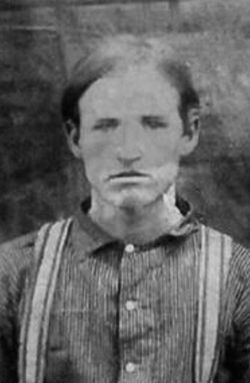
In the early years of the twentieth century, the hollows of Newton and Madison counties were bound together by blood and marriage until nearly every family carried some connection to the next.
Marion Lewis grew up inside that web.
Born 10 February 1882, he was the twin of George Washington Lewis. Their mother, Bertha Dunlap Lewis- known as Ruthie--had married William Samuel Lewis in Clarksville in 1862. William, already thirty-six at the time of the marriage, had been born around 1829.
He died while the boys were still young, and Ruthie raised the remaining sons without him. By the 1900 Newton County census, she and several of the younger children were living in the household of their older brother, John Franklin Lewis, and his wife Allie Belle Burns. Frank and Belle kept the family under one roof on the same hard ground they had always worked.
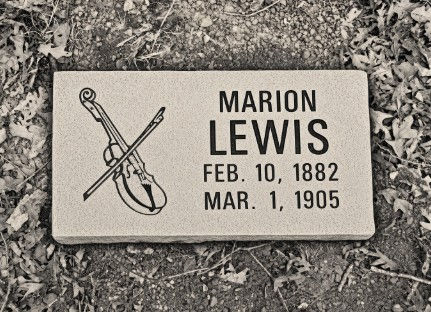
Marion played the fiddle well enough that people sent for him when dances were held. On the night of 1 March 1905, or the evening just before, he and his twin Wash went to one at Harrison Pruitt’s place near Fallsville. A quarrel over a young woman turned into a fight.

Lee Newman, only eighteen, went after Marion. While the two were locked together, Elias Alfred Sutherland (sometimes listed as Silas) stepped in from behind and cut Marion’s throat, opening the jugular. Marion tried to make it home and died of the wound on the way.
First reports named Newman. The Huntsville Democrat of 15 March 1905 said the youth was in the Jasper jail charged with the killing and that the head of the deceased was almost severed. The Daily Arkansas Gazette of 5 March reported the same charge for a death the previous Tuesday night.
The legal process soon shifted the weight of the crime. Elias Sutherland was tried for murder in the first degree and given nineteen years. He appealed. The Arkansas Supreme Court reversed the conviction and sent the case back.

In July 1906, the Newton Circuit Court tried him again for murder in the second degree. The jury returned a verdict of five years in the penitentiary, reduced from six. Newman pleaded guilty to assault at the January term and received a county-jail sentence and a fine.
By July 1907, Governor Xenophon Overton Pindell issued a full pardon to Elias Southerland. The man who struck from behind served roughly one year of the shortened term.
That outcome was not unusual among the hill settlements. So many families had intermarried across generations that an impartial jury was nearly impossible to seat. Cousins, in-laws, and longtime neighbors filled every potential panel.
A dance-hall killing that began over a girl could be treated as a sudden fight even when the fatal cut came from behind. Nearly one-hundred-twentY- years later, the mismatch is still plain.
A young man whose family the 1900 census showed still living together after the mother kept the family together in a relative's home was laid to rest under a simple stone in Radford's Freewill Baptist Cemetery approximately 1/2 mile across the county line on the north side of what is now State Highway 16 in Madison County,
The eighteen-year-old who started the assault paid with a short jail stay and a fine.
The older man who finished it spent about a year behind bars before a governor restored his freedom.
The courts of Newton County worked inside a net of kinship that often softened the penalty. Marion’s twin and older brother remained in the same hills.
The household listed in that census entry carried the empty place. Elias Sutherland lived until 1933 and was buried near Fallsville.
The record still shows a punishment that never matched the injury.