Travelin' Arkansas: Beneath the Hills-The story of the Cricket and Crest tunnels in rural Boone County
- Dennis McCaslin

- Jul 8, 2025
- 3 min read


Tucked deep within the craggy ridges of the Ozark Mountain range near Omaha in Boone Countyt, lie two hidden industrial marvels--testaments to human ambition, grit, and ingenuity.
These are the Cricket and Crest Tunnels, an awe-inspiring pair of railroad bores carved through stone and clay at the dawn of the 20th century, at a time when railroads were not only the arteries of commerce but also symbols of human conquest over geography.
Today, these tunnels are relatively quiet. Their once-busy tracks now host the scenic rumble of tourist trains, and vines creep along their entrances. But in their silence lies a powerful story—one forged in fire, sweat, and dynamite.

Construction began in 1903, spearheaded by the Missouri Pacific Railroad’s White River Division, which sought to carve a vital rail corridor through the unforgiving Ozark terrain. This would connect remote mountain towns with national rail lines, ferrying goods, mail, and people where wagon trails could not.
The task was monumental.
Workers--many local men, immigrant laborers, and seasoned railroad hands--labored in tight crews, boring through rock and soggy clay with little more than black powder, steel drills, and muscle. They worked around the clock in rotating shifts, living in crude camps far from towns and creature comforts. The tunnels were so remote that all tools, timber, steel, and food had to be hauled in over mule trails or newly laid track.

The Cricket Tunnel, known as Tunnel “B,” measured over 2,650 feet and cut beneath what is now Old U.S. Highway 65. Construction here was grueling. Soft, unstable clay and groundwater caused dangerous collapses.
A particularly devastating rockslide in September 1904 halted all progress and nearly doomed the project. In response, engineers lined the tunnel with steel and concrete—a cutting-edge technique at the time—and later opened the southern 500 feet to the sky in 1916 to relieve geological pressure.
Further west, the Crest Tunnel—Tunnel “C”—offered no reprieve. At 3,500 feet, it remains the longest railroad tunnel in Arkansas, and the only one that includes a curve. Unlike Cricket, Crest was bored entirely through solid bedrock. Crews removed more than 80,000 cubic yards of stone by hand and blasting, often advancing just a foot or two per day. Precision was critical; the slightest miscalculation could doom months of work in an era before lasers and computer models.
Together, these tunnels carved a rail path through what was once impassable mountain country.
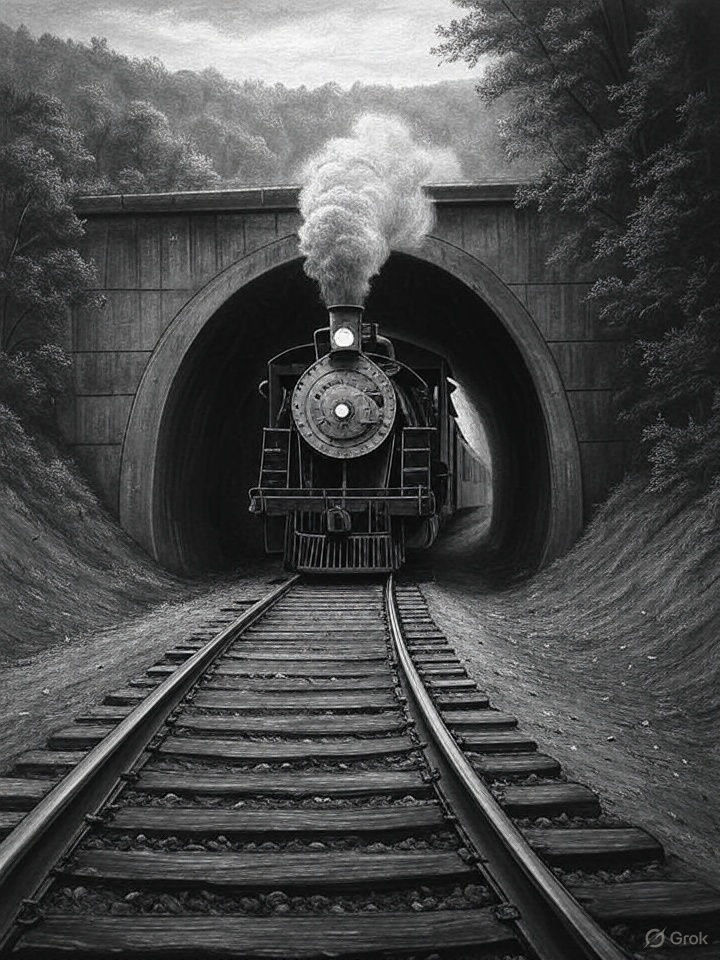
By 1905, the line was complete. Trains roared through the hollows and under the hills, connecting tiny Ozark settlements to the outside world. The tunnels, dark and echoing with steel wheels and whistles, were hailed as engineering triumphs. They stood as monuments to man’s ability to move mountains--literally.
But the world changed. Diesel engines replaced steam. Highways replaced rail. The towns these tunnels once served faded, and by the late 20th century, few outside Boone County even knew they existed.
In 2007, a new chapter began. Recognizing their historical and engineering significance, the Cricket and Crest Tunnels Historic District was added to the National Register of Historic Places. This designation protected the tunnels as rare surviving examples of early 20th-century rail engineering in Arkansas and honored the laborers who built them with grit and guts.

Today, the tunnels still echo with train--now filled with camera-wielding tourists aboard the Branson Scenic Railway, which rolls through these darkened corridors, offering a glimpse into history. Vegetation creeps over the concrete portals, and bats hang where lanterns once swung, but the spirit of industrial boldness remains.
Standing at the mouth of either tunnel today, one feels a sense of reverence. There are no placards boasting about world records or technological firsts. But there should be. These tunnels, carved with sheer determination in one of the most isolated corners of the Ozarks, remind us what people can build with basic tools, a vision, and relentless effort.
Whether you're a railroad enthusiast, a lover of forgotten Americana, or simply someone who marvels at what it takes to bore through mountains, the Cricket and Crest Tunnels are worth the journey.
Because deep in the quiet woods of Boone County, Arkansas, the ghosts of progress still whisper through stone.


