Stone Gardens: This Maledon dealt in groceries and dry goods in early Fort Smith instead of outlaws and nooses



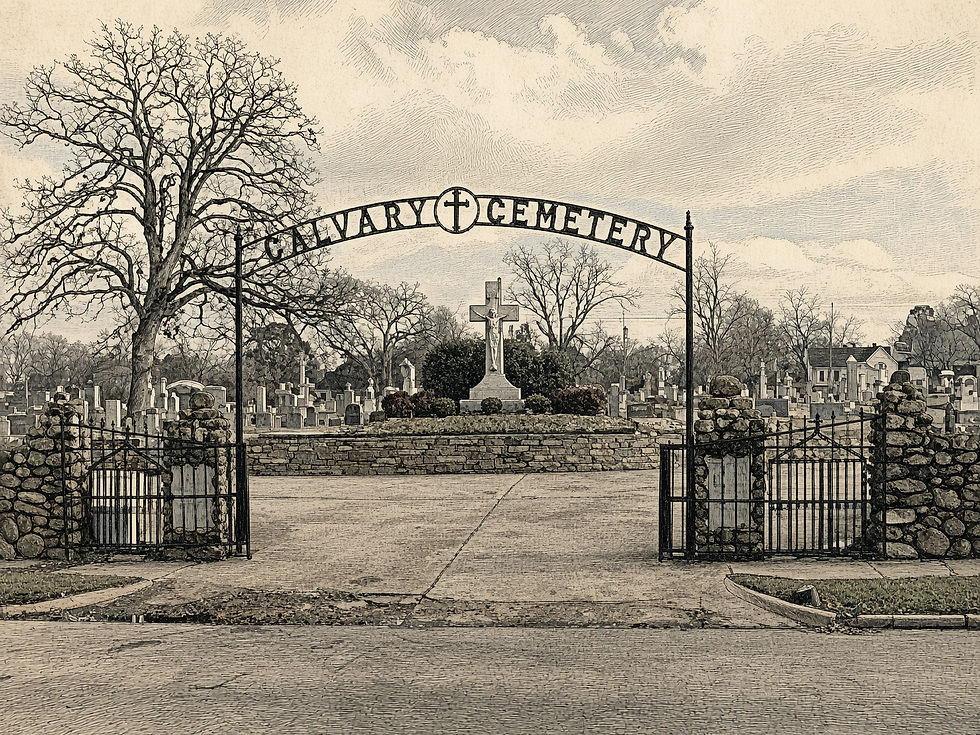
Calvary Cemetery sits on Lexington Avenue, about a mile from the house John Benjamin Maledon kept on Howard Street before the city renamed that road North Fifth. Pecans and cedars shade Catholic crosses and worn German names a short walk from the rooms where he ate and slept--close enough for a funeral wagon, far enough that the living and the dead were never neighbors in the same breath.
He was born August 6, 1841, in Detroit, Wayne County, Michigan, and died February 15, 1898, in Fort Smith, aged 56. His father, Johannes Maledon (1799–1862), died before the war’s middle years were written down. His sisters--Margarette Regina Maledon Greb (1821–1901), Mary Maledon Ens (1828–1901), and Eva Maledon Kramer (1836–1913)--are named with him on the family memorial.
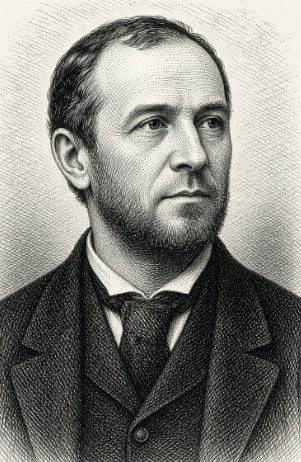
John’s recorded war service is modest and local. He was a private in Company B, Fifty-first Arkansas Militia, Sebastian County’s own home regiment under the Militia Law of 1860. The law required able-bodied free white men eighteen to forty-five to appear with their own arms a few times a year. He was nineteen when state troops seized the federal post at Fort Smith in April 1861, and twenty when a March 1862 muster at Fort Smith put his name on a payroll dated May 29, 1862.
That paper covers ten days of inspection and drill. He did not march into the printed campaigns east of the river. He stayed on the county roll among German and Irish neighbors who kept the home companies. Union columns took the town in September 1863. After that, militia duty in Sebastian County was roll call, occupation, and hard neighbors.

He came home to Howard Street and to Katherine Firetine Euper (1847–1907), daughter of Peter and Theresia Theuer Euper, first a Firetine widow, then wife of Johann B., as the stone cutters spelled him. She outlived him nine years and took her place in the Lexington plot.
What the town has long repeated is that John was brother to George Isaac Maledon—born June 10, 1830, in Germany, hangman for Judge Isaac Parker, later a grocer, later a tent show of ropes, dead in 1911 and buried at Mountain Home in Johnson City, Tennessee, not on Lexington.

The paper trail will not close that door. Blood is unproven. What can be said without stretching is that a George J. Maledon, sometimes written George Jat, went into business with John for a stretch: counters and ledgers, not nooses. Partnership is not paternity.
George the hangman enlisted Union at Fayetteville in March 1863. John mustered gray. Same surname, opposite cloth, unproven as brothers.
John kept a quieter ledger than the newspapers allowed the hangman. Knights of Columbus. A house on Howard. Trade among the German Catholic streets--merchant work, a partnership that lived on books rather than headlines. His son John Paul (1870–1899) was a grocer and died at twenty-nine.

Other children and kin in the plot include William M. (1877–1952), Edward (1875–1945), infants Johnie and Lizzie (both 1874–1876), Charles E. (1861–1947), Andrew G. (1868–1953), Bertha W. (1884–1943), and Katherine (1895–1973), along with Jacob (1838–1906) and Elisabetha Weindel (1844–1936).
Annie Maledon, shot at Muskogee in 1895, is recorded in the city death book and said to lie to the left of Elizabeth, with no stone left.
A stone garden does not settle what the courthouse and the family Bibles left open. It only keeps the dates the living forget to say aloud. Detroit, 1841. Private, county militia, ten days of recorded drill in March 1862. Katherine Euper. A house on Howard. A partner named George J. A grocer son in the next row.
Late light on Lexington. Church bells if the wind is right. No drum. Only the militia private and the wife and the children, finished with Howard Street, finished with the rumor of a scaffold in the bloodline, sleeping where Calvary put them, and the weather has been kind enough to leave the letters readable.


