Stone Gardens :The Forgotten Scout of the Pecos: - Indian War US Medal of Honor winner Pompey Factor
- Dennis McCaslin

- Apr 28
- 3 min read


In the rugged borderlands of western Arkansas, a largely overlooked chapter of American frontier history took root. There, around 1849, Pompey Factor was born into a world of displacement, resilience and quiet valor.
Today his name is rarely spoken in the same breath as more celebrated Medal of Honor recipients of the Indian Wars. Yet Pompey Factor stands as one of the most compelling and most forgotten heroes tied to the region: a Black Seminole scout whose daring charge across the Pecos River in 1875 earned him the nation’s highest military decoration.
Pompey Factor’s heritage was forged in the crucible of two peoples who refused being subjected to Anglo ideas and encroachment on natie lands. . His father, Hardy Factor, was a Black Seminole chief, a leader among descendants of runaway African American slaves who had formed alliances with the Seminole Nation in Florida.
These Black Seminoles fought alongside the Seminoles in the Second Seminole War and later endured forced relocation to Indian Territory. Many families, including the Factors, eventually migrated into Mexico in the 1850s to escape the threat of re-enslavement.

Pompey’s mother was a Biloxi Indian woman. He was born into slavery in Arkansas about 1849, likely during one of the family’s transient periods near Fort Smith.
On Aug. 16, 1870, at age 21, Pompey Factor enlisted at Fort Duncan, Texas, as a private in the Seminole Negro Indian Scouts. These elite, mixed-heritage units were attached to the all-Black 24th Infantry Regiment. Recruited for their unmatched knowledge of the terrain and tracking skills, the scouts played a critical but under-credited role in the Red River War.
Factor served from 1870 to 1877 and re-enlisted briefly from 1879 to 1880. His defining moment came on April 25, 1875, near Eagle’s Nest Crossing on the Pecos River in Texas.
Under the command of Lt. John L. Bullis, Factor and two fellow Black Seminole scouts, John Ward and Isaac Payne, were on a reconnaissance patrol when they encountered roughly 25 to 30 Comanche warriors.
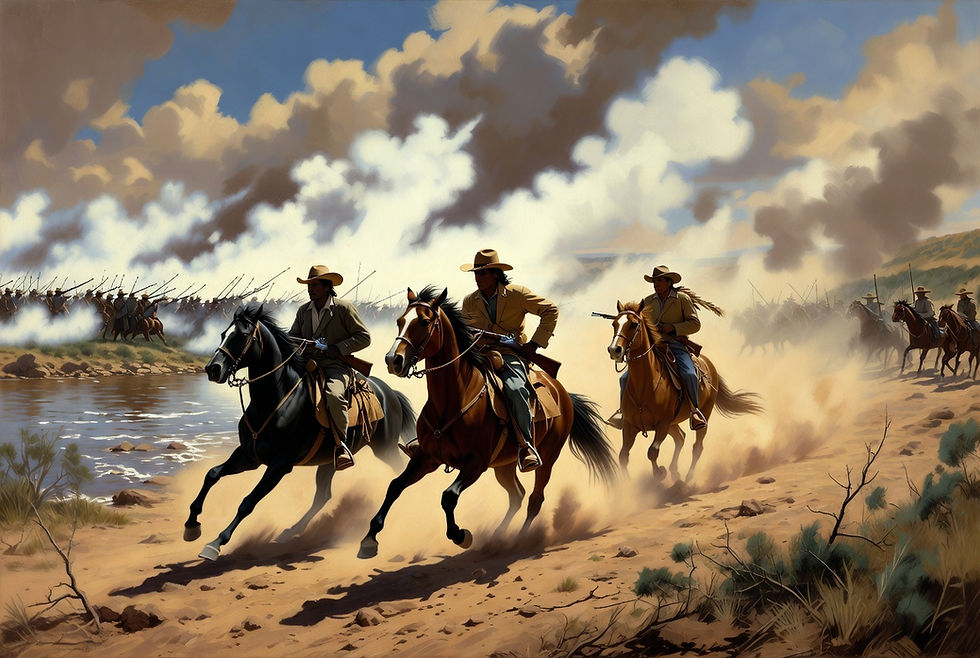
A fierce firefight erupted. After 45 minutes of intense combat against superior numbers, the scouts began to withdraw. Bullis’s horse bolted, leaving the lieutenant on foot and exposed.
Under heavy enemy fire, Factor, Ward and Payne turned back. They mounted Bullis behind them on their own horses, alternately carrying him to safety while returning fire. The patrol rode 56 miles back to Fort Clark without further losses.
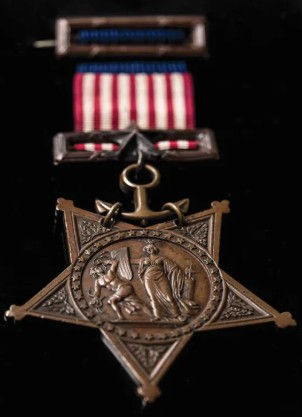
For this extraordinary act of courage and loyalty, Pompey Factor, John Ward and Isaac Payne were each awarded the Medal of Honor on May 28, 1875. The official citation reads simply that with three other men he participated in a charge against 25 hostiles while on a scouting patrol. It remains one of the few Medals of Honor ever bestowed on Black Seminole scouts.
Discharged for the final time in November 1880, Factor returned to civilian life in the Texas-Mexico border region. He settled primarily around Brackettville, Texas, and spent time farming in Mexico. Like many Black Seminole veterans, he lived modestly and received only a small Army pension and worked as a farmer .

Pompey Factor died destitute on March 28 or 29, 1928, at age 79 in Brackettville, Kinney County, Texas. He was laid to rest in the historic Seminole Indian Scout Cemetery just outside town, among his comrades who also earned the Medal of Honor: John Ward, Isaac Payne and Adam Paine. A modest stone marks his grave in the windswept burial ground reserved for the Black Seminole scouts and their families.
The service of Pompey Factor reminds us that the Indian Wars were not fought solely by white cavalrymen or famous generals. They were shaped by men like him, Black Seminole scouts from the Arkansas borderlands, whose courage under fire helped open the American West yet whose legacies were allowed to fade.
He is not merely a footnote. He is a bridge between the Seminole resistance of Florida, the flight to Mexico and the final chapters of the Western frontier. In remembering Pompey Factor, we honor the mostly forgotten heroes whose blood and bravery helped build the nation and who deserve their place in the stone gardens of our shared memory.


