Stone Gardens: Texas transplant served as merchant, newspaper publisher and politician in Delaware County
- Dennis McCaslin

- Apr 26
- 2 min read
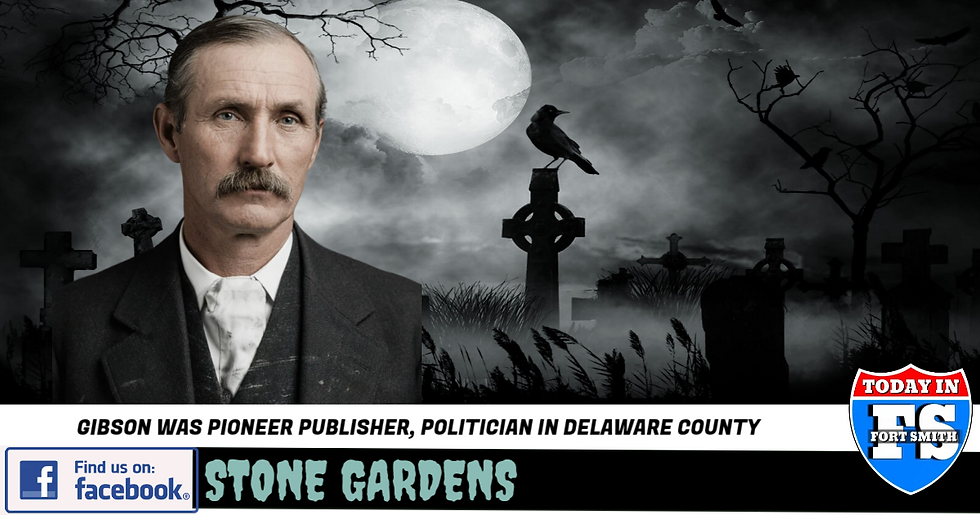

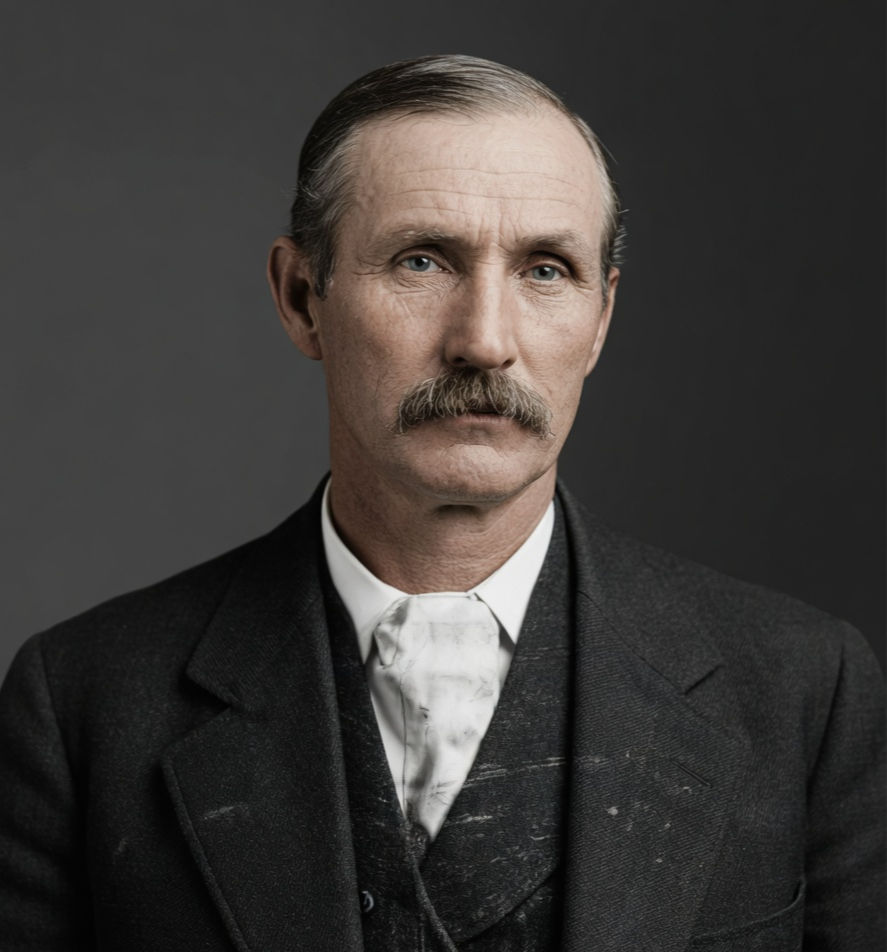
John H. Gibson was born on June 4, 1861, in Rusk County, Texas, to Quinton Koscuisko Gibson, a white Georgian who served and died in the Civil War in 1864, and Nancy Abigail Bell Gibson, whose Cherokee family had moved to Texas to escape conflicts in the Cherokee Nation between the Treaty Party and the Ross faction.
After his father’s death, young John returned to Indian Territory on February 17, 1872, with his mother and sister Rosa. The family settled in the Grove (Delaware County) area, where his mother later remarried James E. Harlin.
Gibson attended the Cherokee Male Seminary in Tahlequah starting in 1878, where he appeared on the first Honor Roll published in the Cherokee Advocate and served as vice-president of the Cherokee Debating Society, though he later left school for lack of funds and supported himself by teaching at Olympus School in 1884 while farming his own land.

In the early 1880s Gibson emerged as a pioneer in the Grove community, opening the town’s second general store and, in the early 1900s, founding and publishing the Grove Sun as editor and proprietor.
Under his leadership the weekly newspaper became the voice of the region, chronicling local news, territorial issues, family events, and the transition to Oklahoma statehood; its pages carried the obituaries of his first wife Arie Tennessee “Ary” Sturdivant Gibson in 1904 and their youngest daughter Hudnall in 1905.
He married Ary on July 8, 1886; they had five surviving children—Quinton, Mattie B., Mary L., Jennie C., and John L.-- along with three daughters who died young. After Ary’s death he wed Mattie McDonald in 1906, and they had three more children: Nannie A., Paul W., and Charles Obediah.
Gibson’s public service defined his legacy in Delaware County. Elected mayor of Grove for four terms, including in 1899 and again in 1907 during the year of statehood, he swore in the first county judge and clerk when Grove served as the temporary county seat and worked continuously on the town council.

He also served in the Cherokee legislature in 1897 and 1903, rising to speaker of the lower house until tribal government dissolved, and later represented the area in the sixth and seventh Oklahoma legislatures
He Also served e two terms as Delaware County commissioner from 1920 to 1925.
Through the Grove Sun and his political roles, he helped guide the community from Indian Territory days into organized state government, fostering local commerce, education, and civic life.

John H. Gibson died at home in Grove on April 13, 1940.
He was buried in the Gibson family plot at Olympus Cemetery in Grove alongside his first wife Ary and several children, with graveside services conducted by the Masonic Lodge, of which he was a charter member.
His life--from Texas birth and Cherokee schooling to decades as newspaper publisher, four-term mayor, legislator, and county leader--left an enduring mark as one of Grove’s and Delaware County’s most influential pioneers, shaping both its printed record and its early governance.


