Stone Gardens: One of the early pioneers of Polk County rests eternally in a rural graveyard southeast of Hatfield
- Dennis McCaslin

- Sep 29, 2025
- 2 min read


Old Dallas Cemetery, seven miles east of Mena on Polk Road 44, holds the grave of John M. Dallas (~1820–1885), a settler and early sheriff whose name echoes Polk County’s frontier days.
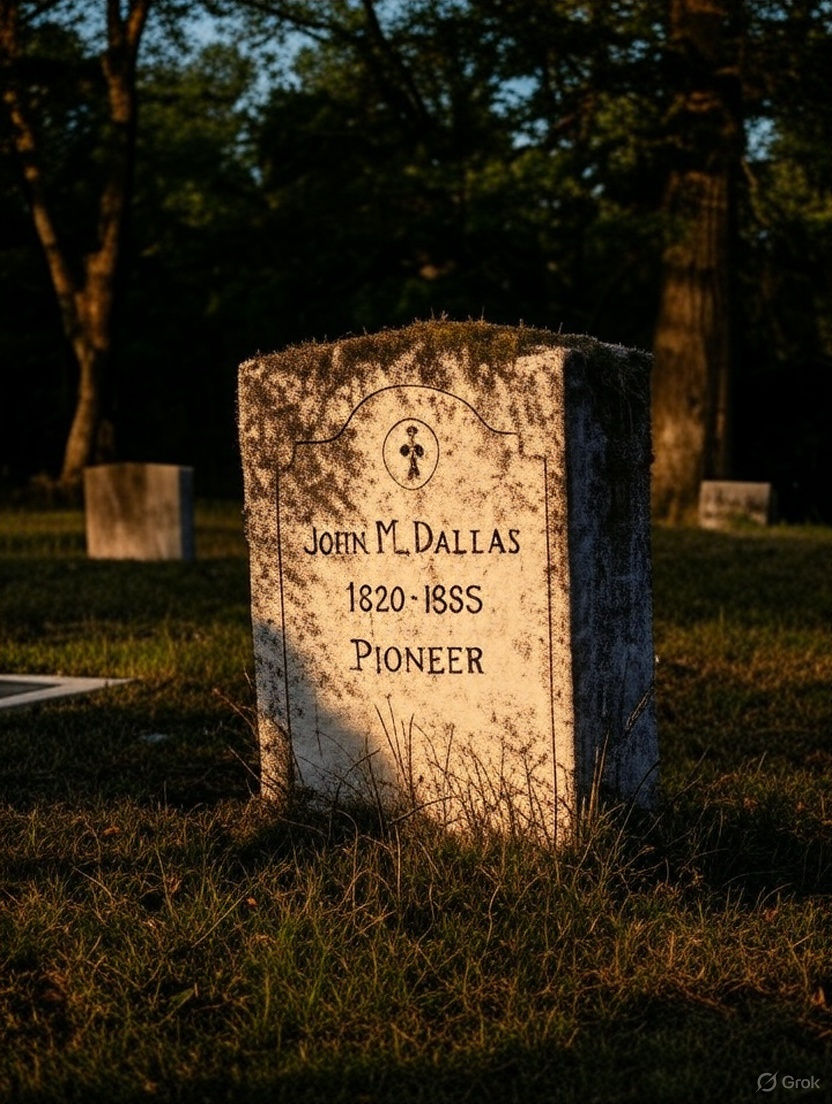
His simple sandstone marker, inscribed "John M. Dallas / 1820-1885 / Pioneer," stands in a quiet plot of about 200 burials, many unmarked, reflecting the county’s rugged beginnings.Born around 1818–1822 in Tennessee (likely Roane or Knox County), John M. Dallas arrived in Arkansas around 1842–1844 via the Southwest Trail with Scots-Irish settlers.
He married Sarah A. Keaton, (1825–1890), and they raised six children, including William and John Jr., in what was then Dallas, the county seat named for Vice President George M. Dallas.
The family farmed 160 acres near the Cossatot River, but John’s role as a lawman defined his legacy.Around 1845, shortly after Polk County’s formation on November 30, 1844, Dallas served as sheriff or constable during a chaotic pre-statehood period.
No records confirm an exact term—courthouse fires in 1878 and 1883 destroyed early documents—but he likely managed land disputes as prospectors chased 1849 gold rush rumors near Rich Mountain, mistaking quartz for gold.
During the Civil War, Polk County leaned Confederate, but Dallas stayed neutral, aiding refugees from both sides, according to local histories.Post-war, he focused on farming and supported the 1896 vote to move the county seat to Mena, spurred by railroad growth.
He died in 1885 at about 65, buried in Old Dallas Cemetery on land patented in 1849 by Walter Scott and donated in the 1870s by Austin and Sally Keaton. Sarah joined him in 1890, her grave unmarked.
The cemetery, named for the now-extinct county seat, holds other pioneers and early veterans.Dallas’s descendants spread to Oklahoma, and family lore ties him to the “Dallas Invincibles,” a local militia precursor.
His grave, maintained by the Polk County Genealogical Society, is a testament to the settlers who shaped Arkansas’s Ouachita foothills. Visitors can find the site at 34.58°N, 94.15°W, accessible via AR-375. For maps or cleanup events, contact the Polk County Museum in Mena.


