Stone Gardens: McGuirk's Tri-State Territory was a staple for the National Wrestling Alliance for three decades
- Dennis McCaslin
- 23 hours ago
- 3 min read


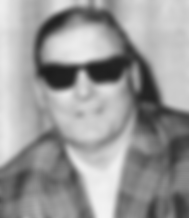
Leroy Michael McGuirk was born on December 13, 1910, in Garvin, Oklahoma, a small unincorporated area of McCurtain County
He entered the world in McCurtain County during a challenging time for his family. His father died before Leroy reached his twelfth birthday, and a swimming accident cost him the sight in one eye.
These hardships tested the young man, but he channeled his determination into wrestling. After his father's death, the McGuirk family moved to Tulsa, which would basically become his adopted hometown for the remainder of his life.
McGuirk attended Tulsa Central High School, where he excelled on the mat and captained the school's first state championship team in 1928. He continued his education and athletic career at Oklahoma A&M College, now Oklahoma State University, wrestling from 1928 to 1932 under legendary coach Edward C. Gallagher.

There he became a two-time NCAA All-American, capturing the 155-pound national title in 1931 and finishing as runner-up at 174 pounds in 1932. His collegiate record stood at 19 wins and 2 losses, showcasing speed, technical skill, and toughness that would define his career.
After graduation McGuirk turned professional, working with promoter Sam Avey. On March 5, 1934, he defeated Hugh Nichols in Tulsa to claim the NWA World Light Heavyweight Championship. He secured a second reign in 1938 by beating Danny McShain. On June 19, 1939, he won the World Junior Heavyweight Championship from John Swenski in Hollywood.

McGuirk unified the National Wrestling Association and National Wrestling Alliance versions of the junior heavyweight title on December 28, 1949, by defeating Billy Goelz in Des Moines. His reign as junior heavyweight champion lasted more than ten years, one of the longest in wrestling history for a male singles titleholder. Known as a tough shooter and skilled worker, he dominated the division between Tulsa and Hollywood.
Tragedy struck on February 7, 1950, in Little Rocks. While being driven to a restaurant by his pupil Robert Bob Clay, McGuirk was thrown against the windshield in an effort to avoid a collision. Shattered glass from his tinted glasses damaged his remaining good eye, leaving him permanently blind and ending his in-ring career at its peak.
Undeterred, McGuirk transitioned to promoting and booking. Sam Avey kept him as a partner, and he rose through the ranks of the National Wrestling Alliance, serving multiple terms as second vice president in the 1950s and 1960s.

He booked talent across Oklahoma, Arkansas, Missouri, Louisiana, and parts of Texas, training promising wrestlers including future NWA World Heavyweight Champion Dick Hutton. McGuirk took full control of the Tri-State territory in 1958 when Avey retired.
Under his leadership the promotion thrived, including for a number of years the Fort Smith, territory where he ran matches out of local National Guard armories and eventually the Jimmy Lott Sports Arena on Towson Avenue, with Lott serving as the local manager for the organization.
The promotion drew massive crowds, such as the 1978 Louisiana Superdome event with Bill Watts that attracted an estimated 31,000 fans. He navigated tensions with other promoters and helped launch the careers of stars like Danny Hodge and Jack Brisco.

McGuirk also dedicated time to charity, working with Ed Lewis to establish the NWA Leader Dogs for the Blind annual fundraiser, drawing from his own experiences with vision loss.
His daughter Michelle Kathleen, known in wrestling as Mike McGuirk, followed in a different capacity as a ring announcer, later working for the World Wrestling Federation. She married wrestlers B. Brian Blair and Doug Somers at different times.
McGuirk eventually moved to the Claremore area in his later years and remained connected to the sport for more than fifty years as one of the NWA's longest-serving members.

He was inducted into the Oklahoma Athletic Hall of Fame in 1977, the George Tragos and Lou Thesz Professional Wrestling Hall of Fame in 2004, and the NWA Hall of Fame in 2015,
Leroy McGuirk died on September 9, 1988, in Claremore, at the age of 77. His contributions to amateur and professional wrestling left a lasting mark on the sport in the Arklahoma region and beyond. He was cremated and his ashes were installed atthe Memorial Park Cemetery Columbarium in Tulsa in Section 15B, Room 1, Niche 37.
His story stands as a testament to overcoming adversity and building a legacy through dedication to wrestling and community.