Stone Gardens:: Hon. George Washington Parks- The judge who helped carry a Nation on his shoulders
- Dennis McCaslin

- Nov 9, 2025
- 3 min read


The little family cemetery on a rise above the old Coo-wee-scoo-wee District looks like any other patch of Oklahoma prairie until you notice the tall limestone obelisk crowned with a Masonic square and compass.
Beneath it lies Judge George Washington Parks, a man who helped drive the Cherokee people west at gunpoint when he was eighteen, then spent the rest of his life trying to make the new country a place of justice.
Stand at his grave on a quiet October afternoon and you can almost hear the creak of wagon wheels. In 1838 those wheels belonged to the detachments George Parks guided along the Trail of Tears. General Winfield Scott had spotted the lanky Tennessee boy and made him a wagon-master.

For two years the teenager rode ahead of weeping families, marking campsites, burying the dead, and learning a lesson he would never forget: a nation can be moved by force, but it can only be governed by fairness.
He went home to Cleveland, Tennessee, married Louisa Spriggs in 1844, and built a dry-goods empire on a $4,000 inheritance. Six times the citizens elected him mayor. In the lodge hall he rose through the Royal Arch degrees until he had held every chair in sight.
Life looked settled.

Then came the Civil War. Parks rode with Wheeler’s Cavalry, gray coat flapping through the smoke of a dozen battles. When Appomattox silenced the guns, he came out the other side with two wagons, a tired team, nine dollars in his pocket, a wife, and eight children staring at him for the next meal
.In October 1867 the wagons rolled west again, ut this time by choice. The Cherokee Nation, still bleeding from its own civil war, opened its arms to the one-eighth-blood son of Susannah Taylor Parks. George staked a claim in the Coo-wee-scoo-wee District, turned soldier and merchant into farmer and neighbor, and quietly began earning the trust he had lost as a teenage wagon-master thirty years earlier.
\
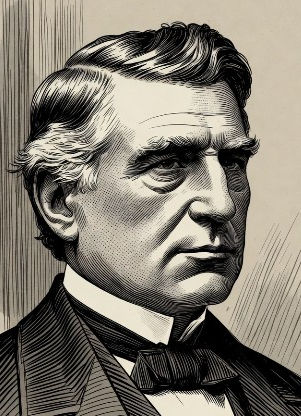
1880 the Cherokee people did something remarkable: they elected a white-looking, Tennessee-raised Confederate veteran to the highest court in the land. As Associate Supreme Judge, George Washington Parks sat on cases that decided citizenship, land rights, and the very future of a sovereign nation surrounded by a hungry United States.
The Cherokee Advocate called him “wise, conscientious, and honorable.” The Muskogee Phoenix said he never forgot what it felt like to be powerless. He never re-joined the Masonic lodge after moving we (too busy, he said) but the brethren still carved their ancient emblem at the top of his stone.
Beneath it they cut the words his grieving family chose:
"Since thou canst no longer stay
To cheer me with thy love,
I hope to meet with thee again,
In that bright world above.”

Louisa lies beside him. She outlived him by ten years, dying in 1893. Around them sleep six of their eight children, each stone a reminder that the judge’s hardest trials were not on the bench but in the little cabin where childhood fevers and accidents took their toll.
Today Parks Cemetery is easy to miss...just a cluster of stones behind a wire fence, guarded by cedar and redbud. But pause long enough and the wind carries echoes: the crack of a wagon whip in 1838, the thud of Confederate hooves, the calm voice of a gray-eyed judge reading a verdict in Cherokee and English.
George Washington Parks began his life moving a nation against its will. He ended it helping that same nation write laws to protect itself. In the end, the boy who once pointed wagons westward found his true direction: toward justice, toward home, toward the bright world he still believed waited above the Oklahoma sky.