Stone Gardens: From cavalryman to circuit rider - The life andlegacy of Rev. Augustus H. Lark


Beneath the shade of pines in Newberry Chapel Cemetery IN aLMA lies a man whose life bridged war and peace, hardship and healing.
Rev. Augustus Henry Lark, born in 1844 in Greenville County, South Carolina, lived through the crucible of the Civil War and emerged as a spiritual anchor in postwar Arkansas.
The son of Reverand Henry Augustus Clark and Harriet Louisa Soutjhern Clark and just two generation removed from his grandfather--Henry Augustus Clark Sr.-- who had emigrated from Germany toPickens County South Carolina in 1838, Augustus was the firstborn to a family of thirteen children.
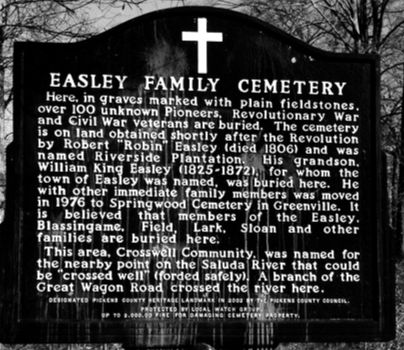
His siblings, for the most part, lived out their lives near their South Carolina birthplaces as evidenced by their later burials in the Cemetery in the Easley Family Cemetrey near the Antioch Missionary Baptist Church in Easley, South Carolina.
At just 18, August Lark enlisted in Company F of the South Carolina 2nd Cavalry--Easley’s Cavalry--a unit known for its mobility and grit.

The regiment, formed in 1862, was tasked with defending Charleston’s marshy coastline before joining major campaigns across Virginia and Pennsylvania. Lark’s service placed him at the heart of pivotal battles: Antietam, Brandy Station, Gettysburg, and the Second Battle of Fort Fisher.
He was among the 186 men who rode under Lt. Col. Thomas Lipscomb at Gettysburg, clashing with Union forces east of town.
But it was not just where he fought--it was how he served. Family accounts recall that Lark once carried the wounded General Matthew C. Butler from the battlefield, a moment of courage that speaks volumes about his character.
He was also entrusted with securing cattle for the army, a logistical task that required diplomacy and trust in a time of scarcity.
After the war, Lark returned briefly to South Carolina to continue his education--an uncommon path for a Confederate veteran.

In 1867 he married Mary Ann Proctor, and by 1875, the couple had resettled in Alma where Lark became a licensed Methodist minister, serving as a circuit rider across Crawford County’s rural communities.
His ministry was more than sermons--it was service. He officiated weddings and funerals without charge, offered counsel to grieving families, and helped rebuild spiritual life in a region still reeling from war. His influence extended beyond the pulpit: he was a trusted figure in local civic and religious circles, known for his humility and steadiness.

Together, Augustus and Mary Ann raised as many as fourteen children, three of whom--Milton Rozelle, Fred, and Julian--became Methodist ministers themselves.
Their home became a hub of faith, music, and education, and their legacy continues through descendants who still honor his memory.
Rev. Lark died in 1915 at age 71.
His grave, marked by a modest headstone in Bewberry Chapel, , remains a site of quiet reverence. But his true monument is the community he helped shape--one forged not just by survival, but by service.


