Stone Gardens : Captain Nathaniel Hale Pryor crossed the nation with Lewis and Clark before settling in Oklahoma
- Dennis McCaslin

- May 15
- 3 min read


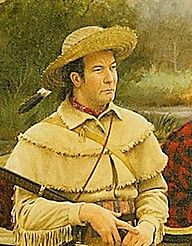
Nathaniel Hale Pryor was one of the most enduring figures of the American frontier-- a sergeant on the Lewis and Clark Expedition, a captain in the War of 1812, a fur trader, and ultimately a key intermediary between the U.S. government and the Osage Nation
. He is the only member of the Corps of Discovery known to be buried in Oklahoma, and the town of Pryor (and Pryor Creek) in Mayes County bears his name in honor of his pioneering work in the Three Forks region.
Born around 1772 in Amherst County, Virginia, Nathaniel was the son of John Pryor and Nancy Floyd. The Pryor and Floyd families were closely connected; Nancy was the sister of Robert and Charles Floyd, making Nathaniel a first cousin of Sergeant Charles Floyd, the only man who died during the Lewis and Clark Expedition.

When he was about eleven, the family moved to the Kentucky frontier near Louisville. Both parents died by 1791, leaving Nathaniel and his brother as orphans. He received little formal education and was apprenticed to learn frontier skills.
On May 17, 1798, he married Margaret “Peggy” Patton, daughter of a prominent Louisville pioneer. Peggy died young, and no confirmed children survived from that marriage. Pryor was the only married man allowed to join the Lewis and Clark Expedition in 1803. He enlisted on October 20, 1803, in Clarksville, Indiana, as one of the “Nine Young Men from Kentucky.”
William Clark quickly promoted him to sergeant and gave him command of the First Squad.

Pryor was known as a strict but capable leader who participated in every major phase of the journey to the Pacific and back.
After the expedition returned triumphantly in 1806, Pryor received 320 acres of bounty land.

He remained in the Army, serving as an ensign in the 1st Infantry. In 1810 he resigned but was soon involved in frontier intelligence work. During the War of 1812, he was commissioned a captain in the 44th Infantry and fought under Andrew Jackson at the Battle of New Orleans in January 1815.
Following the war, Pryor turned to the Indian trade. In 1819 he established a trading post on the Verdigris River near its confluence with the Arkansas River in present-day northeastern Oklahoma. He formed close ties with the Osage people, entered a long-term relationship with an Osage woman, and fathered several children.

He guided explorers, helped establish Union Mission, and assisted in negotiations between tribes. In 1827, he was appointed acting sub-agent for the Osage, a position later made permanent.
Captain Nathaniel Pryor died on June 10, 1831, at the Osage subagency at approximately age 56. He was initially buried near the agency. In 1982, the Mayes County Historical Society arranged for a permanent memorial and monument at Graham Memorial Cemetery in Pryor, Oklahoma. A second marker stands near the original gravesite.

His life spanned the Revolutionary-era frontier, the great Western exploration, the War of 1812, and the early days of American Indian policy in the West.
From Virginia orphan to captain, trader, and respected Osage advocate, Nathaniel Pryor played a vital role in the opening of Indian Territory.
The town of Pryor, Pryor Creek, and even the Pryor Mountains in Montana stand as lasting tributes to his legacy. His grave in Mayes County remains a quiet but powerful reminder of Oklahoma’s frontier history.