Stone Gardens: A soldier who "died" in the Civil War had a chance encounter with his first wife years later and remained silent
- Dennis McCaslin

- 7 minutes ago
- 3 min read


Thousands of vehicles a week make the drive from Poteau on US Highway 59 north to US 64 at Sunset Corners, passing by the wholly unforgotten graves of David Robert Welch and Phoebe Ann Harris Welch.
The small private enclosure lies on privately owned land west of Shady Point, beneath older trees that still shade a plot seldom visited without the landowner’s permission
. David’s stone stands broken at the base in the southeast corner. Phoebe’s rests beside it. The ground sits roughly five hundred yards from the vanished stage stop and trading post once known as Brazil Station, near Brazil Creek and the site of the old Brazil School in Section 27 of Township 8 North, Range 24 East.
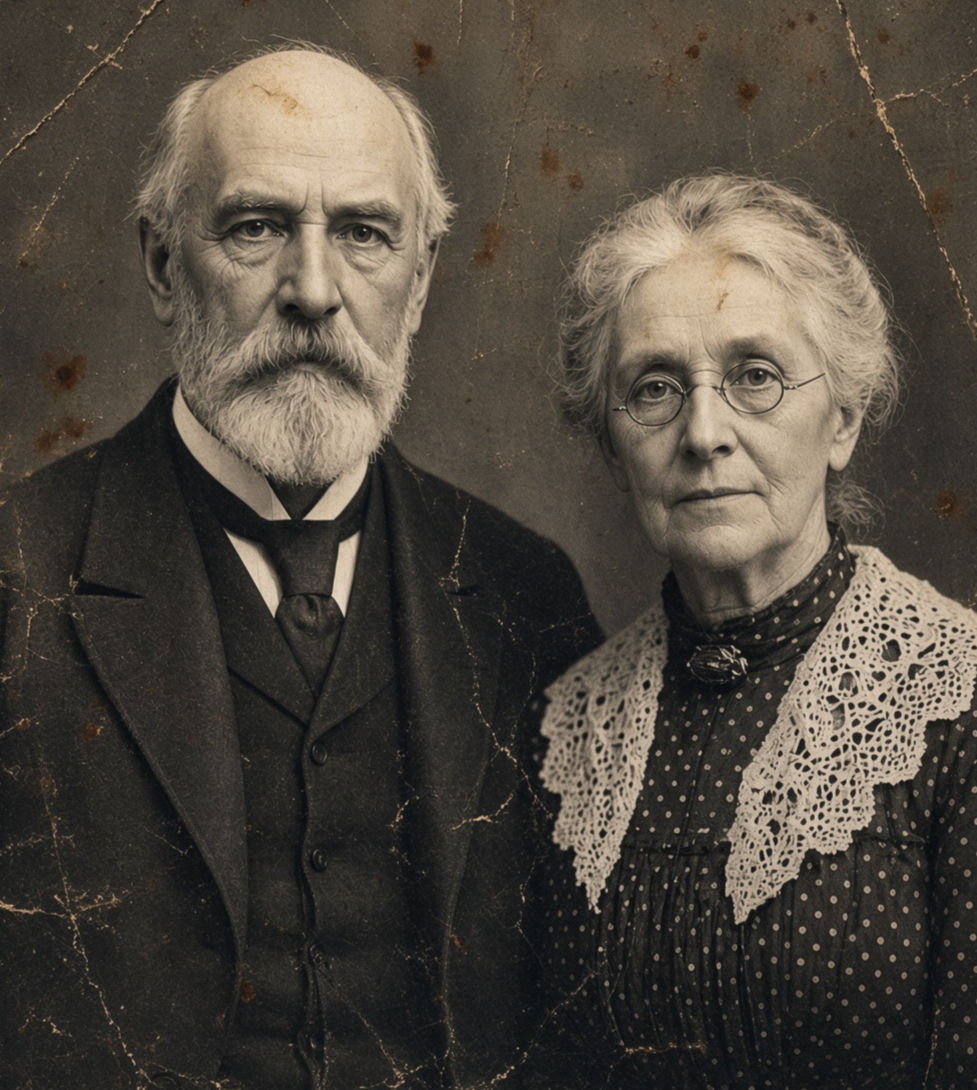
A larger Brazil Cemetery continues in limited use nearby, yet this family ground remains separate and largely unreachable.
David Robert Welch was born in Morgan County, Alabama, in 1838, the son of James and Catherine Pate Welch.
By 1858 he had moved into Arkansas and married Sarah Ann Elizabeth Wilson in Sevier County. They began a family that included sons James and William Anderson and a daughter named Jill.
When the war came he enlisted as a private in Company F of Dawson’s Regiment, the 19th Arkansas Infantry.
Captured and held by Union forces, he was long counted among the dead. Sarah, left with young children, eventually remarried George Washington Terry and settled with them at the Dutch Creek community in Scott County, Arkansas.

Seven years afterward, a tin peddler appeared on the road near her home. Bearded and wearing a worn hat, he drew neighbors to his wagon. Sarah remarked that the man looked like her first husband. The peddler offered no reply and continued on his way.
He was David Robert Welch, who had worked after his release to buy a team and stock a wagon, then made his slow return west. Finding his former wife remarried and established, he kept his silence and pressed on into the Choctaw Nation.
According to a mathematician on the University of Arkansas faculty (who took my phone call and probably thought I was insane) the odds of Welch stumbling onto Sarah--given the passage of time, geographical considerations and chance encounter at the precise time of their crossing paths-- would be "akin to winning the Powerball for three consecutive drawings".
Robert eventually reached out to Sarah and reestablished his relationship with his children from that union in 1878.
In Indian Territory he married Louvenie James in 1873. She died soon after. He next married Lucinda Daniels, a Choctaw widow of Albert McKee Folsom; she too died early in 1875 and was buried in the same ground that would later hold him.

On the first of October 1878, in Fort Smith, he married Phoebe Ann Harris. She was a half-blood Indian connected to the LeFlore family who had come north with the Choctaws from the South in 1872. Together they settled at Brazil Station about 1876.
David opened a trading post at the old stage stop in what was then Skullyville County. Phoebe became the first postmaster when the Brazil Station office opened in 1879. David also controlled a toll lane at Geary Lane on the Arkansas River bottom farther north.
Their children included Robert Anderson Welch, born at the station in 1877, along with Gertrude and a son Turner who died young. David’s earlier sons James and William Anderson spent time with him in the Territory; he gave each a start in business.
William Anderson Welch lived until 1943, and later generations from his line helped gather and preserve the family accounts. Robert Anderson Welch, interviewed in 1937 while living near Wilburton, remembered the station as a stagecoach stop and confirmed that his parents lay side by side in the Brazil Station cemetery.

Phoebe lived to the age of eighty-three and was buried next to David.
David Robert Welch died on the fifteenth of October 1892 at fifty-four. The private plot that holds him and Phoebe remains overgrown and difficult of access.
The broken stone and the quiet enclosure speak of lives that crossed Alabama, Arkansas, war, remarriage, and the shifting borders of Indian Territory into present-day Le Flore County.
Their sons carried the name forward into later generations while the two themselves rest beneath the trees near Shady Point, their graves passed daily by traffic that rarely knows the stories held in the private ground just beyond the road.


