Stone Gardens : A quiet legacy and rural lifestyle is remembered in a historic Leflore County cemetery near Heavener
- Dennis McCaslin

- 8 hours ago
- 3 min read


Albert Payton Hill was born on December 4, 1857, in Texas, during a time when the state was still forging its identity in the years leading up to the Civil War.
Little is documented about his early years or exact birthplace within Texas, but he emerged from the rugged rural landscapes typical of the post-Civil War South and Southwest, where families scratched out livings through farming, trade, and sheer determination amid Reconstruction and westward expansion.
By his young adulthood, Hill had made his way into Arkansas, where he would build the core of his family and career.
In 1888, Hill married Marie Rhoda “Molly” Winchester, born September 22, 1868, in Leaksville, Rockingham County, North Carolina

Marie Rhoda “Molly” Winchester. Molly was the daughter of John Elijah James Winchester and Jennie McDonald Winchester. The couple settled in the Arkansas region, where they raised a growing family. T
heir children included Nancy J. Hill (later Selph, 1889–1968), John Payton Hill (1891–1973), and Mary Belle Hill (later Presson, 1895–1968).
Life in late 19th-century Arkansas involved the challenges of rural agriculture, entered on small-scale farming in areas like Sebastian County, where communities were tight-knit and resources were often scarce. Molly’s early death on January 9, 1907, at age 38 in Milltown, left Hill a widower with children still at home.
She was buried in Dawson Memorial Cemetery in Milltown.

Hill did not remain single long. On February 13, 1908, in Scott County he married Nettie Mae Cameron, born January 8, 1892, in Oklahoma. Nettie was significantly younger, and their union reflected the practical realities of frontier family life, where remarriage helped sustain households and raise children.
Together they navigated the transition into the 20th century as the region evolved with statehood and economic shifts. Hill’s career appears rooted in agriculture and local community life in the Arkansas-Oklahoma border area, typical for men of his generation who worked the land, raised livestock, and participated in rural existence.
The family’s migration patterns mirrored broader movements of the era. Starting in Texas, Hill moved into Arkansas for marriage and child-rearing, and later connections pulled them toward Oklahoma. By the later years of his life, Hill resided in the Heavener area of Le Flore County, a region shaped by coal mining, timber, and farming in the Ouachita Mountains.
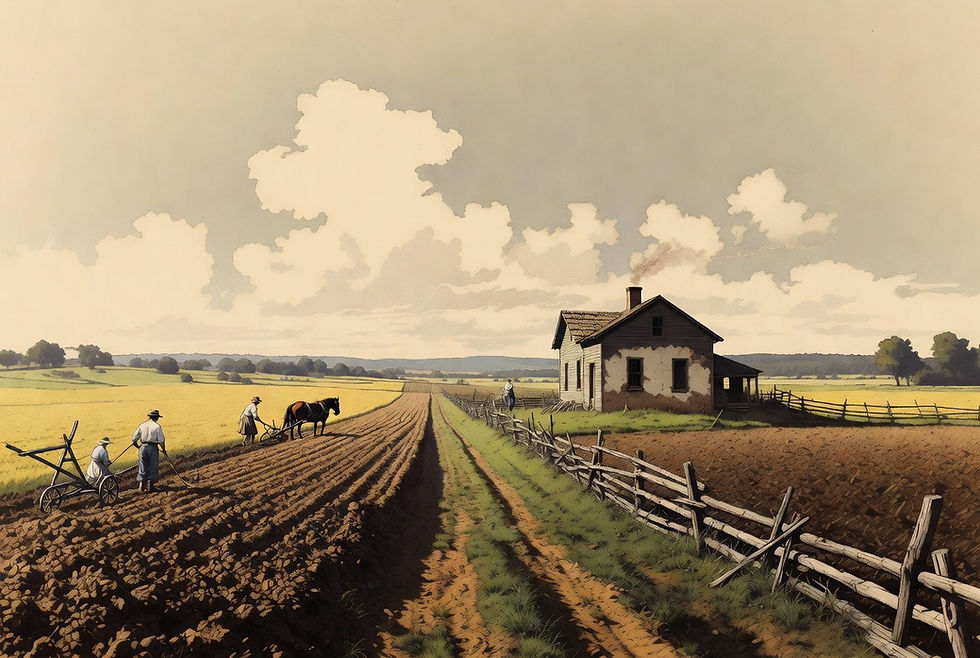
This migration offered better opportunities or family ties as the Indian Territory became the state of Oklahoma in 1907.
The Hills experienced the hardships and quiet triumphs of such moves: building homes, tending farms, and weathering economic uncertainties.

Albert Payton Hill died on October 8, 1938, at age 80 in Heavener. He was laid to rest in Conser Cemetery in Le Flore County, joining a community burial ground that holds many local families. His second wife, Nettie Mae Cameron Hill (later King and Wiles), survived him by many years, passing in 1980 and was buried in Union Ridge Cemetery in Sebastian County.
She had remarried after his death, first to Oscar Lee King in 1951.
Hill’s legacy lives through his descendants, who carried forward the family name across Arkansas, Oklahoma, and beyond. His children from the first marriage established their own households, contributing to the social fabric of the region.
In an era without modern conveniences, Hill exemplified the steadfast character of Southern and Southwestern pioneers: a man who endured personal loss, adapted to new places, and prioritized family amid the transformations of post-Civil War America into the modern age.
His story, pieced from cemetery records and family connections, reflects the broader tapestry of ordinary lives that built the heartland--quiet, resilient, and deeply rooted in land and kin.


