Stone Gardens: A quiet hollow remembers cross hollows Confederate Encampment and Its forgottendead
- Dennis McCaslin

- May 7
- 3 min read


In the gentle, sloping hills of Benton County, just north of modern Lowell and east of Rogers, a narrow valley known as Cross Hollows once sheltered thousands of Confederate soldiers during the harsh winter of 1861–1862. Today, the site is peaceful farmland and woodland along the historic Old Wire Road, but beneath its surface lie the faint traces of one of northwest Arkansas’s most significant Civil War encampments--and a modest, largely unmarked mass grave holding the remains of at least two unknown soldiers who never left.
Cross Hollows earned its name from the intersecting ravines and ridges that form a natural crossroads. The location straddled the Telegraph Road (later the Old Wire Road), the vital north-south artery linking Missouri to Arkansas. Abundant springs provided fresh water, nearby mills supplied lumber and grain, and the high ridges offered defensive vantage points.

After the Confederate victory at Wilson’s Creek in Missouri in August 1861, General Benjamin McCulloch’s army fell back into Arkansas. By late November, commanders selected Cross Hollows as winter quarters. Up to 10,000–12,000 troops from Missouri, Arkansas, Texas, and Louisiana regiments built a sprawling camp of log huts, turf-covered shelters, and even large two-room plank barracks arranged in long rows.
A satellite camp called Camp Benjamin lay roughly two miles to the east.
Life in the encampment was one of routine hardship typical of Ozark winter quarters: drilling on frozen ground, foraging for scarce supplies, battling illness, and enduring the boredom and cold that claimed more lives than battlefield wounds in many units.
Local contractors, including Peter Van Winkle’s sawmill operations, provided timber for the structures. Archaeological work conducted in the early 2000s by the University of Arkansas and the Arkansas Archeological Survey uncovered artifacts that paint a vivid picture of daily existence--forks and plates from mess kits, gun parts (including .69-caliber smoothbore musket components), personal items, and hundreds of hobnails from worn-out boots.

In mid-February 1862, Union Major General Samuel R. Curtis’s Army of the Southwest advanced from Missouri, pushing Sterling Price’s Missouri State Guard south. Price linked up with McCulloch at Cross Hollows. After a brief clash at Bentonville on February 18, McCulloch concluded the position was untenable. Despite Price’s protests, the Confederates abandoned the camp around February 17–22.

As they withdrew toward the Boston Mountains, troops set fire to many barracks and supplies to deny them to the Federals. Union soldiers arriving on the scene found smoldering ruins and, according to some contemporary reports, even food that had been deliberately spoiled or poisoned.
Curtis’s forces used the abandoned site briefly as a staging area before marching toward Pea Ridge, where the decisive battle of the campaign unfolded on March 7–8, 1862. A later skirmish occurred at Cross Hollows in June 1864, but the winter encampment of 1861–62 remains its defining moment.
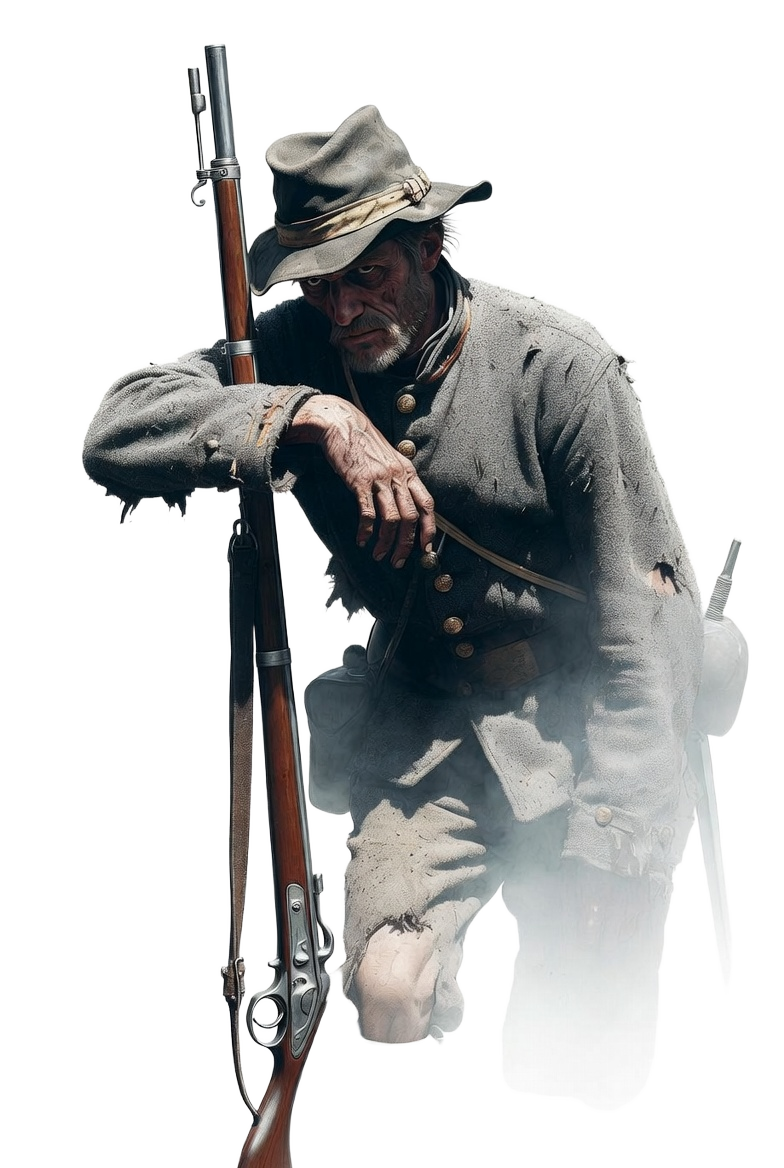
Near the heart of the old encampment lies the small Cross Hollows Mass Grave. According to cemetery records and local historical accounts, it contains the remains of at least two unknown soldiers--one Confederate and, in some descriptions, possibly one Union--who died during the occupation or immediate aftermath. The grave is humble and unmarked by individual stones, consistent with the hurried burials of winter camp deaths from disease or accident.
The site has been recognized by the Benton County Historical Society, which received the land as a donation. A historical marker stands nearby on South Old Wire Road (County Road 83), just 0.2 miles north of its intersection with Dogwood Drive / Cross Hollows Road (County Road 1189), on the left when traveling north.
Coordinates for the general area are approximately 36° 16.866′ N, 94° 6.816′ W.
The mass grave and surrounding encampment site offer a poignant reminder of the human cost of the Civil War in northwest Arkansas. While grand battlefields like Pea Ridge draw more visitors, places like Cross Hollows preserve the quieter, often overlooked stories of soldiers enduring winter far from home. Archaeological investigations have revealed organized camp layouts, defensive features, and everyday artifacts, yet much of the physical evidence remains subtle--shallow depressions, scattered artifacts, and the enduring landscape itself.

Today, the site connects to broader historic trails, including segments of the Trail of Tears route that passed through the hollow decades earlier.
It stands as a modest but powerful testament to the conflict’s local impact, where thousands of men briefly made a valley their home before marching on to larger fates, leaving behind only the hollowed ground and a few unknown graves to mark their passage.
For those seeking to visit, the marker and surrounding area along the Old Wire Road provide a tangible link to this chapter of Arkansas history.