Stone Gardens: A Cherokee "Holy Ground' stands as a silent sentinel just behind the Grove School Administration building
- Dennis McCaslin

- Dec 7, 2025
- 2 min read


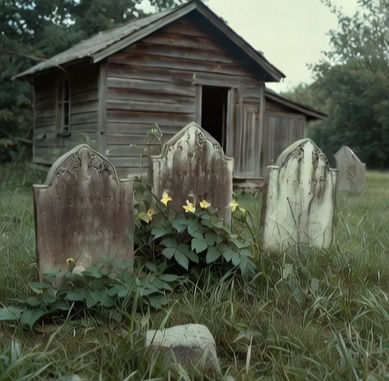
Beneath the sprawling branches of a forty-foot hickory tree on a small rise behind the Grove Schools Administration building, three weathered tombstones keep silent watch. This tiny plot no larger than a backyard, holds the weight of a nation’s grief and the quiet strength of one Cherokee woman.
Electa Crittenden was born on Christmas Day, 1835, in the Georgia mountains her people had called home for centuries. When she was barely three, U.S. soldiers rounded up the Cherokee at bayonet point and marched them west.

Like thousands of other children, Electa walked the Trail of Tears. Hunger, cholera, and freezing rain stalked every mile.
Roughly one in four Cherokees never reached Indian Territory. She did.
By the 1850s she had married Henry Crittenden, another survivor. They settled at a spring-fed crossroads that travelers called Grove Springs. Electa raised children, planted gardens, and helped hold a fragile community together while the wounds of removal were still raw.
Her infant son lies beside her; Henry himself vanished in the chaos of the Civil War. When Electa died on January 20, 1879, at age forty-three, friends buried her on the hill beneath the hickory and carved a simple tribute: “Her gentle ways will ever dwell in hearts of those who knew and loved her well.”

For decades the little cemetery faded from memory. Vines swallowed the stones; a house and shed crept close to its edges. Then, in the early 2000s, a retired descendant named Carol Savage began digging through family records and stumbled onto Electa’s story.
What followed was years of quiet determination,, clearing brush, righting markers, and rallying volunteers.
On a warm May afternoon in 2012, members of the Oklahoma Chapter of the Trail of Tears Association gathered under that same hickory. They sang hymns in Cherokee and English, offered prayers, and unveiled a bronze plaque at the foot of Electa’s stone: “In honor
of one who endured the forced removal of the Cherokees in 1838–1839.”
Today the restored plot is known simply as Trail of Tears Cemetery. Grove schoolchildren walk the short path from campus to stand among the stones and hear the story of a little girl who kept walking when the world tried to break her people.
Cherokee leaders call it holy ground. The hickory still spreads its shade; the plaque still gleams.
Electa Crittenden never sought fame. She only lived, hrough the worst of times and into the fragile peace that followed.
In the heart of modern Grove, her grave and its two companions remain a small, stubborn reminder: survival itself can be the greatest act of resistance.
The cemetery is open to the public. Visitors are welcome to pay their respects and listen for the gentle ways that still linger under the old tree.


