Stoine Gardens: A Kentucky Union family's journey to Arkansas left numerous ancestors across the region
- Dennis McCaslin
- 1 minute ago
- 4 min read


Kenney Cemetery in the hills of Crawford County holds the final resting place of a Kentucky-born Union veteran whose life bridged two states and two centuries.
Tucked in a quiet corner of the Ozarks, the cemetery is the shared burial ground of Jacob B. Gabbard and his wife, Mahala “Haley” Marcum Gabbard.
Their modest graves, one marked with his military service in Company A of the 47th Kentucky Infantry, tell the story of a mountain family that endured war, migration, and the hard work of building new lives on the frontier.

Jacob B. Gabbard was born in August 1824 in Manchester, Clay County, Kentucky, the son of Edward “Ned” Gabbard and Sarah “Sallie” Bowman. Both parents traced their roots deep into the early settlement of southeastern Kentucky.
Mahala was born on 1 July 1824 in Big Creek, Clay County, Kentucky, to Thomas Marcum Sr. and Mary “Polly” Willson Marcum. The couple married on 5 November 1845 in Madison County, Kentucky, and settled into the demanding BASICS of mountain farming.
The Civil War tested their young family in profound ways. In 1863, at nearly forty years old, Jacob enlisted as a private in Company A of the 47th Regiment, Kentucky Mounted Infantry.
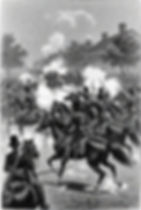
Organized at Irvine and Camp Nelson between October 1863 and January 1864, the regiment consisted largely of mountain men from eastern Kentucky counties who remained loyal to the Union. These units were crucial for defending the state against Confederate raiders and guerrilla bands that plagued the region.
Jacob’s company participated in operations aimed at securing Kentucky, including the defense against John Hunt Morgan’s forces.
The regiment saw action in the Battle of Cynthiana in June 1864, where Union troops under General Edward Hobson clashed with Morgan’s raiders in a sharp engagement involving mounted infantry charges and street fighting.
Though the 47th helped stabilize the area, the war brought constant hardship to families left behind. Jacob served until the regiment mustered out in late 1864, then returned to Mahala and their growing household in Jackson County, Kentucky.
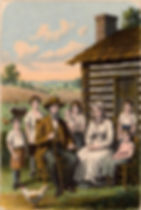
Back on their farm near McKee, the Gabbards raised thirteen children amid the challenges of postwar reconstruction. The 1870 census shows Jacob farming while Mahala managed the large household. Their known children included Mary Jane, Nancy Jane, John W., Edward E., Lewis M., Thomas Lewis, Sarah E., twin daughters Rachael and Mahala Catherine, Frances Fannie Jane, Green B., Phillip H., and Jacob B. Jr.
Several children did not survive to adulthood, a common tragedy of the time. Mahala later recalled in the 1910 census that she had given birth to thirteen children, with seven still living.
Sometime in the late 1870s or early 1880s, like many Kentucky families seeking fresh land and opportunities, Jacob and Mahala joined the westward migration into Arkansas. They settled in the rugged northwestern counties, first in areas around Cass in Franklin County and later near Red Star in Madison County.
The Ozark landscape, with its hollows and ridges reminiscent of their Kentucky homeland, offered a new beginning. Jacob continued farming, while the family maintained close ties across the region.

.Jacob B. Gabbard died on 14 November 1907 at the age of eighty-three in Cass, Franklin County, Arkansas. Mahala survived him, living with their son Phillip and his family until her own death on 4 May 1913 at age eighty-eight in Red Star, Madison County. Both were laid to rest side by side in Kenney Cemetery in Crawford County. J
acob’s marker proudly notes his Union service in Company A, 47th Kentucky Infantry, a lasting testament to his wartime contributions. Their story reflects the broader patterns of nineteenth-century American life: deep Kentucky mountain roots, unwavering Union loyalty during a divided conflict, the sacrifices of a large pioneer family, and the determined move westward that helped settle the Arkansas Ozarks.
In the peaceful grounds of Kenney Cemetery, Jacob and Mahala Gabbard rest together, their legacy carried forward through descendants who still honor the Union veteran and the loving mother who raised their family across two states.

---+
+++++++++
Jacob B. Gabbard died on 14 November 1907 at the age of eighty-three in Cass, Franklin County, Arkansas. Mahala survived him, living with their son Phillip and his family until her own death on 4 May 1913 at age eighty-eight in Red Star, Madison County.
Both were laid to rest side by side in Kenney Cemetery in Crawford County. Jacob’s marker proudly notes his Union service in Company A, 47th Kentucky Infantry, a lasting testament to his wartime contributions.
28 25 to 30 miles from Van Buren in the Winfrey Valley (also called Winfred Valley) community of Crawford County, Arkansas, at the head of Frog Bayou Creek.
It's a remote, rural cemetery best accessed during dry summer months.
Their story reflects the broader patterns of nineteenth-century American life: deep Kentucky mountain roots, unwavering Union loyalty during a divided conflict, the sacrifices of a large pioneer family, and the determined move westward that helped settle the Arkansas Ozarks.
In the peaceful grounds of Kenney Cemetery, Jacob and Mahala Gabbard rest together, their legacy carried forward through descendants who still honor the Union veteran and the loving mother who raised their family across two states.