Our Arklahoma Hertigae: From Captivity to Council House--The Armstrong legacy across three generations


On a quiet spring morning, Robert Armstrong, a Wyandot interpreter and devoted Christian, breathed his last. Born a white child and taken captive by warriors, Robert’s life would become the origin story for a family that shaped the legal, political, and spiritual identity of the Wyandotte Nation across a century.
His descendants—most notably his son Silas and grandson Silas Jr.--would extend his legacy from the tribal council fires of Kansas to the dusty plains of Indian Territory.

Robert Armstrong was no ordinary man. As a boy, he was captured during a frontier raid in Pennsylvania and adopted into the Wyandot Nation, receiving the name O-no-ran-do-roh.
He grew up immersed in the language, customs, and spiritual practices of the Wyandot, eventually marrying into the tribe and becoming a respected hunter and interpreter.
After General Wayne’s 1795 treaty opened new territories, Robert reconnected with white settlers and began to master English once more.
His ability to bridge cultures led him into trading and interpreting work throughout Ohio.
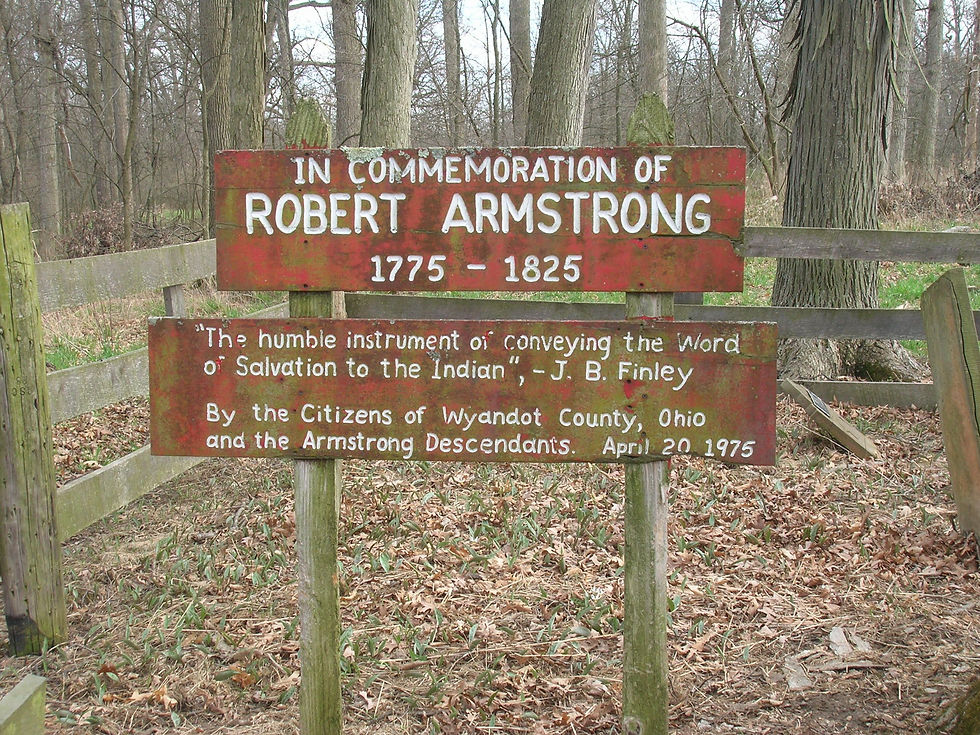
But it was in 1819 that Robert underwent the most profound transformation—his conversion to Christianity. Inspired by the preaching of missionary John Stewart, he became a fiery exhorter in the Wyandot language, bringing the Gospel to the very people who had raised him.
He died in 1825, having become a cornerstone of the early Native Methodist movement in Ohio.

Silas Armstrong Sr. was a man of two worlds --culturally Wyandot, yet aware of his European roots--and inherited his father’s sense of mission and influence. By 1843, as the Wyandot were forcibly removed westward, Silas helped lead their migration to Kansas Territory.
He built much more than homesteads. Silas opened a trading post, served as a boundary commissioner, jailer, and eventually became Head Chief of the Wyandot Nation in 1858.
He guided his people through volatile years marked by statehood battles, broken treaties, and encroaching settlement.
Under his leadership, the community established homes, a council house, and resistance strategies to preserve their autonomy.
At his death in 1865, Chief Armstrong was memorialized as “the constant friend of the Indians… a devoted Christian and a good Mason.” He lies beneath a grand monument in Huron Indian Cemetery—a still point in the turning world of Wyandot self-determination.
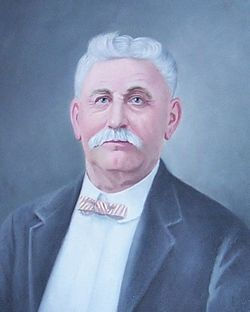
Born just weeks before his mother Sarah Preston’s death in 1843, Silas Armstrong Jr. inherited not only the legacy of his grandfather and father but also a world changed.
Raised in a household of wealth and tribal prestige in Wyandotte, Kansas, Silas Jr. would later become a county sheriff and respected civic figure during the post-Civil War years.
His first marriage to Marian Parr produced a son, Robert P. Armstrong, continuing the family name. Following Marian’s death, he later married Estelle Aubrey Brown, moving by the turn of the century to Indian Territory (now Oklahoma), where he lived among the Shawnee before settling in Wyandotte in Ottawa County.

When he died in 1907, he was buried with honor in Wyandotte Indian Cemetery—his journey closing a chapter that began generations earlier on a Pennsylvania frontier.
The Armstrongs are a family of interpreters--not just of language, but of culture, land, faith, and law.
From Robert’s trauma and redemption, to Chief Silas’s tireless diplomacy, to Silas Jr.’s navigation of post-removal life, their story arcs through the tectonic shifts of American expansion and Native endurance.
This is more than biography. It is the map of a people-drawn in footsteps, signatures, prayers, and graves—etched across Ohio, Kansas, and Oklahoma.


