Our Arklahoma Heroes: Medal of Honor winner from Mayes County earned high military praise for his actions on February 9, 1945


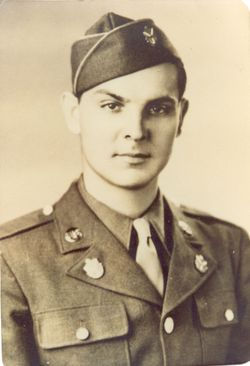
John Noah Reese Jr. was born June 13, 1923, in Muskogee , to John Noah Reese Sr. and Cleathel Frances Barnes. His father was born January 24, 1900, in the Cherokee Nation, had one-half Cherokee blood, and was enrolled on the Dawes Rolls as Cherokee by Blood under census card 9757 and roll number 21925.
John Sr.’s parents were Tuxie Oceola Reese and Mary Manda Hall, who raised him and four siblings in Cherokee Nation townships before the family later lived in Muskogee County after statehood. John Sr. worked as a lineman and later at the Oklahoma Ordnance Works in Pryor.
He married Cleathel Frances Barnes on June 2, 1920, in Wagoner County. Cleathel was born in 1904 to Noah Barnes and Carrie Belle Fusselman. The couple’s first child, daughter Lorene Frances Reese, was born in 1921. By the 1930 census the family lived as roomers in Sulphur, Murray County, Oklahoma.

They later settled in Tulsa, where John Jr. attended Woodrow Wilson Junior High School and graduated from Central High School in 1941. School records described him as a quiet, sensible sort of boy who ran on the track team without winning events and belonged to no clubs. After graduation he worked briefly at the Oklahoma Ordnance Works, following his father’s path.
He registered for the World War II draft on June 30, 1942, in Tulsa. On December 18, 1942, from Pryor in Mayes County, he enlisted in the U.S. Army at Tulsa. Army records list his residence as Mayes County, Oklahoma, service number 38325537, height five feet eight inches, weight 140 pounds, four years of high school, civilian occupation unskilled utility work, single without dependents, and enlistment for the duration of the war plus six months.

He entered as a private. He trained with the 37th Infantry Division, a unit originally formed from Ohio National Guard elements that had already seen combat in the Solomon Islands. He was assigned to Company B, 148th Infantry Regiment, on July 21, 1944, while the unit was stationed on Bougainville.
The 37th Infantry Division’s wartime path began in the Solomons. Elements of the 148th Infantry participated in the New Georgia campaign in July 1943. The division then moved to Bougainville, with the 148th landing in November 1943. It held the perimeter and helped repulse major Japanese counterattacks in March 1944, including fighting around Hill 700.

After further service on Bougainville the division prepared for the Luzon campaign. It landed at Lingayen Gulf on January 9, 1945. The 148th Infantry advanced through the Central Plains against opposition, took part in the capture of objectives around Clark Field by the end of January, and reached the outskirts of Manila by February 4, 1945. The division crossed the Pasig River and engaged in the house to house fighting that characterized the Battle of Manila.
On February 9, 1945, Reese’s platoon of Company B, 148th Infantry, 37th Infantry Division, assaulted the Paco Railroad Station in Manila. The station was strongly defended by about 300 Japanese soldiers armed with machine guns and rifles, supported by several pillboxes, three 20 mm guns, one 37 mm gun, and heavy mortars. During a frontal assault across open ground the platoon was halted about 100 yards from the station by intense enemy fire
. On his own initiative Reese left the platoon, accompanied by Private Cleto L. Rodriguez, and continued forward to a house about 60 yards from the objective. Under constant enemy observation the two men remained there for an hour, firing at targets of opportunity, killing more than 35 Japanese and wounding many more.

Moving closer to the station they discovered a group of Japanese replacements attempting to reach the pillboxes. They opened heavy fire, killed more than 40, and stopped further attempts to man the emplacements. Enemy fire intensified as they advanced to within about 20 yards of the station. From that point Reese provided effective covering fire and drew enemy fire to himself while Rodriguez killed seven Japanese and destroyed a 20 mm gun and a heavy machine gun with hand grenades.
With ammunition running low the two began withdrawing toward American lines, alternately providing covering fire for each other. During this movement Reese was killed by enemy fire as he reloaded his rifle. In two anone-halflf hours of fighting, the pair killed more than 82 Japanese, completely disorganized the defense, and paved the way for the subsequent capture of the strongpoint.

Reese was posthumously awarded the Medal of Honor. War Department General Orders No. 89, dated October 19, 1945, authorized the award. The medal was presented to his parents, Mr. and Mrs. John Reese Sr., in a ceremony in Pryor on November 11, 1945.
He also received the Purple Heart, the Combat Infantryman Badge, and campaign medals for the Asiatic Pacific and Philippine theaters. A portion of Oklahoma State Highway 20 between Pryor and Salina was later designated the PFC John Reese Jr. Medal of Honor/Purple Heart Memorial Highway. The Cherokee Nation placed a memorial recognizing him.
His remains were returned to Oklahoma and interred at Fort Gibson National Cemetery, Fort Gibson, Muskogee County, in Section 2, Site 1259 E. His father died October 21, 1962, his mother in 1970, and his sister Lorene in 2002.


