Our Arklahoma Heritage: Arkansas literary gem was mined from the rich history of rural Franklin County


Francis Irby Gwaltney (1921–1981), a prolific Southern author, scholar, and professor, left an ingrained mark on American literature with his vivid novels and screenplays, many of which drew from his roots in Arkansas and his experiences as a World War II veteran.
His life and work, steeped in the culture of the South, continue to resonate with readers and scholars alike.
Born on September 9, 1921, in Traskwood (Saline County) to Dr. Boulanger Gwaltney and Mary Effie Irby Gwaltney, Francis faced early hardship when his father passed away in 1923.
Raised in Charleston by his mother, Gwaltney grew up immersed in the rural settings and tight-knit community that would later shape his writing.
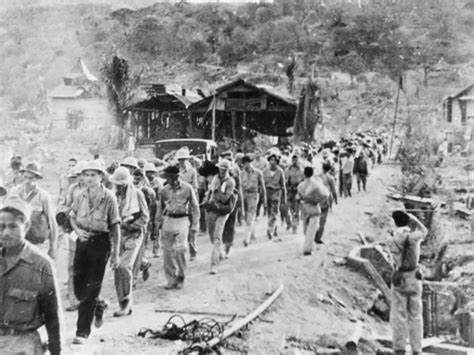
His early life was marked by his service in World War II with the 112th Cavalry during the Philippines Campaign (1944–45).
It was here that he forged a lifelong friendship with fellow soldier and future literary giant Norman Mailer, a connection that would influence his career.
\

After the war, Gwaltney returned to Arkansas, determined to further his education. He earned his high school diploma before pursuing a degree in English at the University of Arkansas, followed by a master’s degree in 1950.
His academic career took him to Arkansas Tech University in Russellville (1952–53, 1970–81) and Louisiana Tech University in Ruston, Louisiana (1963–70), where he inspired students with his passion for literature and storytelling.
On August 19, 1947, he married Emma Carolyn Calhoun, who remained his partner until his death in 1981.
Gwaltney’s literary career began to flourish in the 1950s, a decade when his novels gained recognition for their authentic portrayal of Southern life.

His debut novel, The Yeller-Headed Summer (1954), written with encouragement from Norman Mailer, showcased his ability to weave rich, character-driven narratives. However, it was The Day the Century Ended (1955), inspired by his wartime experiences, that cemented his reputation.
The novel’s gripping depiction of soldiers grappling with the moral complexities of war was adapted into the 1956 film Between Heaven and Hell, starring Robert Wagner and Buddy Ebsen.
Gwaltney’s work stands out for its deep connection to Arkansas, making him one of the state’s most celebrated authors.
His novels, including The Quicksand Years (1960) and A Moment in the Sun (1964), explored themes of identity, struggle, and redemption against the backdrop of Southern culture. His hometown connection to Charleston and Franklin County was detailed in his 1974 novel Idols and Axle Grease.

Critics praised his ability to capture the nuances of rural life, blending humor, heartache, and humanity in stories that felt both universal and distinctly regional.
Beyond novels, Gwaltney made significant contributions to television, writing teleplays for acclaimed series like Alfred Hitchcock Presents and The Fugitive. His scripts brought the same psychological depth and narrative intensity that defined his prose, earning him a reputation as a versatile storyteller.

Francis Irby Gwaltney passed away on February 27, 1981, in Conway, Arkansas, at the age of 59. He was laid to rest at Crestlawn Memorial Park, leaving behind his wife, Emma, and a legacy of literary achievement.\
In recent years, renewed interest in Southern literature has brought attention back to Gwaltney’s contributions. Scholars note that his collaboration with Norman Mailer and his ability to translate personal and regional experiences into universal stories make him a significant figure in 20th-century American letters.
. From the battlefields of the Philippines to the classrooms of Arkansas and Louisiana, he carried the spirit of the South in his words. His novels, screenplays, and teachings remind us that even in the smallest towns, stories of courage, loss, and hope can resonate far beyond their origins.
For those interested in exploring Gwaltney’s work, libraries and used bookstores remain treasure troves for his novels, while his teleplays can be found in archives of classic television.
As Arkansas continues to celebrate its cultural heritage, Francis Irby Gwaltney stands as a beacon of its literary past, inviting new generations to discover the South through his eyes.


