Our Arklahoma Heritage: Vinta businessman and road commissioner paved the way for Route 66
- Dennis McCaslin

- Jan 5
- 4 min read


In the early days of America's automobile boom, one man's vision helped pave the way for what would become an iconic symbol of freedom and adventure: U.S. Route 66.
Cyrus Stevens Avery, born on August 31, 1871, in the small town of Stevensville, Pennsylvania, rose from humble beginnings to become known as the "Father of Route 66."
His life intertwined family, business ambition, and a relentless drive to connect the nation through better roads, leaving a mark that still draws travelers to Oklahoma's historic highways.
Aavery's early years were shaped by migration and hard work. His parents, Alexander James Avery and Ruie Stevens Avery, moved the family to Missouri in 1881, settling in Noel by 1890.

Young Cyrus earned a teaching certificate and pursued higher education at William Jewell College in Liberty, Missouri, graduating with a Bachelor of Arts in 1897. That same year, he married Essie McClelland, beginning a partnership that would span over six decades.
the couple built a family together, raising three children: sons Leighton and Gordon, and daughter Helen, who later married and became Helen Avery Berghell.
Essie supported Cyrus through his ventures, from farming to public service, until her death in October 1962.
By 1904, the Averys had relocated to Vinita in Indian Territory, just three years before Oklahoma achieved statehood in 1907. Vinita, a bustling crossroads town, provided fertile ground for Cyrus's entrepreneurial spirit.

He started as an insurance agent but quickly expanded into real estate loans and oil investments, founding the Avery Oil & Gas Company. The family didn't stay long in Vinita; in 1907, they moved to Tulsa, where Cyrus purchased a farm in 1908.
There, he raised Holstein and Ayrshire cattle, Duroc hogs, Shropshire sheep, and Percheron horses. By the 1910s, he had established a larger 1,400-acre operation northeast of Tulsa, focusing on diversified agriculture.
Ever the innovator, Avery opened one of Tulsa's first "proto-motels" just outside town after World War I, catering to the growing number of motorists, a foreshadowing of his highway legacy.

Avery's public career took off in Tulsa, where he served as chairman of the Tulsa County Commission from 1913 to 1916. During this time, he oversaw the construction of the Eleventh Street Bridge across the Arkansas River, a vital link that would later become part of Route 66.
His passion for roads deepened as automobiles transformed travel. Dirt and gravel paths were no match for the new machines, and Avery joined the Oklahoma Good Roads Association, drawing inspiration from similar efforts in Missouri.
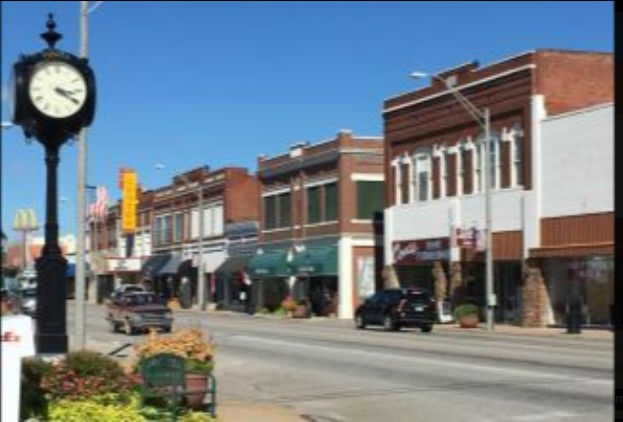
From 1917 to 1927, he presided over the Albert Pike Highway Association, advocating for improved infrastructure. In 1923, he was elected to the Oklahoma State Highway Commission, where he pushed for a gasoline tax to fund road projects, modernizing the state's transportation network.
Avery's national impact came in 1925 when U.S. Secretary of Agriculture Howard M. Gore appointed him to the Joint Board of Interstate Highways. This federal group was tasked with creating a unified national highway system. Avery championed a route that would connect Chicago to Los Angeles, passing through Tulsa and Oklahoma City to boost commerce in his adopted state.

He argued against paths over the Rocky Mountains, favoring a more practical southern alignment. Political wrangling ensued--numbers like U.S. 60 and U.S. 62 were debated, with compromises made for states like Kentucky--but Avery secured the unassigned number 66 for the Chicago-to-Los Angeles highway.
Congress approved the system in 1926, and Route 66 was born.
Not content with just designation, Avery founded the U.S. Highway 66 Association in 1927 to promote paving and tourism along the route. He served as its vice president from 1929 and recruited boosters like Lon Scott to market it as "The Main Street of America."
Avery also contributed to the Ozark Trails system, linking St. Louis to Amarillo, Texas, which fed into Route 66. His efforts turned the highway into a lifeline for Dust Bowl migrants, World War II troops, and postwar vacationers, symbolizing opportunity and the open road.

Avery's later years were quieter, focused on his farms and family. He retired from active highway work but remained a Tulsa civic leader.
Essie's passing in 1962 preceded his own death on July 2, 1963, in Los Angeles, California, at age 91. He was laid to rest in Tulsa's Rose Hill Cemetery, close to the roads he helped build.
Today, Avery's legacy endures along Route 66. In Tulsa, Avery Drive honors him in the southwest part of the city, and the Cyrus Avery Route 66 Memorial Bridge--formerly the Eleventh Street Bridge--was renamed in 2004. The Cyrus Avery Centennial Plaza features a 2012 sculpture, "East Meets West," depicting Avery encountering a horse-drawn wagon on the bridge, symbolizing the shift from old trails to modern highways.
Since 1997, the National Historic Route 66 Federation has awarded the Cyrus Avery Award to those preserving the route's history.
Cyrus Avery's story is one of vision and persistence
. From Pennsylvania farm boy to Oklahoma oilman and road pioneer, he wove his family's journey into the fabric of American mobility. Route 66, stretching through Vinita and beyond, remains his greatest monument—a path that connected hearts, homes, and horizons.


