Our Arklahoma Heritage: Van Buren and Fayetteville were both home to a central figure in the Abolitionist movement


Jonas March Tebbetts was born on January 5, 1820, in Rochester, New Hampshire, one of five sons of Enoch Tebbetts and Anne Roberts Tebbetts. His daughter Marian later described the household as a New England low tariff family, rooted in the traditions of a region that valued free trade and careful thrift.
He received his early education at Phillips Exeter Academy in Exeter, New Hampshire. By age sixteen, he had left school to work as a traveling salesman for Philip Doddridge’s Family Expositor, covering routes through New England, Pennsylvania, Ohio, and Kentucky.
In 1838 he enrolled at Western University in Pittsburgh, later the University of Pittsburgh, but his command of languages and history quickly made him an instructor of English, ancient history, Greek, and Latin. He also briefly worked as a reporter for the Pittsburgh Gazette before taking a job on a steamboat that plied the Mississippi and Arkansas rivers.

The river work brought him to Van Buren in Crawford Count around 1839 or 1840. There he met Judge George W. Paschall, who prepared him for the Arkansas bar. Tebbetts opened a law practice that specialized in representing Cherokee, Choctaw, and Crow people living in Indian Territory.
He was elected judge in Van Buren and, as a Democrat, became prosecuting attorney of the Seventh Circuit Court of Arkansas in 1844, a post he held until the state seceded. He also served as clerk of the Arkansas General Assembly in 1846 and again from 1848 to 1849.
His circuit duties carried him into Washington County, where in 1847 he married Matilda Winlock, a student at the Fayetteville Female Seminary. The couple settled in Fayetteville and in 1853 and 1854 built the Greek Revival house later known as Headquarters House or the Tebbetts House. They had several children, among them a daughter Lillian who would later marry the petroleum operator John H. Galey.

That same year Tebbetts attended a revival led by followers of Alexander Campbell and joined the Christian Church (Disciples of Christ). The new congregation in Fayetteville, under pastor Robert Graham, founded Arkansas College in 1850
. Tebbetts formed lasting friendships with Graham and with college president William Baxter, both of whom shared his growing distaste for slavery.
In 1850, he was elected to the Arkansas House of Representatives from Washington County and served from November of that year until January 1851, earning a reputation as a pro-Union, antislavery Democrat. In 1856 he backed Alfred Burton Greenwood against the slavery defender Thomas Carmichael Hindman at the Democratic convention in Batesville.
Some later accounts claim he was the first attorney general of Arkansas or that the legislature appointed him attorney for the state bank branch in Fayetteville, but the contemporary record centers on his judicial and prosecuting roles rather than those titles.

When Arkansas left the Union in May 1861, Tebbetts remained openly loyal. Washington County itself had voted against secession. On February 23, 1862, Union forces under General Alexander Asboth occupied Fayetteville; Tebbetts offered Headquarters House as their headquarters and presented a flag. The Federals withdrew three days later.
Confederate General Benjamin McCulloch returned, arrested Tebbetts for supporting the Union army, and sentenced him to death. He was held at Fort Smith.

On March 7, 1862, during the Battle of Pea Ridge, a sharpshooter’s bullet killed McCulloch. The charges were dropped and Tebbetts was released. Facing continued threats, he fled to Missouri for the rest of the war. After Appomattox, the hostility of former Confederates drove him and his family from Arkansas permanently.
They settled in Harrodsburg, Kentucky, where Tebbetts resumed private law practice. In 1866 he lobbied for Confederate pardons and made an unsuccessful bid for the United States Senate. In 1871 he served briefly as mail agent for Arkansas.
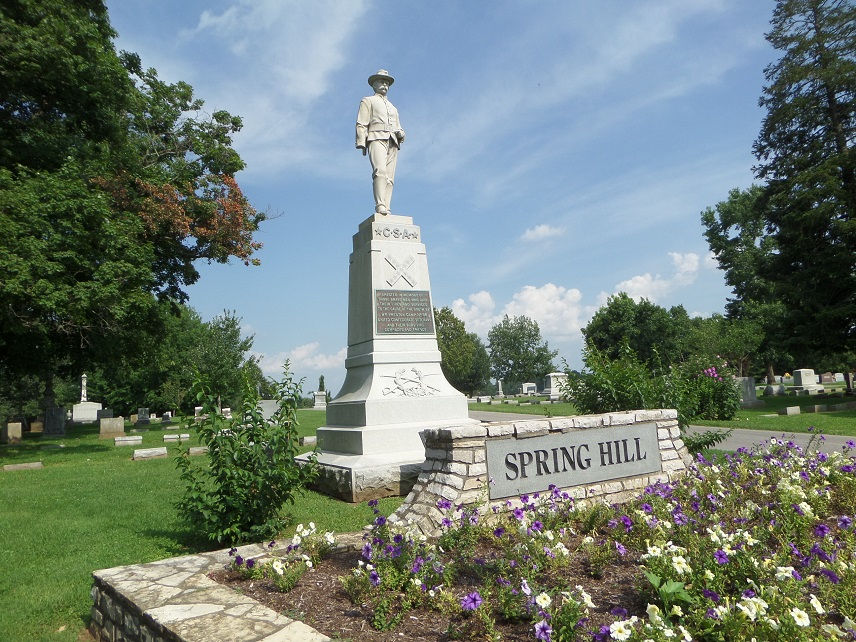
His wife Matilda died in 1892. Tebbetts then moved to the Pittsburgh home of his daughter Lillian and her husband John H. Galey, a wildcatter with claims in Pennsylvania, Kansas, and Texas. He died there on January 16, 1913, at the age of ninety-three, reportedly of influenza, and was buried beside his wife in Spring Hill Cemetery in Harrodsburg, Mercer County, Kentucky.
Headquarters House, damaged in the Battle of Fayetteville and later occupied by both armies, survived. In ,1967 it passed to the Washington County Historical Society and today operates as a museum, a lasting physical link to the New Hampshire-born lawyer whose career began in Crawford County and whose Unionism cost him his home in Arkansas but not his long life.


