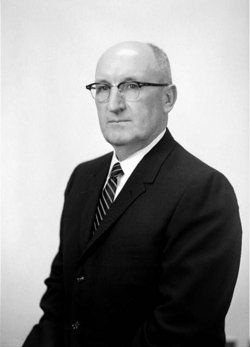
Our Arklahoma Heritage: The patriarch of a deep-rooted family along the Arkansas River served as Union soldier as a teen


Island Cemetery sits on high ground near the Arkansas River in the Arbuckle Island area of Sebastian County, roughly nine to eleven miles northeast of Lavaca along Highway 96. T
he surrounding community never expanded beyond the bare essentials of frontier settlement. An Island post office operated from 1890 to 1911. A general store or two and a blacksmith shop supplied daily needs while a school served the children.

in 1925 roughly seventy five homes stood on the island itself along with a ferry that crossed the river on a rope guide. Floods came nearly every year. In 1943 the river rose high enough to wipe out nearly everything on the island. Residents later found old Spanish coins in the mud.
The place stayed remote, a scattering of farms and river people who depended on the high ground of the cemetery for their dead and on the occasional store or blacksmith for the living.

At least a dozen Underwoods and their spouses rest in the cemetery. Andrew Jackson "Jack" Underwood, born in 1846 in Hamilton County, Tennessee, lies there as a Union veteran of Company E, 1st Arkansas Infantry.
Andrew Jackson “Jack” Underwood (born October 8, 1846, in Hamilton County, Tennessee) enlisted in 1863 as a private in Company E, 1st Arkansas Infantry (Union). Military records confirm this assignment (his headstone incorrectly lists the 2nd Arkansas Infantry).
The 1st Arkansas Volunteer Infantry was organized and mustered into Federal service at Fayetteville, on March 25, 1863, under Colonel James M. Johnson. It was recruited primarily among Southern Unionists (“Mountain Feds”) from northwestern Arkansas counties including Washington, Madison, Newton, Benton, Searcy, and Crawford.
At muster the regiment numbered about 36 officers and 810 enlisted men; many were poorly equipped, often still wearing civilian or butternut clothing, barefoot or nearly so, and armed with scavenged weapons from the Prairie Grove battlefield.
The regiment spent its early months on duty at Fayetteville and took part in the defense against Confederate General William Cabell’s attack on April 18, 1863. Shortly afterward it marched to Springfield, Missouri (April 25–May 4), where it remained until July.

During this period Company E’s men were detailed to guard forage trains and conduct patrols while still lacking adequate shoes, coats, and blankets. The regiment then moved to Cassville, Missouri, in early July before joining the Army of the Frontier at Fort Gibson in the Cherokee Nation on August 17. It participated in the pursuit of Cabell’s forces to Perryville (skirmish August 26) and the actions at Devil’s Backbone / Back Bone Mountain that culminated in the capture of Fort Smith on September 1, 1863.
The 1st Arkansas was among the first Union units to enter the fort; an officer later noted that the regiment had marched some 400 miles on scanty rations and poor water.

From September 1863 to March 1864 the regiment performed garrison duty at Fort Smith and conducted numerous scouts and expeditions in the surrounding region (including actions near Moffatt’s Station, Mount Ida, and a scout from Waldron into Caddo Gap and Dallas). In March 1864 it left Fort Smith as part of General Frederick Steele’s Camden Expedition.
The regiment was engaged or present at Prairie d’Ane (April 9–13), Moscow (April 13), the occupation of Camden, and the hard-fought Battle of Jenkins’ Ferry on the Saline River (April 30), where it helped repulse Confederate attacks in swampy, knee-deep conditions. After the campaign it returned to Fort Smith by mid-May 1864 and remained there on garrison, escort, and frontier duty through the end of the war, taking part in later skirmishes in Bates Township and Newton County.
The regiment was mustered out on August 10, 1865.
Underwood, then a teenager, served through these operations as a private in Company E. Like many in the unit he was a border-state or transplanted Unionist who chose Federal service amid the divided loyalties of the Trans-Mississippi. He later received a military pension for his service.

After the war he settled in western Arkansas.
He married Elizabeth Belle Isabelle Ballard and fathered James Lewis Dink Underwood among others before a second marriage to Mary Melisa Brotherton. James Lewis Underwood, born in 1865, is buried beside his wife Eveline Lee.
Their son James McKinley Mack Underwood, born in 1896, rests with his wife Mary Alice Brotherton, daughter of Lum and Sarah Mangus Brotherton.
Later generations include Davis James Underwood, Paul Levi Pete Underwood who served in Korea, his wife Lavon Thompson, their son Paul Terrance, Albert Jackson Fish Underwood, Nellie Price Underwood, Norma Underwood Harriman, Jerry Faye Underwood Wilson, Harold Wayne Underwood, and the infant Sharel Elaine. The stones and records show a tight cluster of one extended line that stayed put.

The Underwoods intermarried with other local pioneer families that shared the same thin soil and river bottom. The Brotherton connection ran deep.
Andrew Jackson married into the family, and his grandson Mack married Mary Alice Brotherton. Brothertons appear across Sebastian and nearby Franklin counties as farmers and later as the operators of a long standing funeral home in Charleston.
Ballard blood entered through Andrew Jackson’s first wife. Lee, Thompson, Price, Harriman, Wilson, and White names also appear on or beside the Underwood markers.
These were the same families that buried their own in Island Cemetery or the nearby Arbuckle Cemetery, people who raised crops, ran the store, shoed the horses, and waited out the floods together.

Down the line the story stays rooted in that remoteness yet shows small sparks of wider connection. Andrew Jackson’s Union service in a divided border state placed one branch firmly on the northern side of the Civil War.
His grandson Mack and great grandsons carried on as farmers and laborers around Lavaca and Riverdale. Albert Jackson Fish Underwood, born near Arbuckle Island in 1923, served in World War II, worked for a roofing company in Fort Smith, and spent his free time fishing the river and hunting Indian artifacts left by earlier peoples.
Paul Levi Underwood served in the Korean Conflict. Their children and grandchildren stayed close enough that funerals still drew the family back to the same high ground.
The same river that isolated the community also preserved its memory in the cemetery stones, a quiet record of people who never needed more than a post office, a store, and a blacksmith to hold their world together.