Our Arklahoma Heritage: The man who provided an iconic statue to Crawford County rests under a humble headstone


On the southern end of Main Street in Van Buren a marble monument rises from the courthouse lawn--a sentinel of memory carved by a man whose life bridged war and peace, artistry and valor.
That man was Col. Thomas Harrison Elgin, a Confederate veteran turned master stonecutter, whose legacy endures not only in the monuments he left behind but in the quiet dignity with which he lived.
Thomas H. Elgin was born on October 18, 1840, in Palmyra, Missouri, to Dr. Walter W. Elgin and Zarelda A. Lewis Elgin. His father, a respected physician from Woodford County, Kentucky, moved the family to Quincy, Illinois, where he practiced medicine until his death in 1888. His mother, Zarelda, born in Elizabethtown, Kentucky, passed away in 1869.
Together, they raised a family steeped in education and civic duty.
Thomas was one of several children, including Emily Genevieve, Charles E., and Anna E. Buckley--his sister with whom he would spend his final days. The Elgin family’s presence in Quincy was prominent, and their burial plots in Woodland Cemetery reflect their deep roots in the community.

When the Civil War erupted, Elgin set aside his academic pursuits and enlisted with the Missouri State Guard under General Sterling Price. He later served in Marmaduke’s cavalry, rising to First Lieutenant in the commissary department.
He was wounded multiple times and captured during the siege of Vicksburg. After being paroled, he returned to duty, demonstrating a steadfast commitment to his cause and comrades.
His wartime experiences--marked by hardship, loyalty, and survival--would later inform his deep commitment to honoring the memory of fallen soldiers through his postwar work.
After the war, Elgin transitioned from soldier to sculptor. He began as a commercial traveler for a marble firm in Illinois before settling in Russellville in 1878. There, he founded a marble and monument business in 1882 that quickly gained regional acclaim.

Among his most enduring works is the Van Buren Confederate Monument, originally erected in Fairview Cemetery in 1898 and later moved to the Crawford County Courthouse lawn in 1906.
Commissioned by the Mary Lee Chapter of the United Daughters of the Confederacy, the monument honors nearly 1,000 Confederate soldiers from the region. Elgin’s craftsmanship gave form to remembrance, his chisel etching history into stone.
In recognition of its historical and artistic significance, the Van Buren Confederate Monument was added to the National Register of Historic Places in 1996 as part of the Civil War Commemorative Sculpture Multiple Property Submission.
The Crawford County Courthouse, where the monument now stands, is also listed on the National Register, further cementing the site’s importance as a cultural and historical landmark.
Though many of Elgin’s other works remain uncredited in public records, cemeteries across Pope, Johnson, and Crawford counties still bear the hallmarks of his artistry--elegant scrollwork, classical motifs, and the distinctive polish of a master stonecutter.
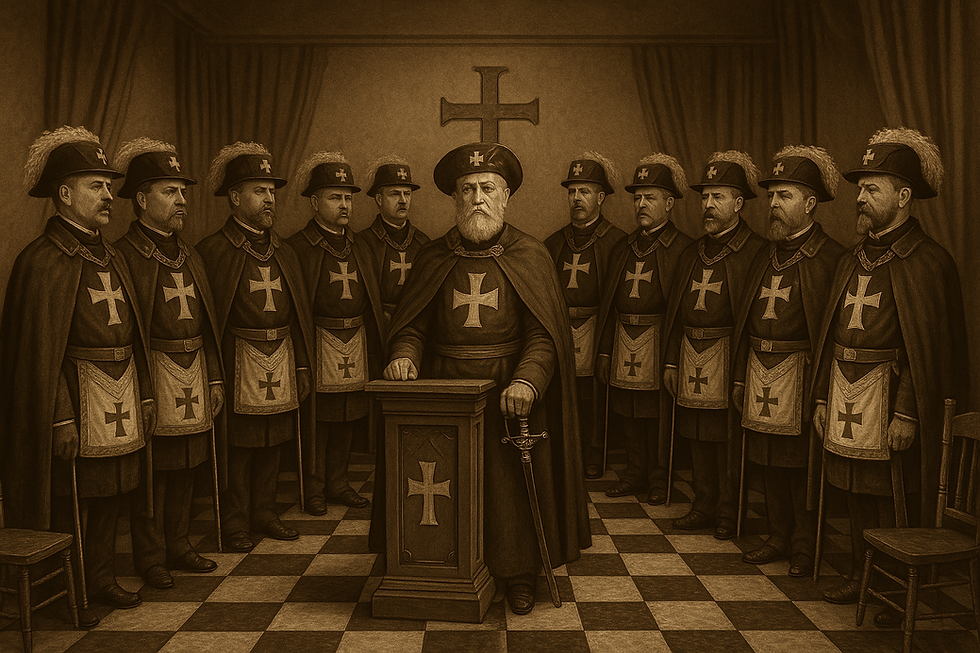
Elgin’s influence extended beyond his workshop. He was a prominent member of the Knights Templar, affiliated with Palestine Commandery No. 7, and served as past Eminent Commander for the State of Arkansas. His leadership in fraternal circles reflected his commitment to community, honor, and tradition.
In declining health, Elgin returned to Quincy to be near his sisters. He died on July 11, 1898, at the home of Mrs. A. E. Buckley. His funeral was held the following day, and he was laid to rest in Woodland Cemetery, near the graves of his parents and siblings.

And here lies a quiet irony: the man who sculpted towering memorials and intricate tributes for others is himself remembered by a simple, flat stone bearing only his initials and date of death. No grand epitaph, no carved laurels--just the barest inscription.
It is a humbling contrast to the ornate monuments he created, and perhaps a reflection of his own humility or the haste of his passing.
Yet in the courthouse lawns and cemetery hills of Arkansas, his true monument endures--not in the stone that marks his grave, but in the ones he raised for others.
His legacy lives on in the enduring silence of marble, in the names he preserved, and in the communities that still walk among his work.


