Our Arklahoma Heritage: The life and legacy of Jack C. Montgomery, WWII Medal of Honor hero
- Dennis McCaslin

- Jan 3
- 4 min read


In the annals of American heroism, few stories capture the raw courage and quiet dedication of Native American warriors like that of Jack Cleveland Montgomery. A proud citizen of the Cherokee Nation, Montgomery rose from the rural fields of Oklahoma to the blood-soaked beaches of Italy, earning the nation's highest military honor through acts of bravery that saved lives and turned the tide of battle.
His life, spanning from 1917 to 2002, wasn't just about one fateful day in World War II--it was a testament to perseverance, cultural pride, and the often-overlooked contributions of Indigenous peoples to the U.S. military
Born on July 23, 1917, in the small community of Long in Sequoyah County, Oklahoma, Jack Cleveland Montgomery grew up in a world shaped by Cherokee heritage and the hardships of rural life. As a member of the Cherokee Nation, he was part of a people who had endured the Trail of Tears and rebuilt their lives in Indian Territory.
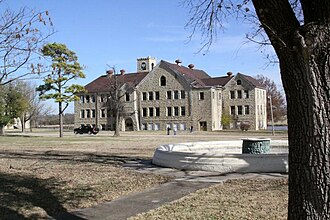
His early education took place at the Chilocco Indian Agricultural School in northern Oklahoma, a boarding school where many Native youth learned trades. Montgomery later transferred to Carnegie High School, graduating in 1936, and became one of three Chilocco alumni to earn the Medal of Hono, a remarkable feat highlighting the school's role in fostering battl-hardened leaders.
Athletics became his outlet. At Bacone Junior College, Montgomery shone as a running back on the football team, showcasing the speed and determination that would later define his combat style.

In 1937, while still a student, he enlisted in the Oklahoma National Guard, joining the 45th Infantry Division (known as the "Thunderbirds") a unit that included soldiers from over 50 Native American tribes. This early military stint was interrupted in 1938 when he transferred to the University of Redlands in California on a scholarship, where he earned a degree in physical education in 1940.
Returning to Oklahoma, he briefly rejoined the Guard before an honorable discharge in 1941. But the attack on Pearl Harbor that December changed everything, pulling him back into service just months later.
World War II transformed Montgomery from a college graduate into a battle-hardened soldier. Reenlisting in early 1942, he deployed to Europe with the 45th Division, seeing his first combat during the Allied invasion of Sicily in July 1943--part of Operation Husky. His platoon captured a key airfield at Biscari, earning him a battlefield commission to second lieutenant, a Purple Heart for wounds sustained, and a Bronze Star for valor.

Promoted again before the invasion of Salerno, Italy, in September 1943, he received a Silver Star for his leadership under fire.
The 45th Division, with its diverse Native American ranks, symbolized the significant role Indigenous soldiers played in the war--over 44,000 served, many volunteering at rates higher than the general population.
Montgomery's Cherokee background instilled values of courage, honesty, and community, which he carried into every engagement. But it was at the Anzio beachhead in early 1944 where his legend was forged.

February 22, 1944, dawned cold and deadly near Padiglione, Italy. The Allies' Anzio landing had bogged down into a brutal stalemate, with German forces dug in deeply. As first lieutenant commanding the 1st Platoon, Company I, 3rd Battalion, 180th Infantry Regiment, Montgomery faced a dire threat: Enemy infantry had established three echelons of positions just 50, 100, and 300 yards from his men, complete with machine guns and mortars.
What followed was an act of audacious bravery. Armed only with an M1 rifle and hand grenades, Montgomery crawled through a ditch toward the closest position under cover of darkness. Emerging onto a mound, he fired accurately and lobbed grenades, killing eight Germans and capturing four.

Undeterred, he called in artillery on a house sheltering more enemies, then advanced on the second position with a carbine, silencing two machine guns and forcing seven surrenders—three more dead were found later.
By daylight, with perfect enemy visibility across open terrain, Montgomery charged the house 300 yards away. As Germans streamed out, he directed their surrender, capturing dozens more despite sniper fire.
His tally: 11 enemy dead, 32 prisoners, and countless wounded, all while inspiring his platoon. That night, aiding a counterattack, he was severely wounded by mortar shrapnel--his second Purple Heart.

Evacuated to a field hospital and then back to the U.S., Montgomery recovered and served in a Texas training unit.
On January 15, 1945, President Franklin D. Roosevelt presented him the Medal of Honor at the White House. His awards also included two Silver Stars, two Purple Hearts, a Bronze Star, and the Italian Cross of Valor
Discharged in September 1945, Montgomery returned to Oklahoma, where he built a civilian life far from the spotlight. He joined the Veterans Administration in 1946, working in Bartlesville, Hugo, and Muskogee until retirement, helping fellow vets navigate post-war life.

Living modestly, he maintained steady employment and avoided the struggles some veterans faced. The Cherokee Nation honored him with a bench at its war memorial, recognizing his embodiment of tribal virtues. In a fitting tribute, the VA medical center in Muskogee bears his name, serving as a beacon for veteran care.
Jack C. Montgomery passed away on June 11, 2002, at age 84 in Muskogee and was laid to rest at Fort Gibson National Cemetery. He stands among a proud group of Oklahoma Native Americans highly decorated in WWII, including fellow Cherokee and other tribes' heroes who exemplified disproportionate service and sacrifice.