Our Arklahoma Heritage: The legacy of a small-town veteran, mechanic and inventor endures in Hackett
- Dennis McCaslin

- Nov 3, 2025
- 3 min read


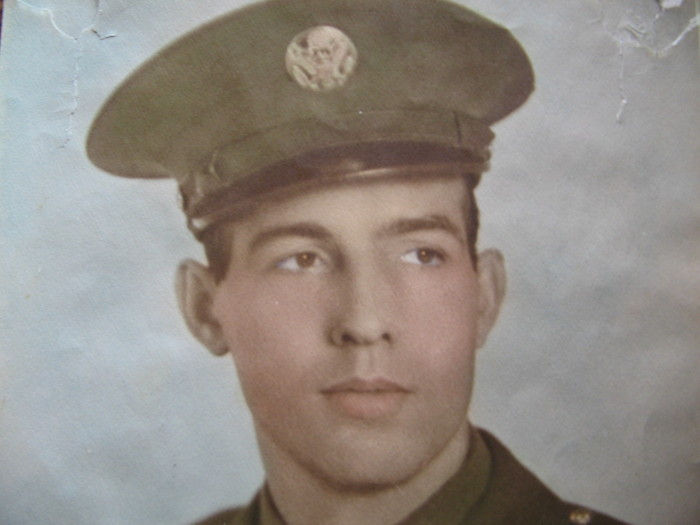
In the shadow of the Ozark foothills the legacy of Arthur Martin Holloway in Hackett endures not in grand monuments, but in the hum of engines and the ripple of waves on a summer lake
Thirty-four years after his death, this World War II veteran, self-taught inventor, and lifelong grease monkey remains a folk hero in Sebastian County, a man whose ingenuity kept tanks rolling toward Berlin and water skis gliding tangle-free across local waters.
Born on March 22, 1915, in the hardscrabble embrace of rural Crawford County, Arthur was the son of William Arthur Holloway and Minnie Lee Martin, a farming family eking out a living amid the Great Depression's dust.

Hackett itself, incorporated in 1885 as a coal-boom outpost named for homesteader Jeremiah Hackett, was no stranger to grit. By Arthur's youth, the town's rail lines and mines had faded, leaving fertile ground for a boy with a knack for fixing what broke.

.Arthur's mechanical prowess found its proving ground in 1943, when Uncle Sam drafted him into the U.S. Army at age 28. Assigned to motor pool duties in Europe, he wasn't on the front lines with a rifle, but his battlefield was no less treacherous: muddy foxholes turned into makeshift garages, where he'd coax life back into Jeeps and half-tracks under the whine of Luftwaffe engines.
Serving with Allied support units in the the 3rd Army's maintenance echelons, Arthur's repairs helped sustain the relentless drive from Normandy's beaches to the rubble-strewn streets of Berlin.
Arthur sailed home aboard the RMS Queen Mary, the "Grey Ghost" troopship crammed with 15,000 weary GIs.

He carried home the European-African-Middle Eastern Campaign Medal, Good Conduct Medal, and World War II Victory Meda, quiet badges for a man who preferred torque wrenches to triumphs.
Back in Hackett, Arthur traded khakis for coveralls, marrying Ruby Lee Oliver around 1938 (they'd wed young, wartime separating them briefly) and opening Holloway's Garage on Main Street in 1946.

For four decades, until his retirement in the mid-1980s, the shop was Hackett's beating heart, a hub for auto and motorcycle repairs, welding jobs, and custom fabrications.
In an era when roads were rougher and rides less reliable, Arthur's garage drew farmers from Cedarville, miners from nearby Barling, and even Fort Smith commuters seeking his unerring touch.
The shop wasn't just a business; it was a community lifeline, sponsoring Little League teams and hosting church suppers in its oil-stained bays
But Arthur's genius wasn't confined to carburetors. In 1950, eyeing the postwar boom in General Motors vehicles, he devised a revolutionary process for aligning caster and camber--the subtle angles that keep wheels true on America's expanding highways. Using homemade jigs and visual gauges, his method slashed alignment time from two grueling hours to under 30 minutes, with precision that rivaled factory specs.

Dealerships across Arkansas and Oklahoma snapped it up, training mechanics in Arthur's technique. He never patented it ("Why hoard a fix when folks need it?") but it cemented his rep as a master mechanic.
A decade later, Arthur's inventive spark ignited again, this time on the water. An avid boater and early evangelist for water skiing in northwest Arkansas's lakes like Fort Smith, Lee Creek, and beyond, he grew frustrated with tow ropes that trailed like stubborn snakes, snagging props and tempers alike.
In his garage after hours, he sketched and welded a solution: a spring-loaded reel mounted on the boat's transom that automatically retracted the rope post-run, stowing it neatly and safely. Filed in 1960, U.S. Patent No. 3,027,116 was granted on March 27, 1962, the first of its kind.
Early versions hit marine shops in the '60s, precursors to today's high-tech retractors.
Arthur's invention didn't make him rich as water sports were niche then, but it glided into family lore, with grandkids still towing behind boats equipped with "Grandpa's reel."

Life beyond the workbench was Arthur's true joyride. A devoted father, he herded his brood through Hackett First Baptist Church youth groups and camping trips under starlit Ozark skies. Summers meant Holloway's Garage closing early for lake days, where Arthur's retractors debuted amid laughter and splashes.
He was no stranger to quiet reflection either--fishing poles at dawn, a pipe in hand, pondering the next fix.
On September 19, 1991, at 76, Arthur slipped away peacefully in Hackett, his hands still callused from a lifetime of creation
. His obituary in the Southwest Times Record was spare: "Retired mechanic, WWII veteran, inventor."
Buried in Shamrock Cemetery's Valley View plot beside Ruby (who joined him in 2002), his stone reads simply: "Arthur M. Holloway, 1915–1991 - Veteran, Master Mechanic, Inventor"
.As Hackett's coal-era rails rust and its lakes lap on, Arthur Martin Holloway reminds us: The fix for tomorrow starts in the garage today.


