Our Arklahoma Heritage: The baseball standout who hailed from a Yell County community that no longer exists


Herbert Spencer Ellison was born on November 15, 1896, at Rutland, a railroad settlement about three miles west of Ola in Yell County. The county books have usually written the place as Ola.
His parents had married there less than two years earlier. On December 6, 1894, a license was issued, and on December 16, David Ellison of Rutland, about twenty-three, married Josephine Eugean Sandlin of Ola, about twenty. She was called Josie, and she had been born on December 22, 1874.
The marriage did not last three years. A daughter, Ester Penelope Ellison, died at four months. A month later, on August 13, 1898, David Ellison died at twenty-eight. On the 1910 census Josie reported three live births and only one child still living. The third
child is not named in the surviving notes.
Herbert was the one who lived.
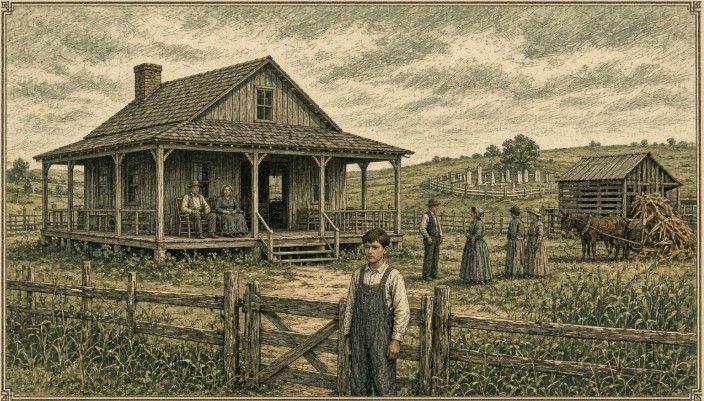
Josie married again, around 1907, to William A. Parton. Family reconstruction from the census puts Herbert, then about eleven, with his grandparents rather than in the new household. In 1900 he was already enumerated in Mason, Rose Creek, and Ward townships.
In 1910 he was in Ward Township in the house of John James Sandlin and Ester Jane Sandlin, both about seventy, along with several of Josie’s brothers and sisters. John James Sandlin had been born on February 28, 1839, in Alabama, of a North Carolina father and a South Carolina mother.

He farmed west of Ola on the Ola-Plainview road, served the Confederacy, lived until April 14, 1932, and was buried in the Sandlin Cemetery at Ola, the family ground also called the Ola Sandlin Cemetery. Ester Jane is buried there with him.
Among the aunts and uncles who shared that house or that name were Mack Duke Sandlin, Lutie Mino Sandlin, Helen Sandlin Reeves, and Roddy Forrest Sandlin. The Sandlins stayed on the place for generations, as farmers, teachers, and lawyers. Herbert was the one who left.
Josie lived a long time after the boy was gone. She died on April 14, 1969, at ninety-four, in Duncan, Stephens County, Oklahoma. A later family note on her grave points back to the son in California and to David Ellison.
There is no record that Herbert raised children of his own, and none appear in the census households that list him as an adult.

At the University of Arkansas in the fall of 1914 the Sandlin grandson was not Babe and not Bert. The campus called him Crook. The 1916 yearbook, written after he had already signed a professional contract and would never serve as the captain he had been elected, remembered him as the heaviest hitter on the club, a popular man, and a ladies’ man.
He was eighteen when he left Fayetteville for Clinton, Iowa. The Daily Arkansas Gazette of August 20, 1915, still identified him from home: Bert Ellison of Ola, captain of the university nine, sold to the Detroit Tigers.
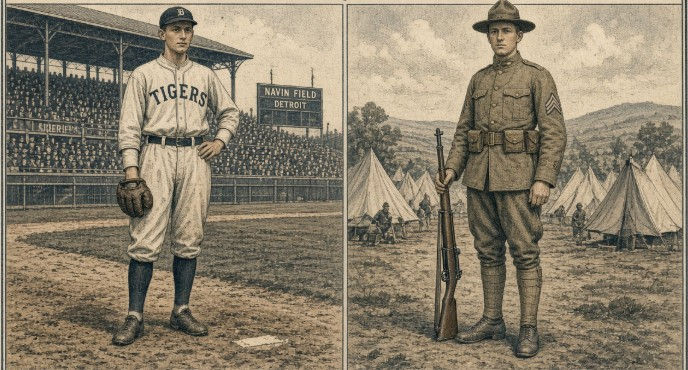
The war pulled him back to the county that had raised him. Turned down for naval aviation, he opened the 1918 season in a Detroit uniform. On April 25 the Yell County draft board ordered him to report. He played three games on furlough in August, then went overseas.

His grave at Golden Gate National Cemetery in San Bruno, California, Section Q, Site 747, carries him as a sergeant in the United States Army in the First World War.
He came back to the Tigers for two more seasons as a utility man, then on November 17, 1920, two days after he turned twenty-four, Detroit traded him to the San Francisco Seals.
San Francisco became the whole of his adult life. The Chronicle took to him in 1921. By September 1923, when manager Dots Miller died of tuberculosis, the club trusted a twenty-six-year-old Arkansan enough to hand him the team
. He managed into the middle of 1926, won two pennants, and on Bert Ellison Day in the fall of 1925 was given an automobile and an engraved gold watch.

The watch is the most personal object that survives in the stories. Stolen in Kobe, Japan, in 1933, traced as far as a pawnshop in China, and given up for lost, it was found in 1946 by boys in a puddle in a Vancouver park, turned over to Captain Dewey Crowley of the Vancouver police, and sent back through Seals president Charles Graham.
Ellison said it still kept time. No one explained how it crossed from Japan to British Columbia.
The managing broke him before the playing did. On July 7, 1926, with the defending champions in last place, he stepped down and told reporters he had lain awake nights trying to figure how to win, and that he needed a long rest.
He was out about a month, came back in August, and never recovered the power of 1923 and 1924. Dallas removed him as player-manager of the Steers on August 2, 1928. He was thirty-one.
He stayed in the city. The 1930 census lists him as an electric welder in the oil business, married to Ethel Shaw Ellison. By 1940 that marriage had ended and he was a customs appraiser, work he kept for about twenty years.
When he died on August 11, 1955, at St. Luke’s Hospital in San Francisco, at fifty-eight, the notice named a wife, Bernice. No children were mentioned. The Pacific Coast League put him in its Hall of Fame in 2006.
Rutland, where David Ellison had lived and where the boy was born, has no depot and no marker. The Sandlin Cemetery at Ola still holds the grandparents who took him in is the biggest thing that ties him o the Yell County soil.