Our Arklahoma Heritage: Small Logan county ghost town had two brushes with greatness...one with devilish results
- Dennis McCaslin

- Apr 20, 2025
- 3 min read


Most people in the region know that Major League Baseball Hall of Famer Jay Hanna "Dizzy" Dean and his brother Paul Dee "Daffy" Dean were born in Lucas, loated in a small corner of Logan County,.
Today, Lucas is little more than a wide spot on the road between Greenwood and Waldron off U.S. Highway 71, with much of the township no longer intact. However, the Dean brothers were not the only famous individuals to have lived there in the early 20th century.
According to family and census records, a young African American named Robert lived with his mother, Julia, and his stepfather, Will Willis, in the rural community. He was one year younger than "Dizzy" Dean, listed at age nine in the 1920 Arkansas census as a resident of Lucas.

This Robert was none other than Robert Johnson, who would later become one of the most influential blues musicians in history.
While "Dizzy" Dean achieved fame with a major league baseball career, recording 1163 strikeouts and a 150-83 record with the St. Louis Cardinals, New York Giants, and St. Louis Browns from 1930 to 1947, Robert Johnson rose to prominence as a transformative figure in music.
Many musicians, including Eric Clapton, who called him "the most important blues singer that ever lived," cite Johnson as one of the greatest guitarists of all time.
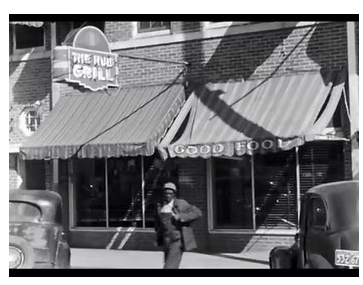
Robert Johnson was likely born on May 8, 1911, in Hazlehurst, Mississippi, to Julia Major Dodds and Noah Johnson. Julia had been married to Charles Dodds, a prosperous landowner and furniture maker, with whom she had ten children.
Charles was forced to flee Hazlehurst by a lynch mob after a dispute with white landowners. Julia later left Hazlehurst with baby Robert, but around 1914, she sent him to Memphis to live with Charles, who had changed his name to Charles Spencer.

Around 1919, Robert rejoined his mother in the Mississippi Delta near Tunica and Robinsonville, living on the Abbay & Leatherman Plantation. Julia's new husband, Willie "Dusty" Willis, was 24 years her junior.
robert was remembered by some as "Little Robert Dusty" but was registered at Tunica's Indian Creek School as Robert Spencer. In the 1920 census, he appeared as Robert Spencer, living in Lucas, Arkansas, with Will and Julia Willis. Records indicate he attended school in 1924 and 1927, suggesting he lived in Lucas for at least eight years, roughly the same age as "Dizzy" Dean.

After school, Robert adopted his biological father's surname, Johnson. At 18, he married 16-year-old Virginia Travis in February 1929. he died in childbirth shortly after, prompting Robert to abandon the settled life of a husband and farmer to pursue a career as a Delta blues musician.
Residents of Robinsonville recalled him as a competent harmonica player but an embarrassingly poor guitarist at the time. After leaving Robinsonville for Martinsville, near his birthplace, possibly to find his father, he honed his guitar skills.
When Johnson returned to Robinsonville, his guitar technique had transformed dramatically, astonishing those who heard him. After losing his second wife to childbirth complications, he became a full-time performer, traveling extensively.

He stayed with extended family or women he met, forming long-term relationships in some places while seducing others during performances. Johnson used at least eight different surnames in various locations, keeping his life compartmentalized.
Johnson recorded 29 songs in two sessions in Texas in 1936 and 1937, which constitute his entire musical catalog. His songs, including "Cross Road Blues" and "Sweet Home Chicago," have been covered by artists like Clapton, Bob Dylan, Keith Richards, and Robert Plant, and his guitar riffs and lyrics have profoundly influenced rock and blues music.

Johnson died in 1938 at age 27 under mysterious circumstances, possibly poisoned, near Greenwood, Mississippi.
His final resting place remains uncertain, with three cemeteries in Mississippi claiming to be his burial site.
Some legends suggest Johnson’s sudden guitar mastery came from a 1929 deal with the devil at a Mississippi crossroads, a myth that adds to his mystique.

That aspect of hios legend was explored in the 1986 film "Crossroads" starring Ralph Macchio, Joe Seneca and Jami Gertz.
Inducted into the Rock and Roll Hall of Fame in 1986 and a posthumous Grammy winner in 1990 for his recordings, Robert Johnson’s journey from a Mississippi dirt farmer to an Arkansas resident and blues legend remains one of music’s most compelling stories.


