Our Arklahoma Heritage: Pioneering Wisdom family found their way to Franklin County in 1871
- Dennis McCaslin

- Jun 29, 2025
- 2 min read



In Franklin County, Arkansas, a secluded cemetery holds the final resting place of William Carroll Wisdom and his wife, Lucy Robertson Wisdom. Their graves, the only ones in Wisdom Cemetery, reflect a lifetime shaped by the challenges of frontier life and the pursuit of new opportunities.
Born in 1785 in North Carolina, William Carroll Wisdom grew up in a nation still recovering from the American Revolution. His parents, Thomas Lewis Wisdom and Catherine Stapp Wisdom, were part of a generation focused on survival and land acquisition rather than direct involvement in the war.
Thomas moved the family from Virginia to North Carolina around 1778, then relocated to Kentucky by 1788, seeking better farmland.
William married Lucy Robertson Wisdom after his first wife’s passing and settled in Hardin County, Tennessee, around 1820.
Together, they raised his three sons and had eight children of their own. For over three decades, they farmed and built a stable life in Tennessee before deciding to move west.
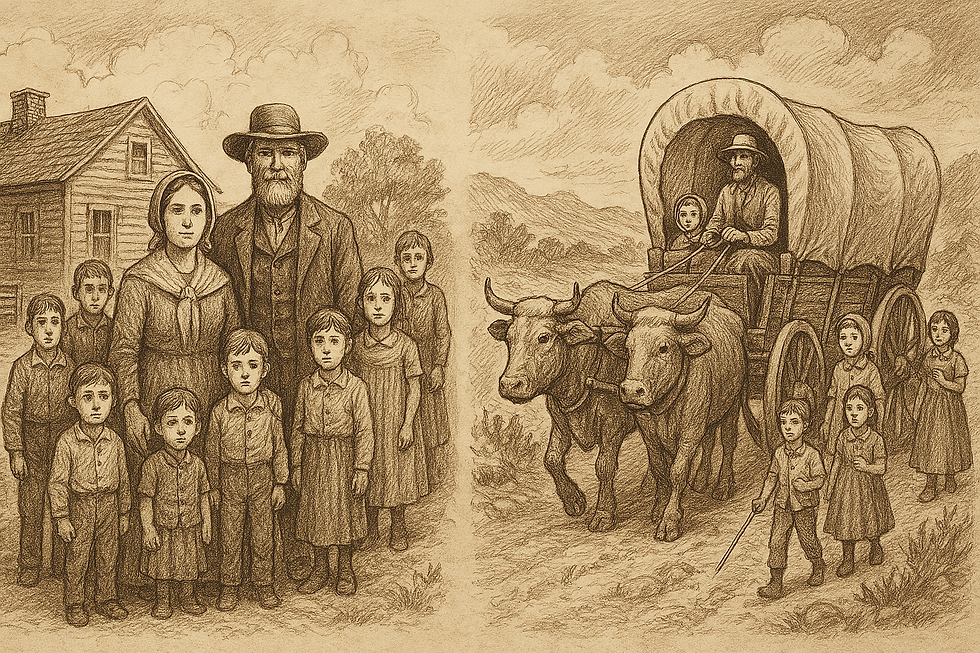
In 1851, William and Lucy left Tennessee for Franklin County, drawn by the promise of affordable land and new opportunities. They settled in White Oak Township, where census records confirm their presence alongside their children.
Like many families making the journey west, they likely traveled by wagon, enduring rugged terrain and harsh conditions.
Their new home in White Oak reflected the broader trend of American expansion, as settlers pushed west in search of prosperity. Franklin County, established in 1837, was still developing when they arrived, offering both challenges and possibilities.
William and Lucy Wisdom lived out their final years in White Oak. By 1870, William had passed away at 85, and Lucy followed shortly after.

They were buried in a private family cemetery on their land--a common practice for rural settlers in the 19th century. Their graves remain the only ones in Wisdom Cemetery, symbolizing their enduring partnership and dedication to family.
Their story is part of a larger narrative of early American pioneers who shaped communities through resilience and determination.
Today, their resting place stands as a quiet

reminder of the sacrifices made by those who sought a new life in an evolving nation.


