Our Arklahoma Heritage: Oklahoma City WAC among 18 female soldiers who died in 1945 military transport crash
- Dennis McCaslin

- Apr 15
- 3 min read


Odessa Lou Hollingsworth was born on November 24, 1917, in Wayne, a small farming town in McClain County, Oklahoma. Her father, Otis A. Hollingsworth, had returned from France the previous year after serving in the First World War. He had lost both legs in combat. Her mother, Lenora Edith Davenport Hollingsworth, whom the family called Nora, managed the household in the rural community south of Oklahoma City.
In August 1918 Otis wrote home to Nora and their infant daughter Odessa. The letter reflected the quiet routines of a family adjusting to life after war.
Odessa grew up in Wayne amid the modest circumstances shaped by her father's injury and the economic pressures of the 1920s and 1930s. Records show the family remained rooted in the area through her childhood. She later listed Oklahoma City as her home, though details of any move are sparse.
No public records indicate that she married.

She carried the surname Hollingsworth throughout her adult life and military service.On December 21, 1943, Hollingsworth enlisted in the Women's Army Corps. She trained and was assigned to Squadron D of the 1202nd Army Air Forces Base Unit with the Air Transport Command.
In October 1944 she sailed as part of the first group of 159 WACs to reach Accra in British West Africa. The women, most in their late twenties, filled clerical, administrative, and support roles at the busy airfield that served as a vital link in the trans-African supply route

.Life in Accra followed a steady pattern of work and limited recreation. One photograph from that period shows Hollingsworth and Private Helen Rozzelle during off-duty time, observing local customs among the people of the Gold Coast. The image captures the women in uniform, standing near a beach with African civilians nearby. The WACs adapted to the heat, the routines of the base, and the distance from home while processing paperwork for aircraft ferrying supplies and personnel across the continent.
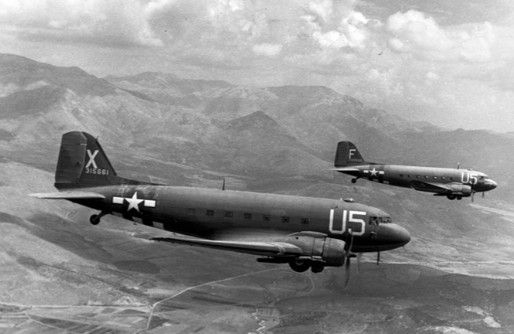
On the morning of May 30, 1945, Hollingsworth boarded a Douglas C-47B Skytrain, serial number 44-76406, with seventeen other enlisted WACs and three crew members. The aircraft lifted off from Accra Air Base at 7:08 a.m. bound for Roberts Field in Liberia, a routine transfer flight of roughly 766 miles along the coast. Radio contact occurred over Takoradi on the Gold Coast about forty-five minutes later. Then distress signals reached Roberts Field.
The plane vanished over the Gulf of Guinea.Search aircraft scoured the waters southeast of Drewin Point near Sassandra in what is now Ivory Coast. Scattered showers had been reported, but no severe weather explained the loss. No wreckage, bodies, or debris surfaced despite a week of intensive efforts.

All twenty-one people aboard were listed as missing. Hollingsworth was twenty-seven years old.The War Department announced the disappearances in early June 1945. The families received official notices, but no further details ever emerged. Hollingsworth's remains were never located.
She is memorialized on the Tablets of the Missing at the North Africa American Cemetery in Carthage, Tunisia, alongside the other seventeen WACs and the three crew members from the flight. The site stands near the Mediterranean coast, far from the Oklahoma fields where she was born.
Otis Hollingsworth lived until March 29, 1968. He died in Del City, Oklahoma, and was buried locally. Nora survived him as well. Their daughter Odessa never returned from Africa, but her name remains on the official rolls of the Women's Army Corps and on the wall of names at the cemetery in Tunisia.
The record of her service ends with the flight that left Accra on a clear Wednesday morning in 1945 and never reached its destination.


