Our Arklahoma Heritage: Newspapers of the day told detailed stories of killings that led to April 10, 1891 executions


On April 10, 1891, the gallows at Fort Smith, Arkansas, stood grimly silhouetted against the morning sky. Two men black men--Matthew Allen and James Mills--ascended its steps, each condemned for separate murders committed years apart in the Indian Territory. Though their crimes bore no connection, their fates converged in a single, solemn moment of frontier justice.
Newspapers across the nation, including the New York Times, the Chicago Tribune as well as the Fort Smith New Era carried detailed stories about the crime and executions of two desperados who both killed their victims in cold blood.
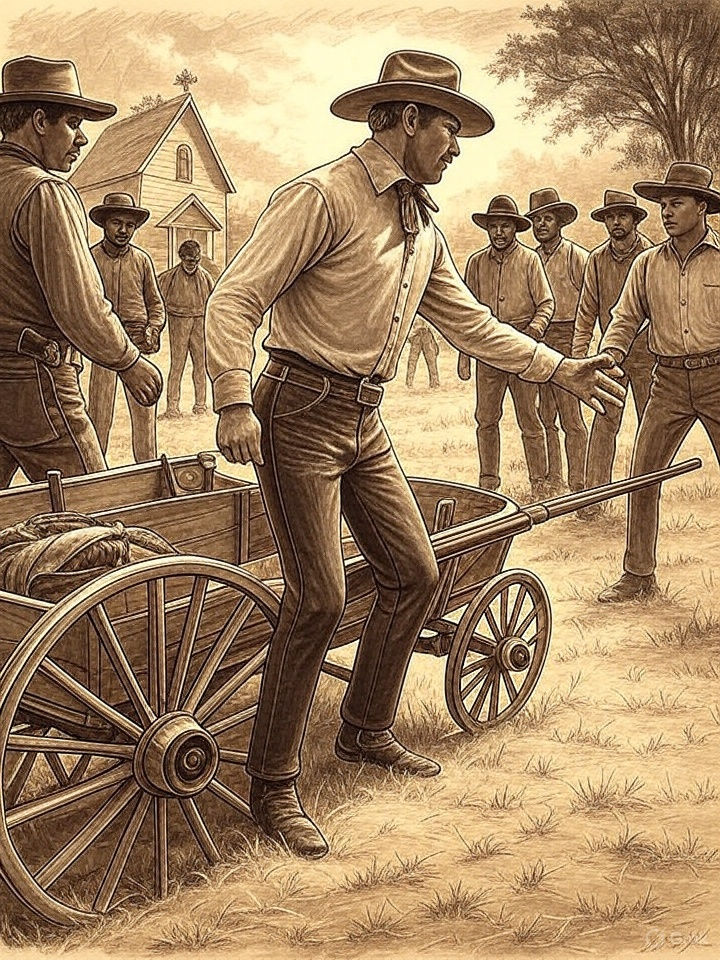
Matthew Allen’s path to the scaffold began with a deadly confrontation at a church gathering in the Chickasaw Nation on July 15, 1888. A dispute over a saddle escalated when Allen overheard his name mentioned. Confronting the group, he retrieved a Winchester rifle from his wagon and shot Shadrack Peters and Cy Love--both of whom died from their wounds.
Deputy Marshals J.C. McAllister and John Swain pursued Allen through the woods. After a desperate three-mile chase and a final standoff, Allen was wounded, captured, and later had his arm amputated due to the severity of his injuries.
At trial, his defense argued provocation, but the jury found him guilty of double murder. He was sentenced to hang on January 3, 1891.
In his final days, Allen accepted baptism and reportedly faced death with calm defiance. On the scaffold, he faintly smiled as the noose was placed around his neck.

James Mills, a young man living in the Seminole Nation, was convicted of murdering John Windham on December 16, 1884. Mills, along with Tom Robins, had been staying at Windham’s home. That night, the two men and Windham went coon hunting, accompanied by Windham’s 13-year-old stepson, Phillip Lincoln.
According to the boy’s testimony, Windham was shot twice--once in the mouth and once in the body--by his companions. Mills and Robins threatened the boy into silence and returned to Windham’s home, fabricating a story for his wife. The next day, the boy confided in neighbors, prompting an investigation.

When confronted, Mills blamed Robins, and Robins blamed Mills. A group of local Black citizens attempted to arrest them. Robins was wounded in the struggle and later died in jail. Mills escaped but was eventually captured.
Despite his claims of innocence, the evidence pointed to his involvement. Robins, before his death, insisted Mills had pulled the trigger.
While in jail, Mills became a model prisoner. The jailer, known as Uncle Henry, described him as “one of the best prisoners, white or Black, that I have ever had under my charge.” Mills converted to Catholicism after his conviction and remained composed, though he seemed not to fully grasp his fate until shortly before his execution.
The executions of Allen and Mills were carried out under the authority of the U.S. District Court for the Western District of Arkansas, which held jurisdiction over crimes in the Indian Territory.Though their crimes were unrelated, the simultaneous execution of Allen and Mills underscores the stark, often unforgiving nature of frontier justice.
Their final moments—marked by ritual, silence, and a chilling calm--remain etched into the legacy of Fort Smith’s gallows.